




Project Background
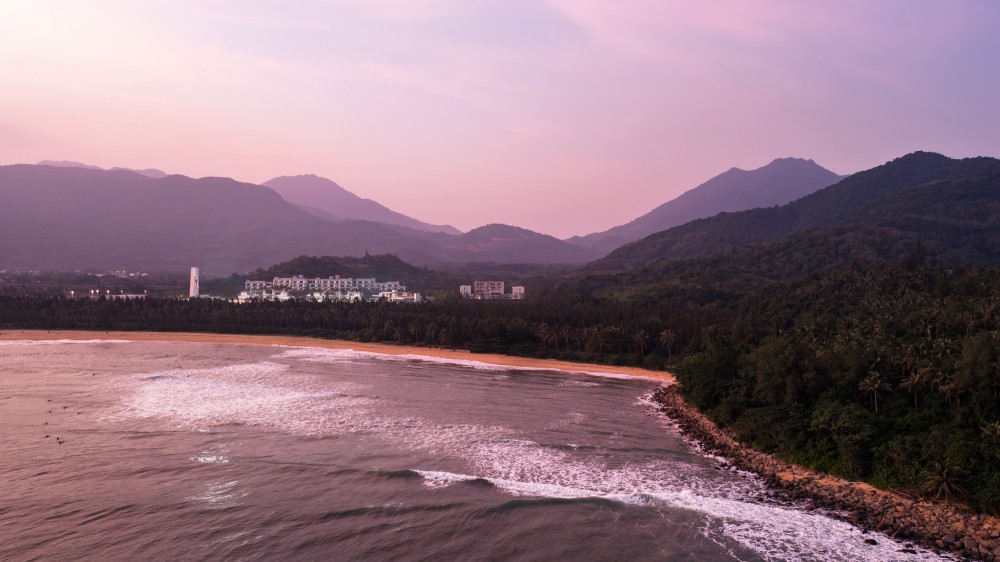
Sun Moon Bay, located in Wanning, Hainan, is a coastal area rich in ecological and tourism resources and is widely regarded as offering the finest surfing conditions in China. Situated within a tropical monsoon maritime climate zone, the bay enjoys a warm and humid climate year-round, with minimal temperature variation and abundant sunshine, providing ideal natural conditions for outdoor activities throughout the year.
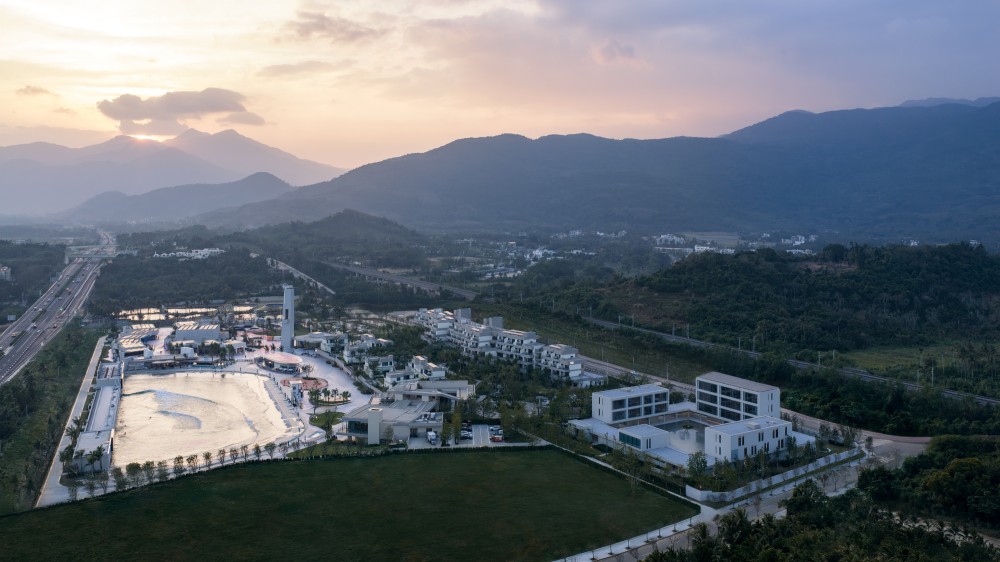
The project is located within Zhulang Resort, a mixed-use destination themed around surfing that integrates sports, accommodation, and commercial functions. Nestled between the mountains and the sea, the resort lies approximately 500 meters from the coastline, forming a comprehensive ecological leisure environment centred on surf culture.
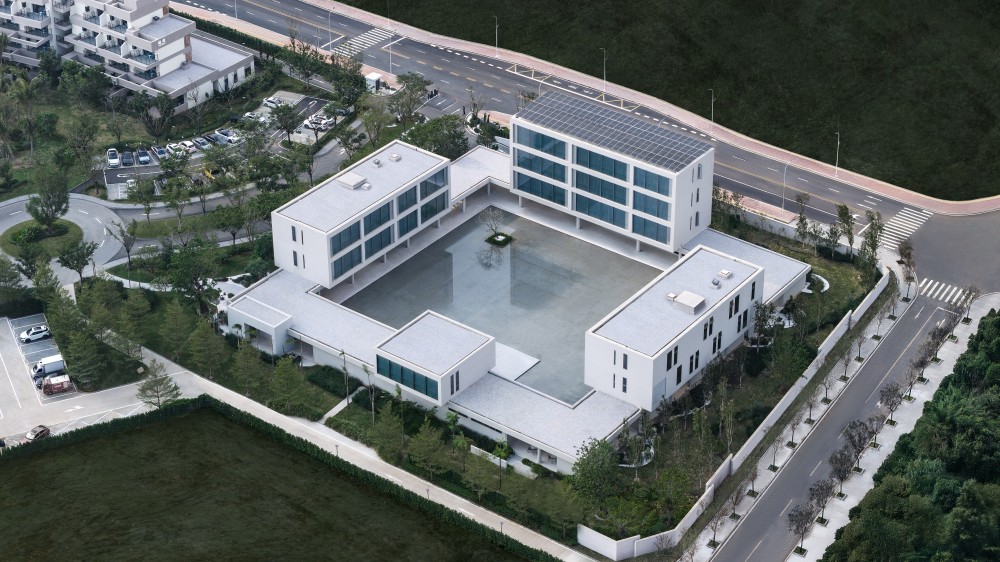
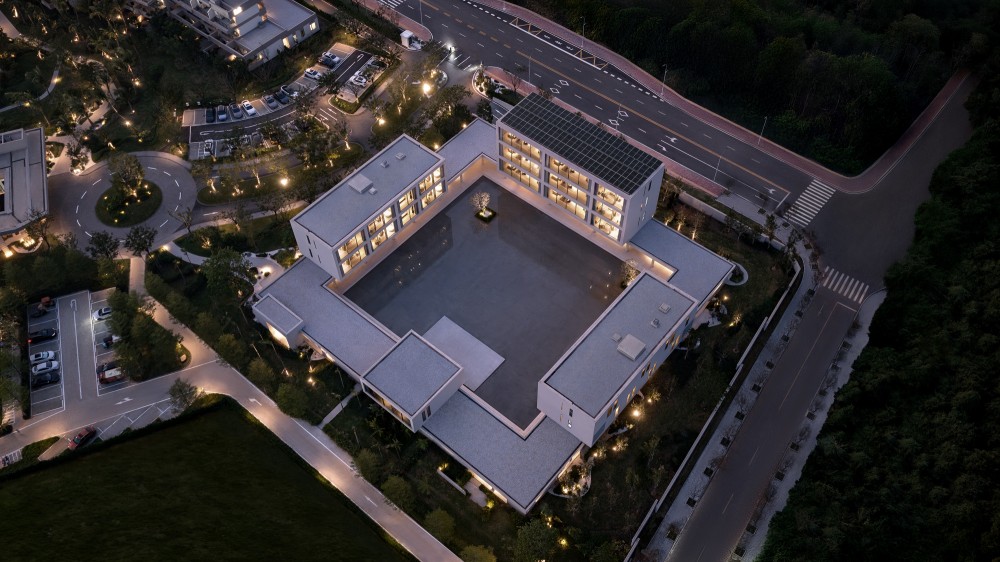
The main challenges of this project arise from the specific conditions of the hotel site. Located at the northeastern corner of the resort, the site features relatively gentle topography but lacks direct visual access to the sea. It is also situated at some distance from the resort’s core amenities—including the artificial wave pool and the main commercial zone—resulting in a comparatively isolated setting. In addition, the site is bordered by the second-phase development area to the south, while vehicular roads run along its eastern and northern edges, introducing further environmental and contextual constraints.
In response to these unfavourable conditions, the design adopts an inward-oriented strategy. Following a site analysis, a clearly defined spatial boundary and an enclosed layout were proposed to create a self-contained environment—an “enclosed garden within the resort”—establishing a spatial realm with its own internal order.
Spatial Design and Concept
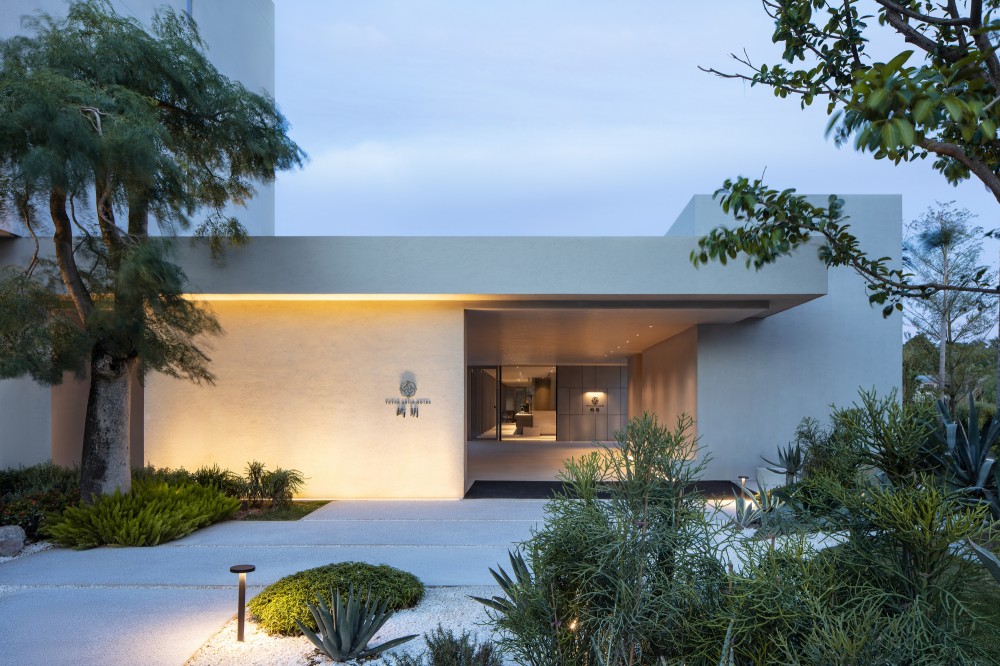
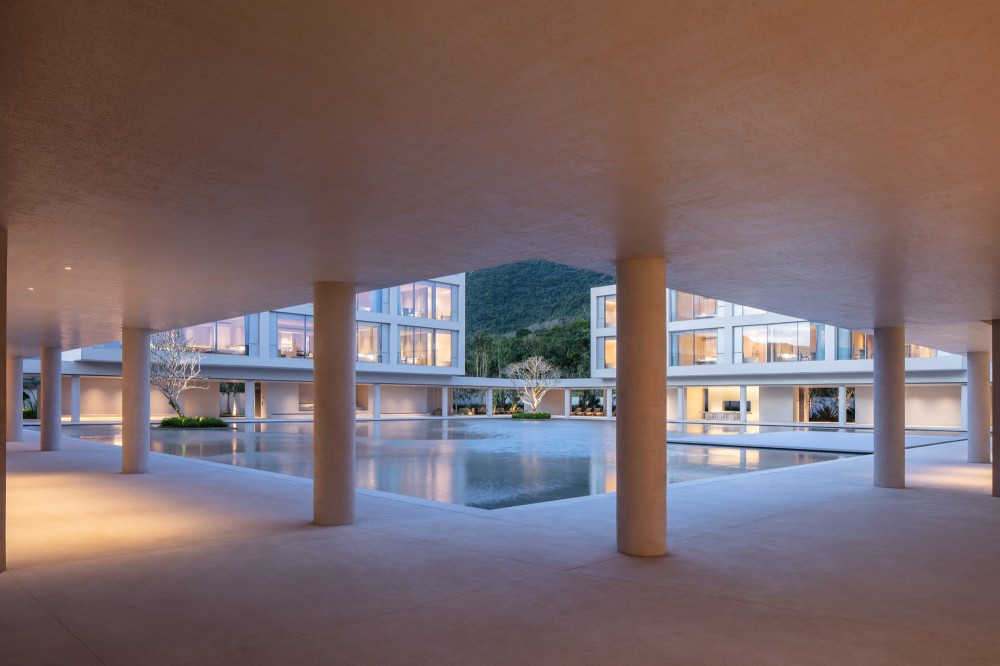
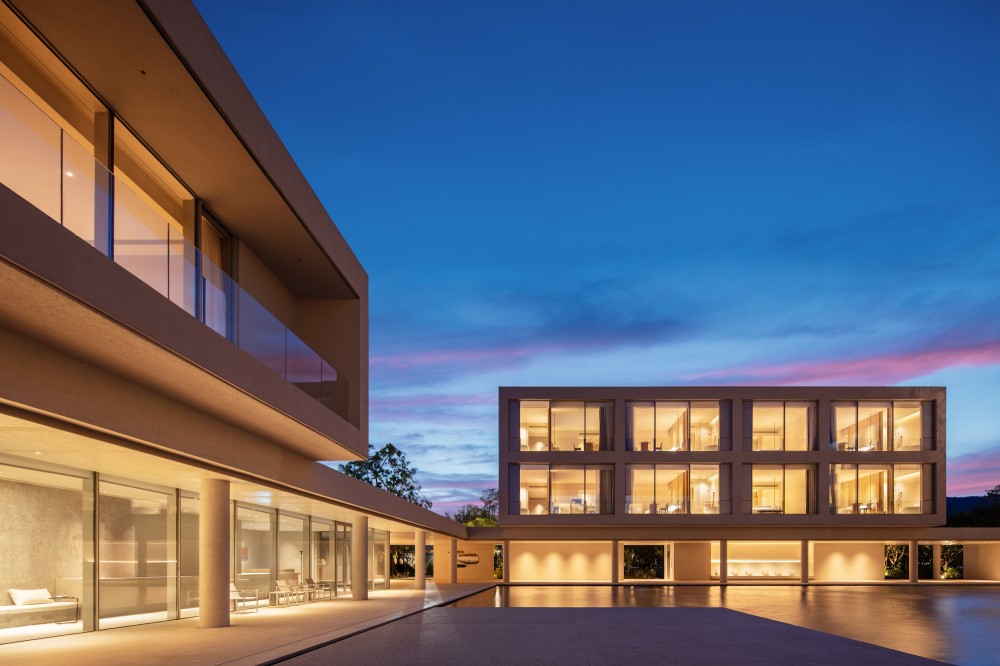
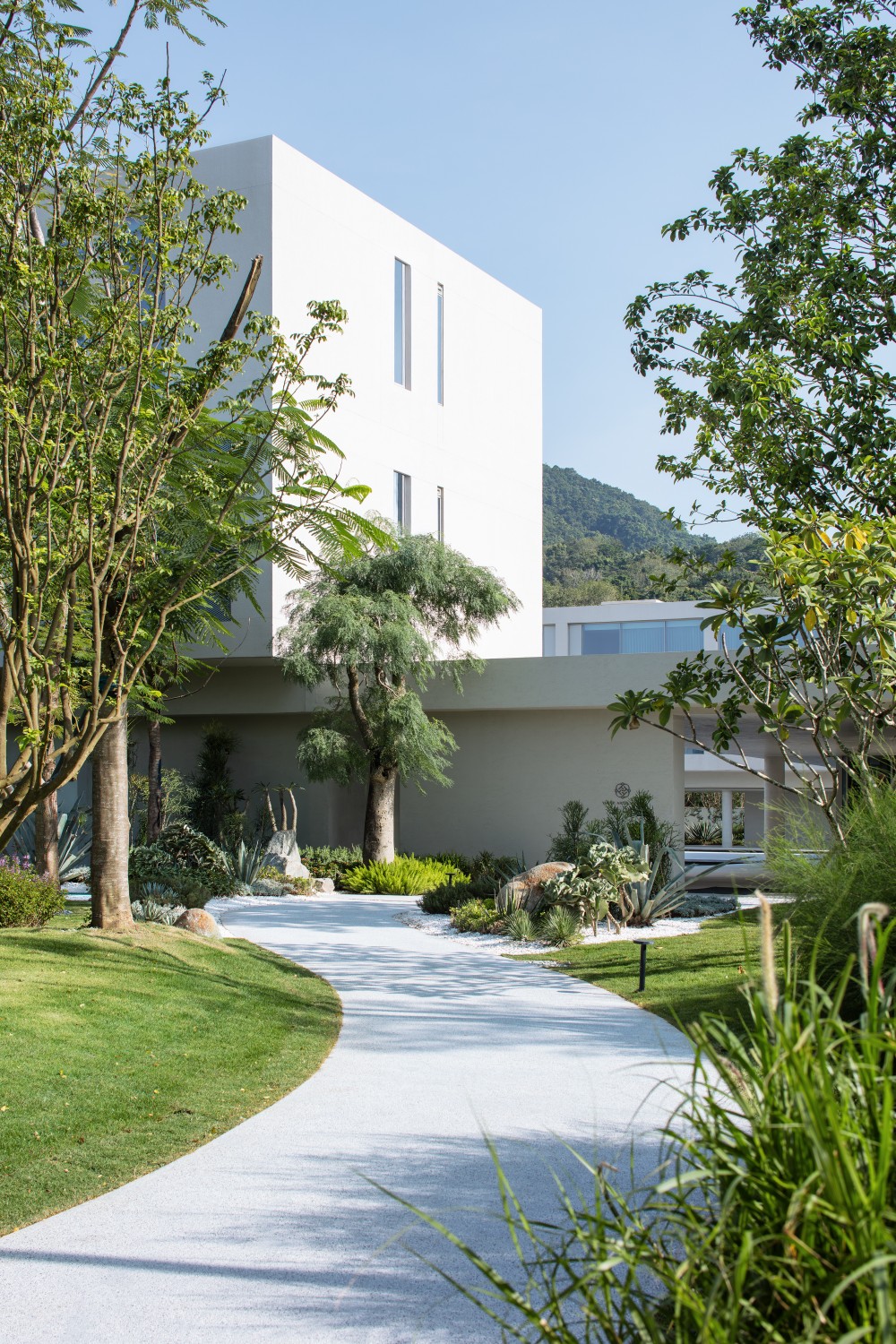
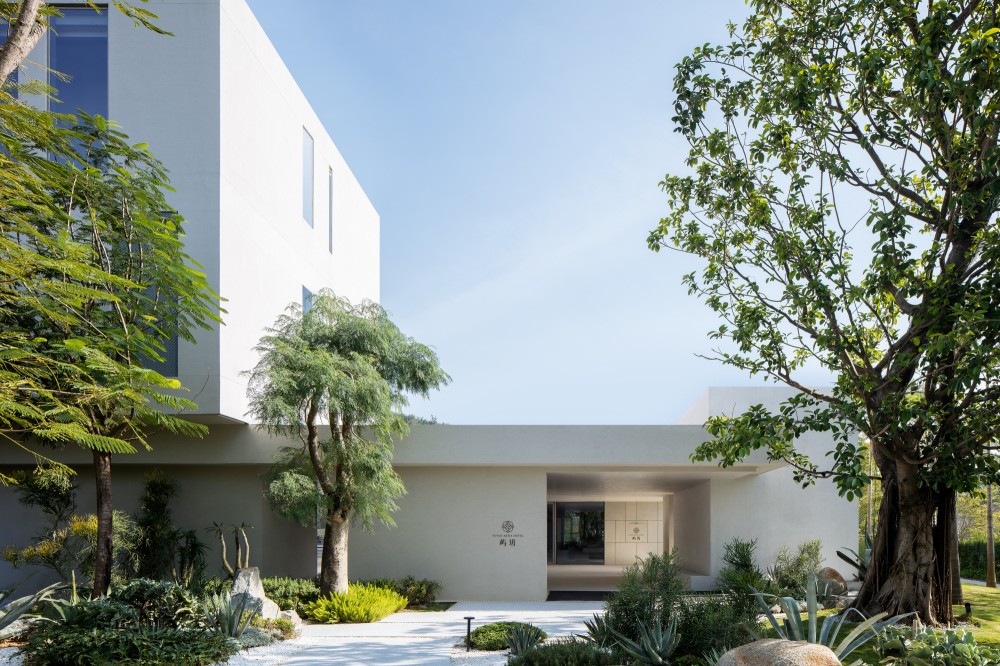
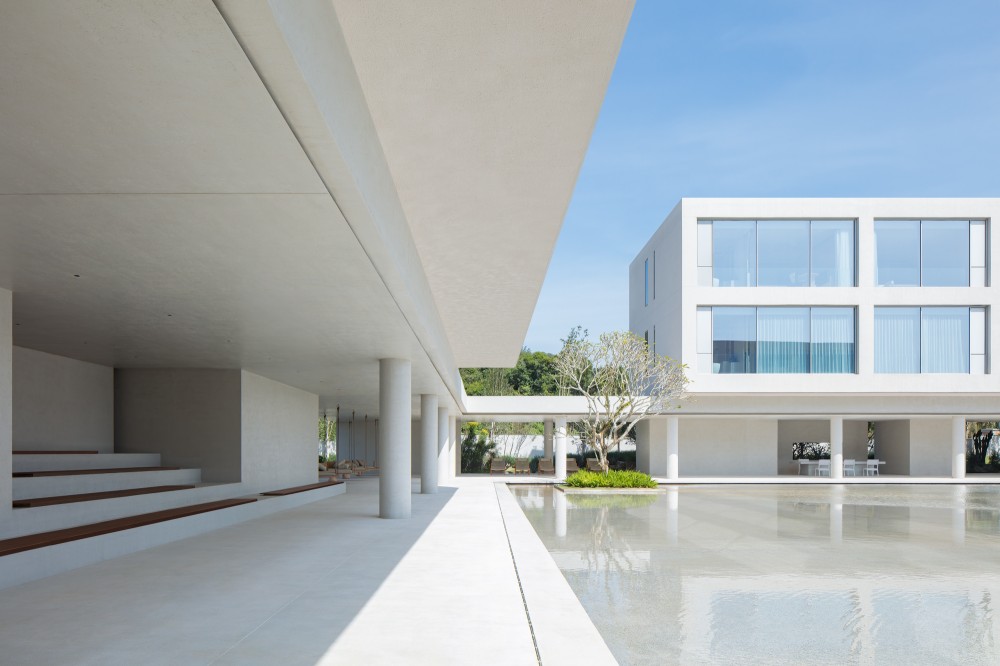
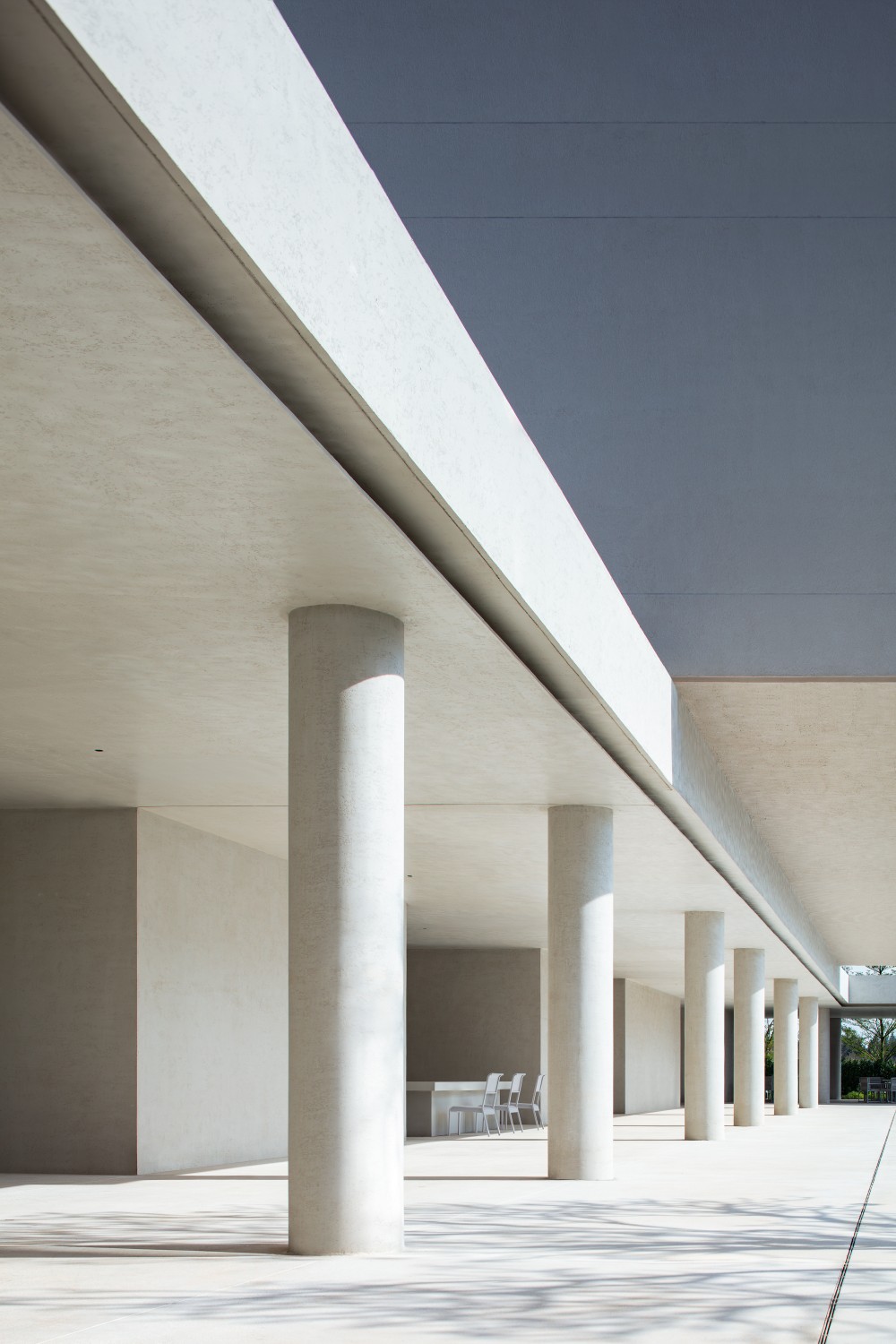
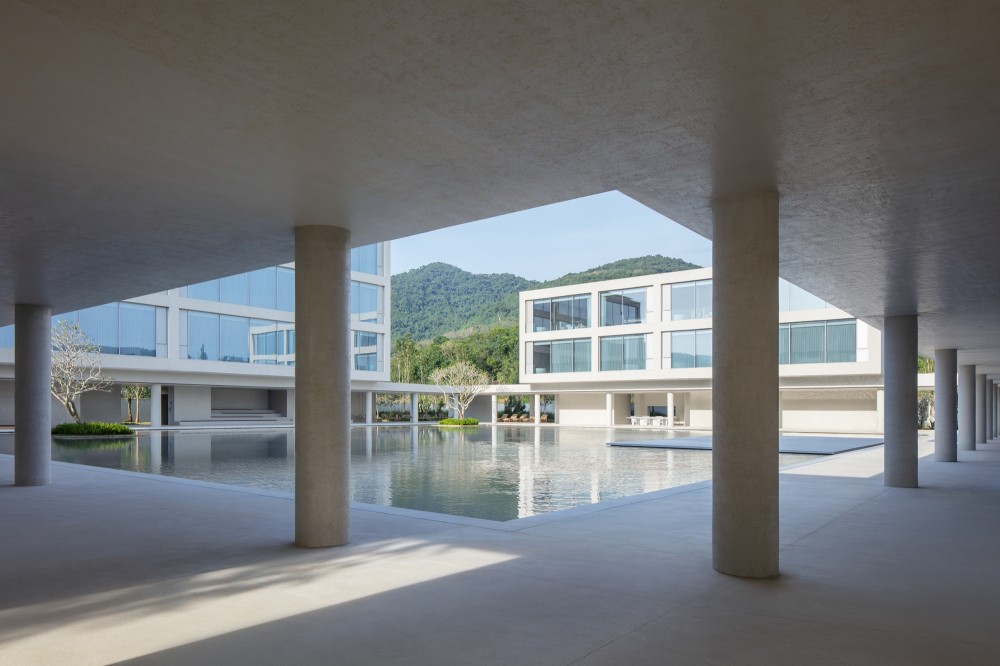
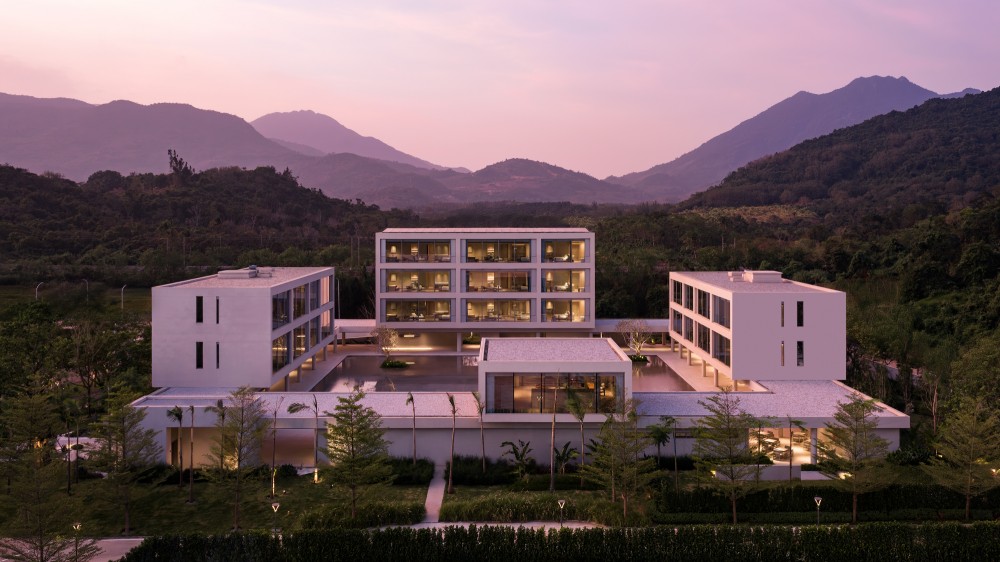
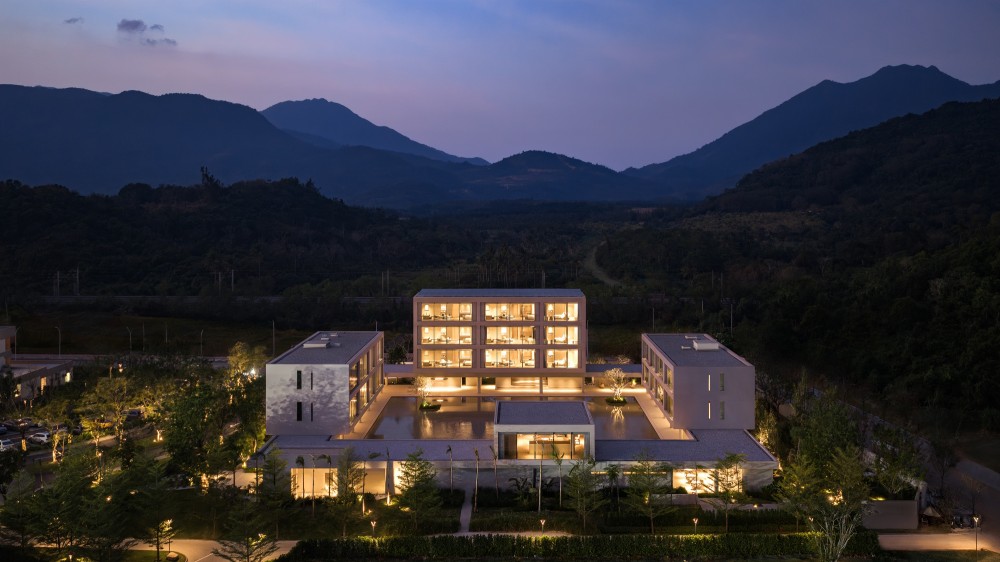
Surrounded by dense greenery and trees, the hotel dissolves into the landscape, its overall form deliberately subdued so that it reads more as a grove than as a built structure. The main entrance is approached via a winding path set within the landscape, where the gradual movement through the greenery mediates a subtle shift in mood before arrival. At the end of the path, visitors pass beneath the elevated colonnade at ground level. Moving forward, the compressed threshold gives way to a sense of openness as the central pool gradually comes into view. The bright, open courtyard stands in deliberate contrast to the solid facade, heightening the spatial tension.
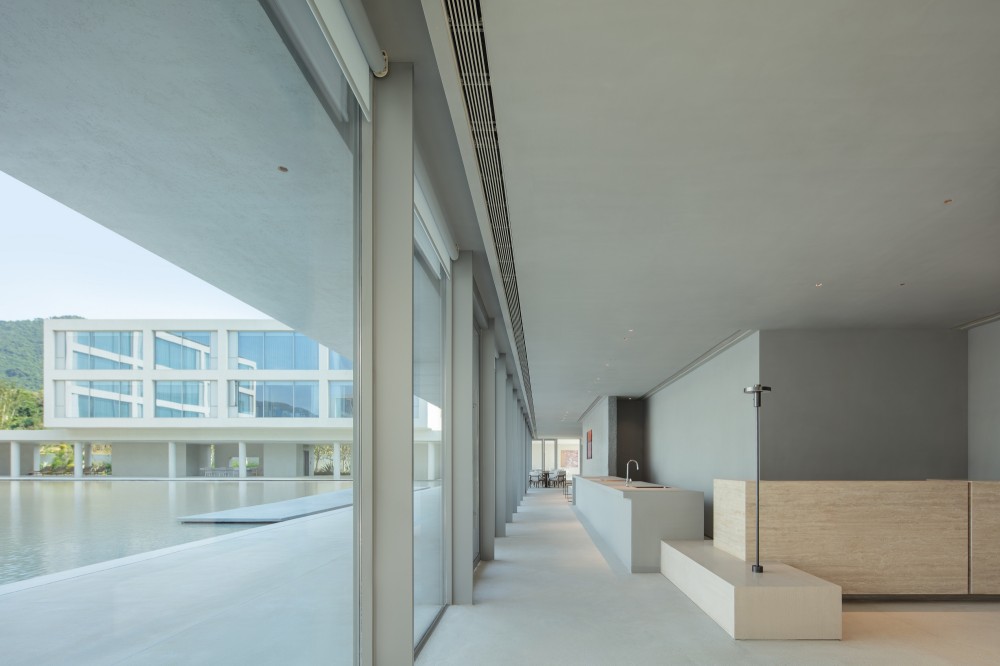
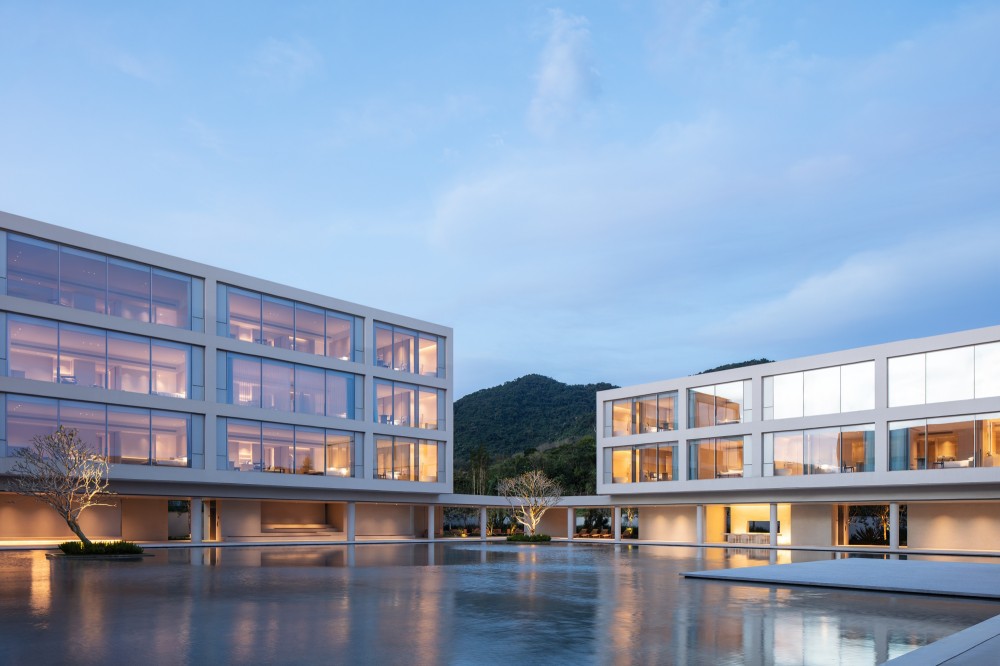
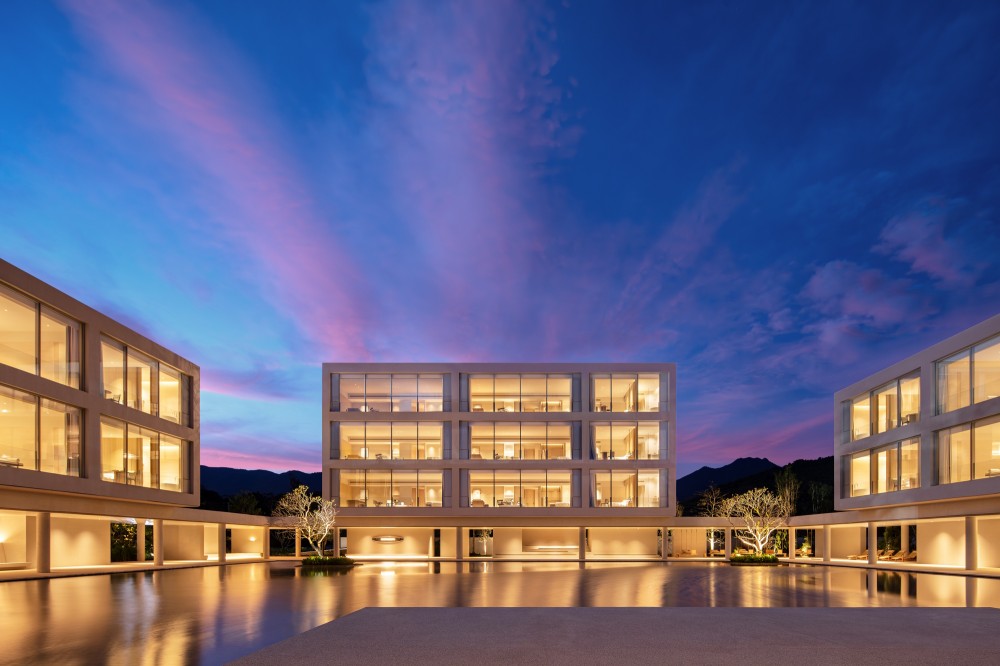
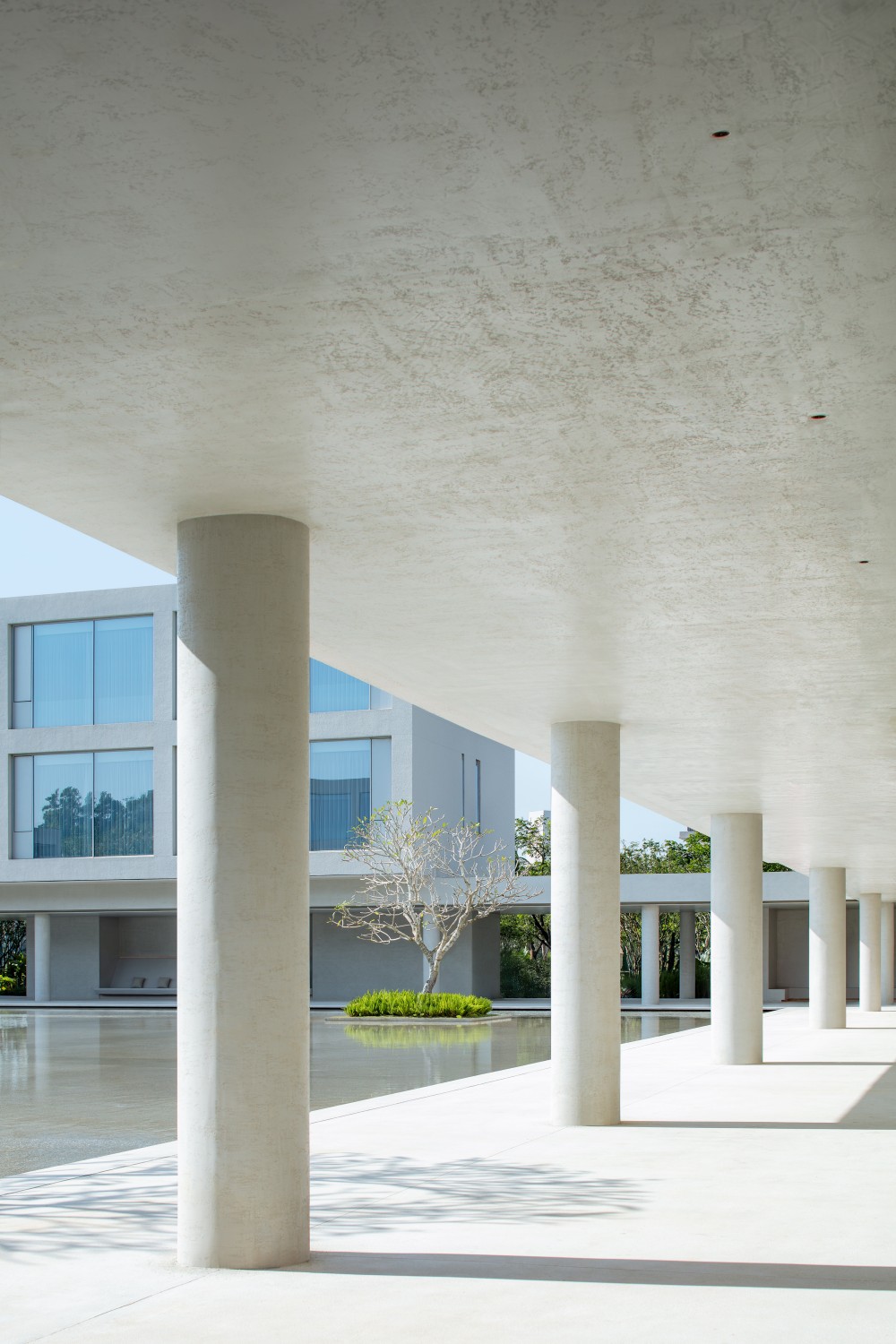
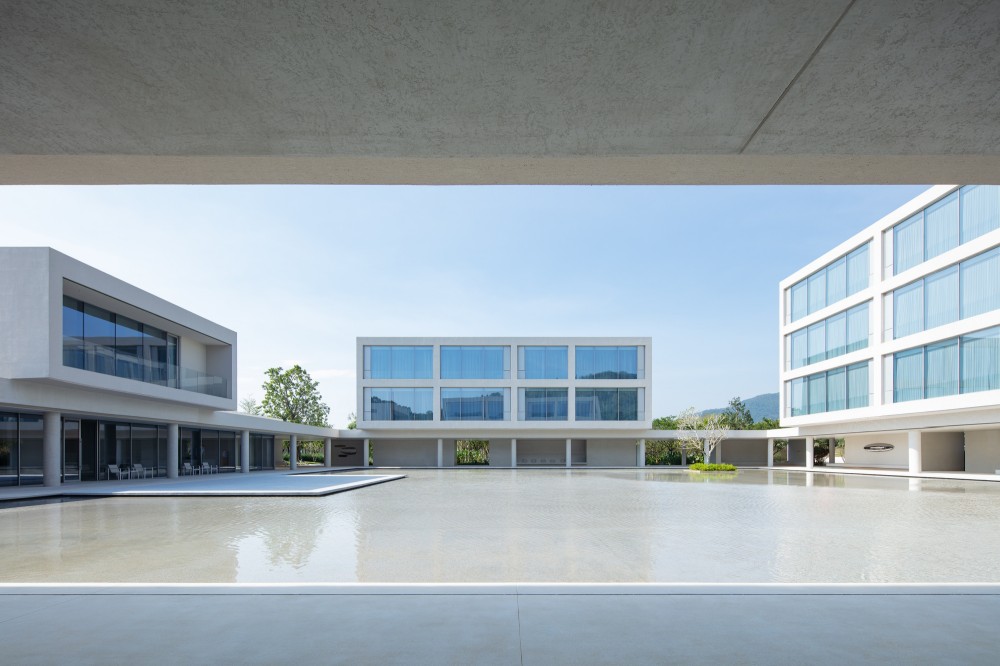
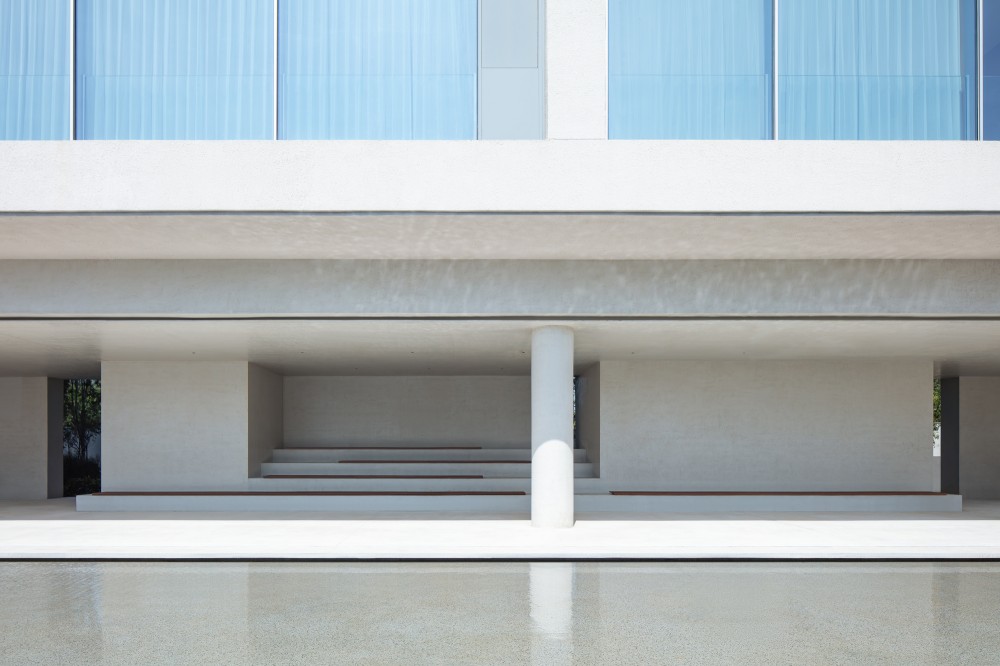
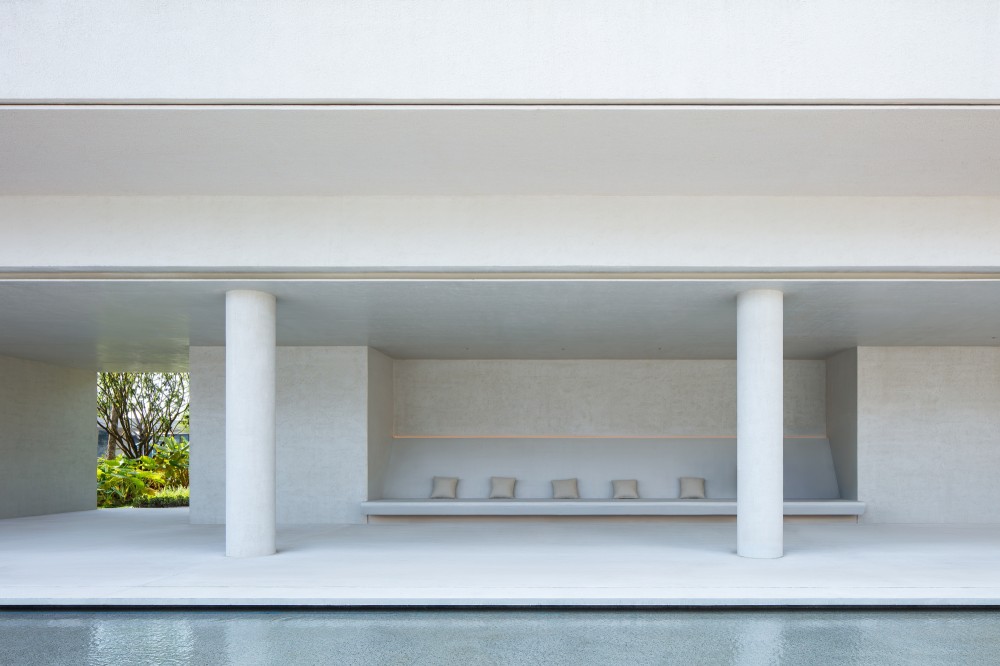
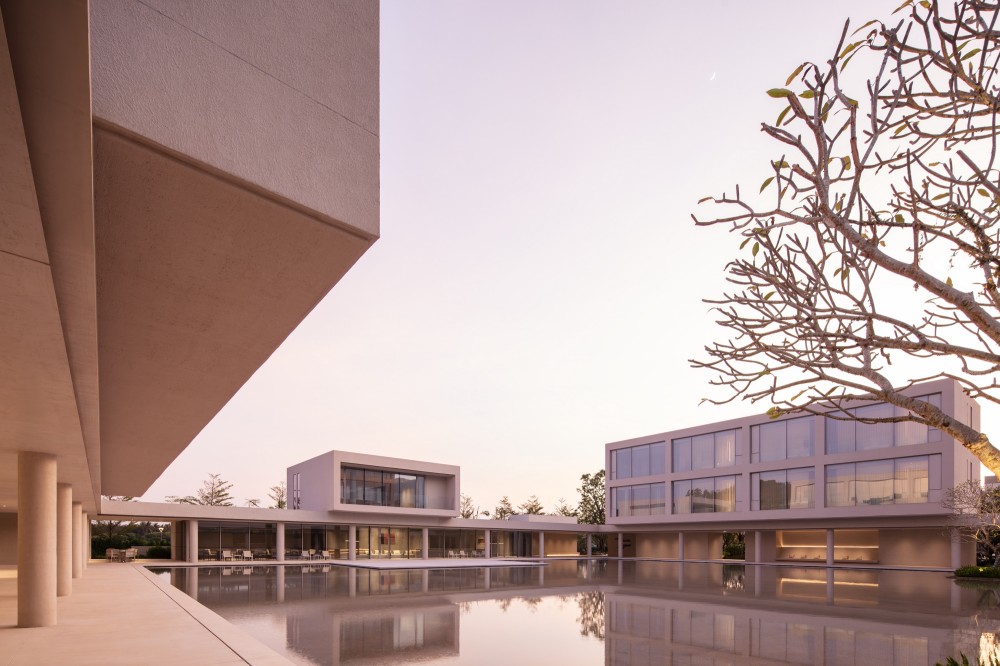
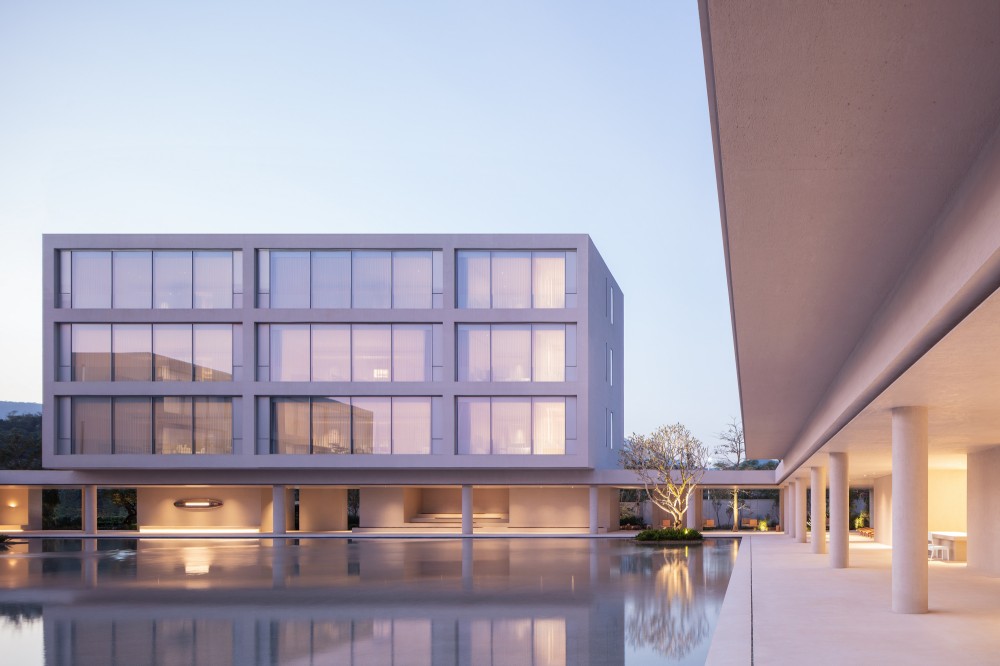
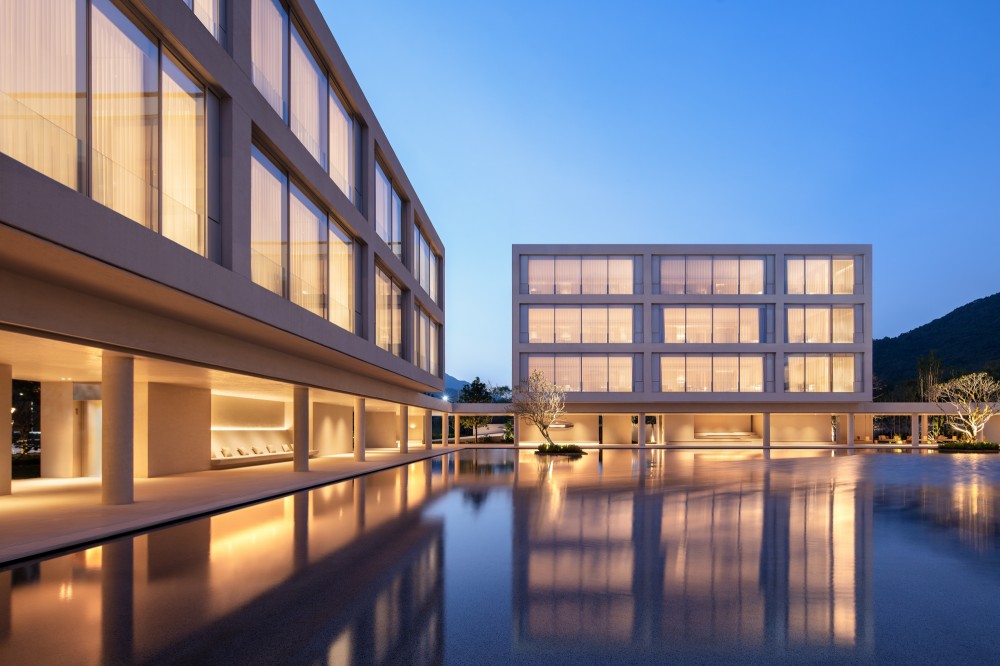
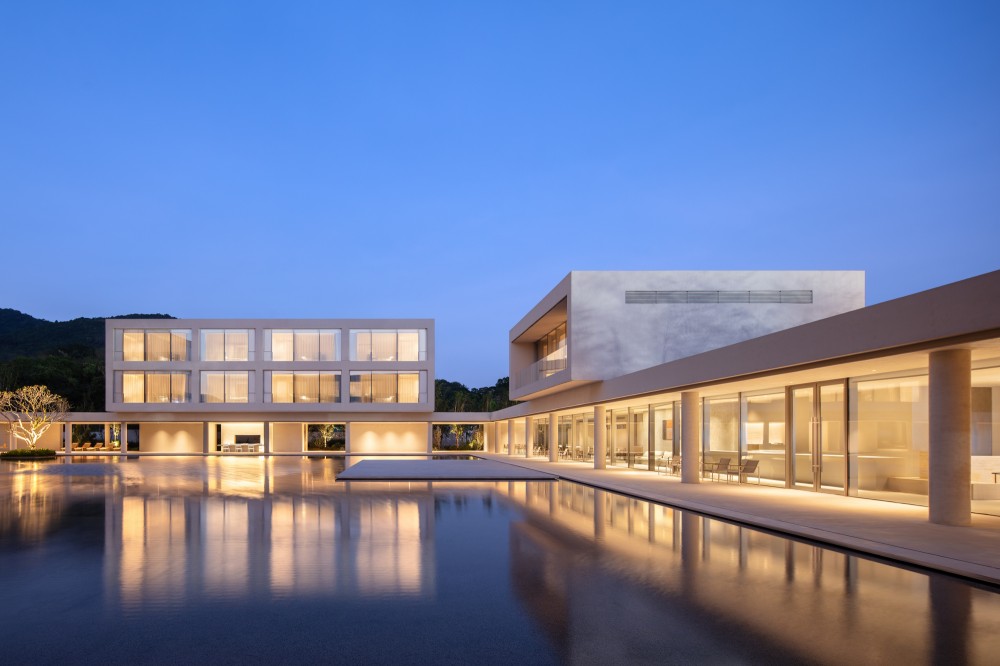
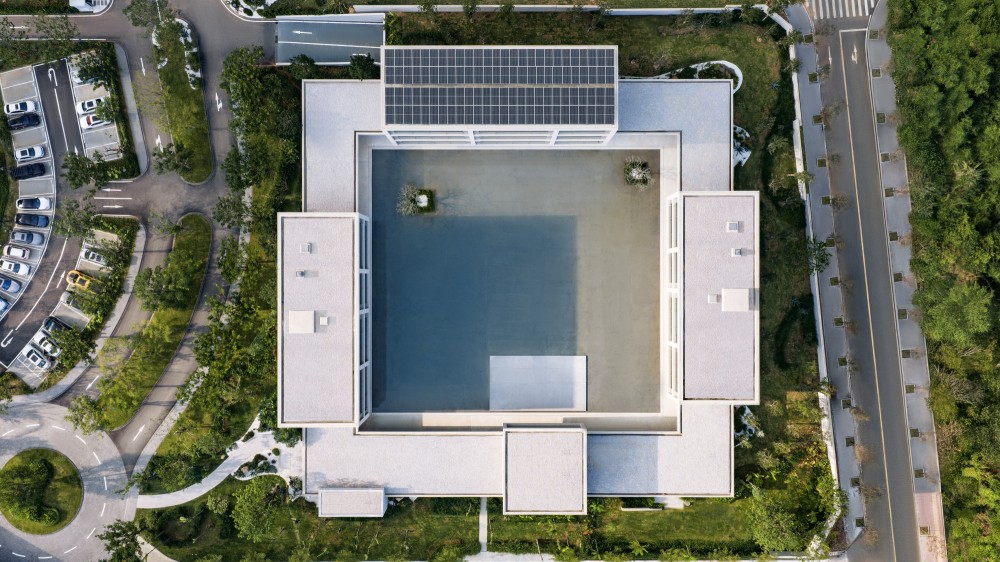
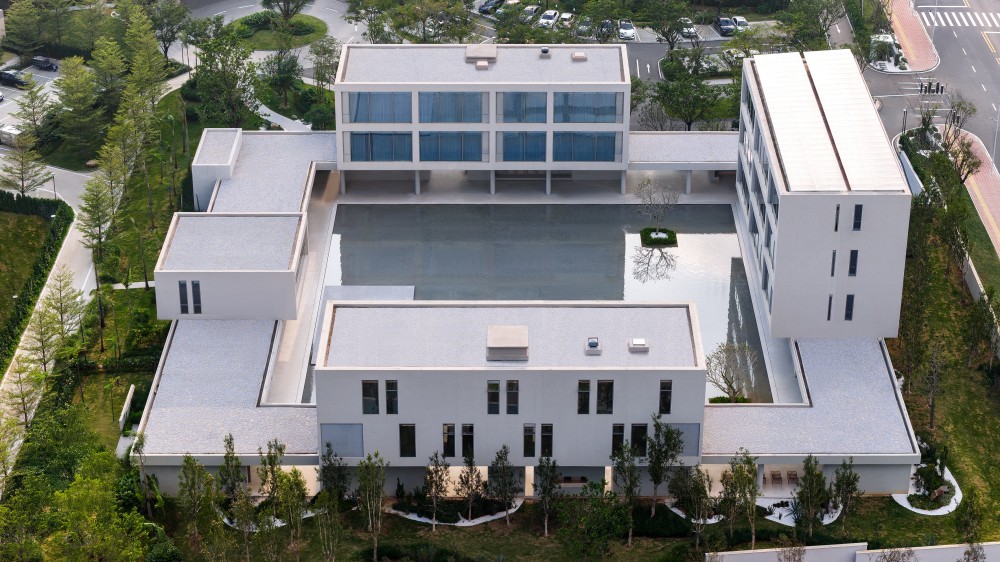
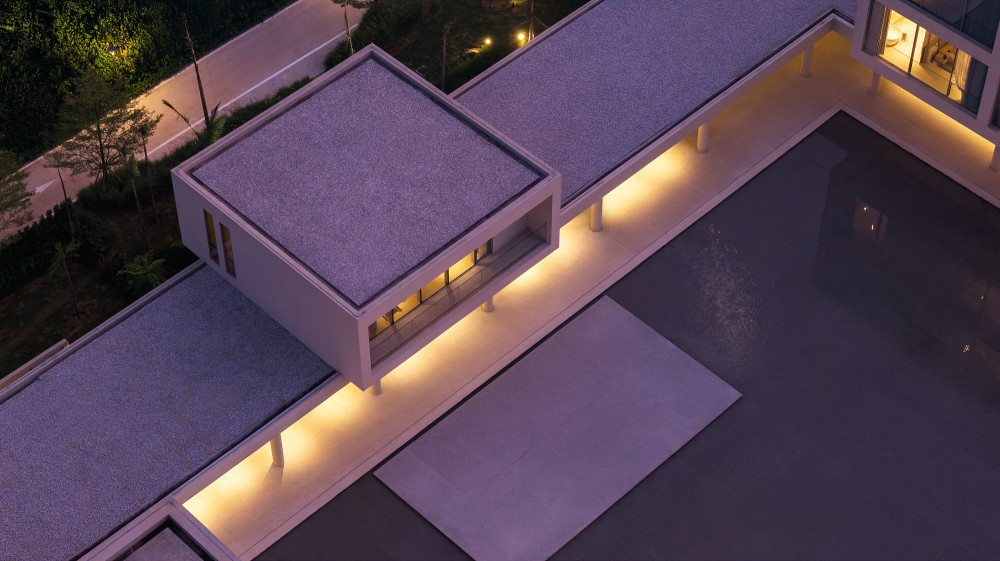
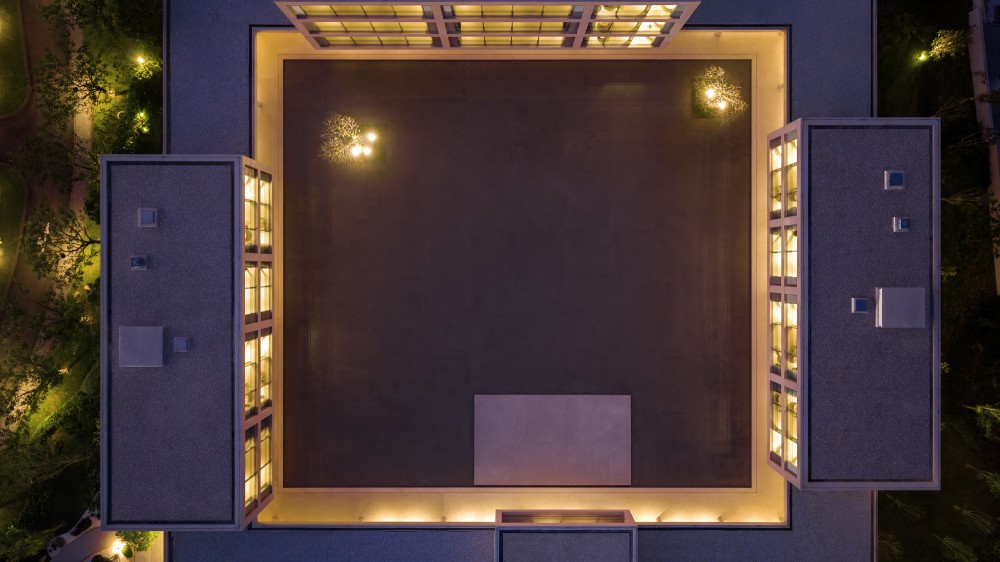
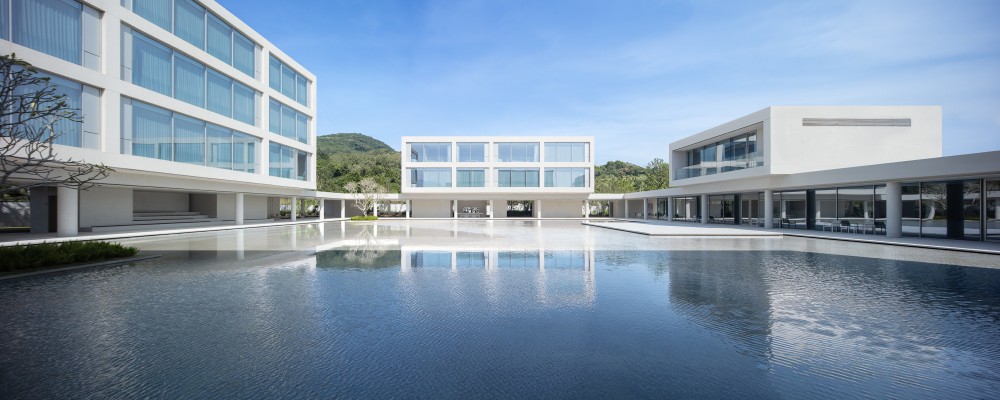
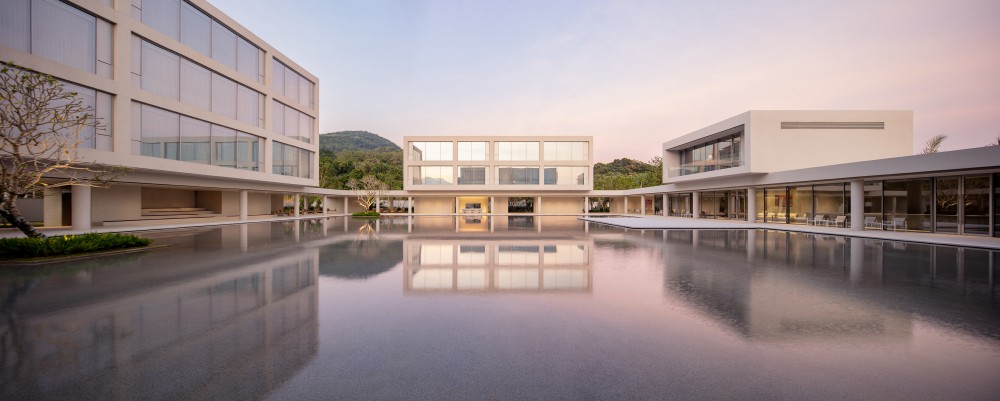
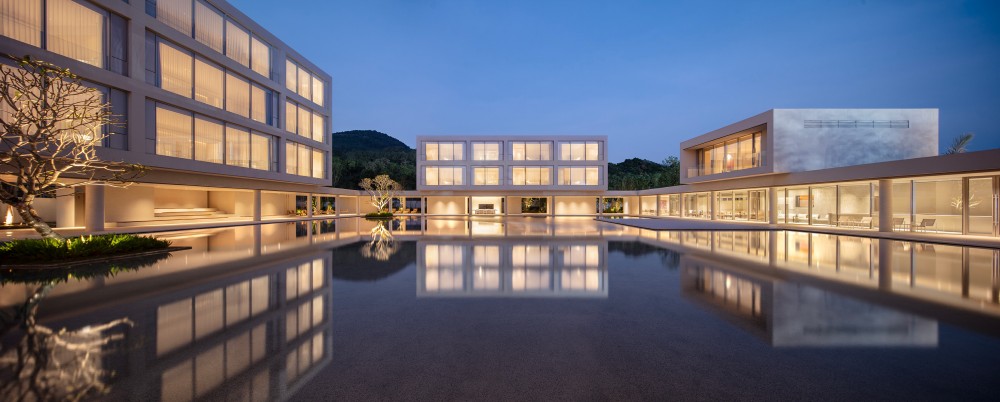
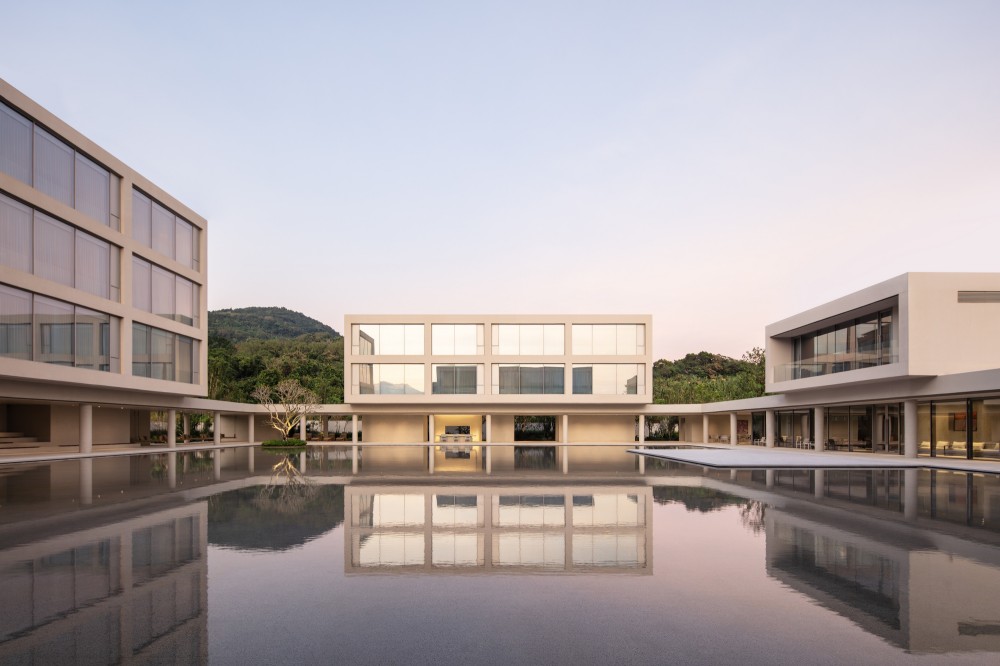
The 41 × 45 meter water courtyard at the centre is conceived as the spatial core of the entire complex. The ground floor surrounding the pool is elevated to form a continuous colonnaded promenade that encircles the water. The design strategy choreographs a circulation path: the hotel lobby, casual dining area, restrooms, elevator cores, and other functions are distributed along the perimeter of the corridor, articulated by a sequence of semi-outdoor resting zones, including lounge chairs and stepped platforms. Spaces of varying scales allow guests to pause at any moment, choosing a setting that resonates with their shifting moods.
The presence of the pool prevents direct shortcuts between functions, deliberately extending circulation routes and transforming movement into an exploratory experience. Meanwhile, the inward-facing configuration establishes layered visual relationships. Internally, sightlines overlap across the courtyard, producing moments of visual connection that oscillate between intimacy and distance. Externally, framed views emerge between landscape walls and colonnades, drawing the surrounding greenery inwards so that nature permeates every corner of the space. In this way, the architecture is conceived not as a static object but as a dynamic field—one that continuously evolves over time.
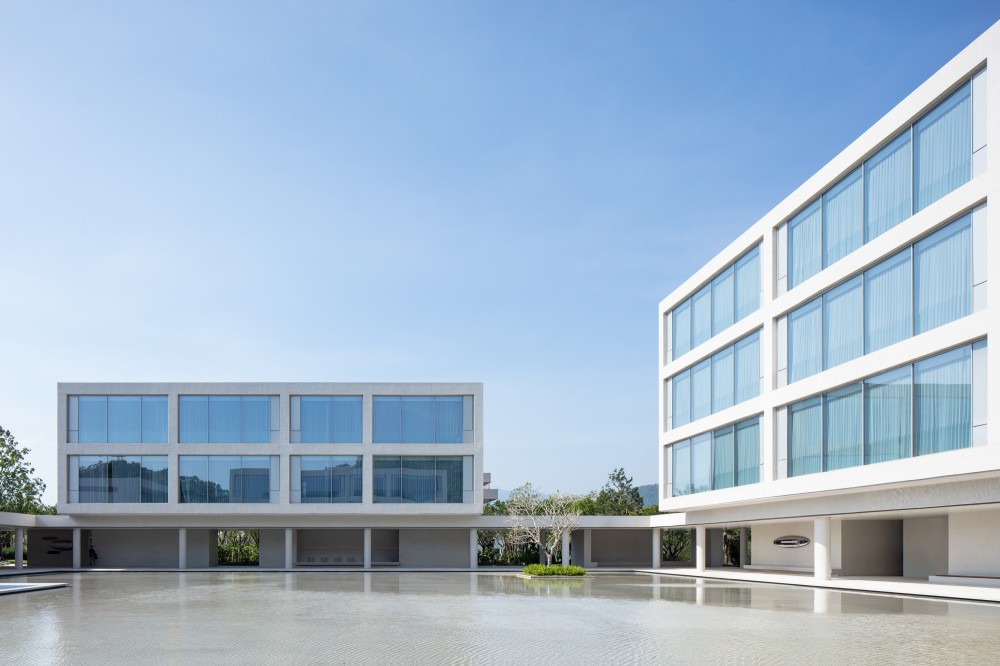
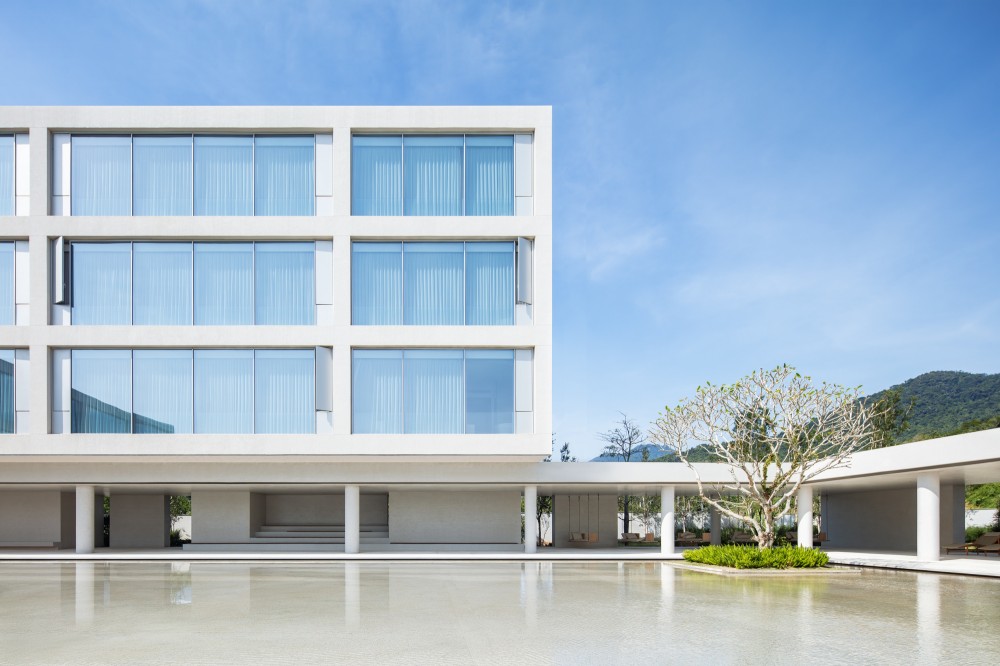
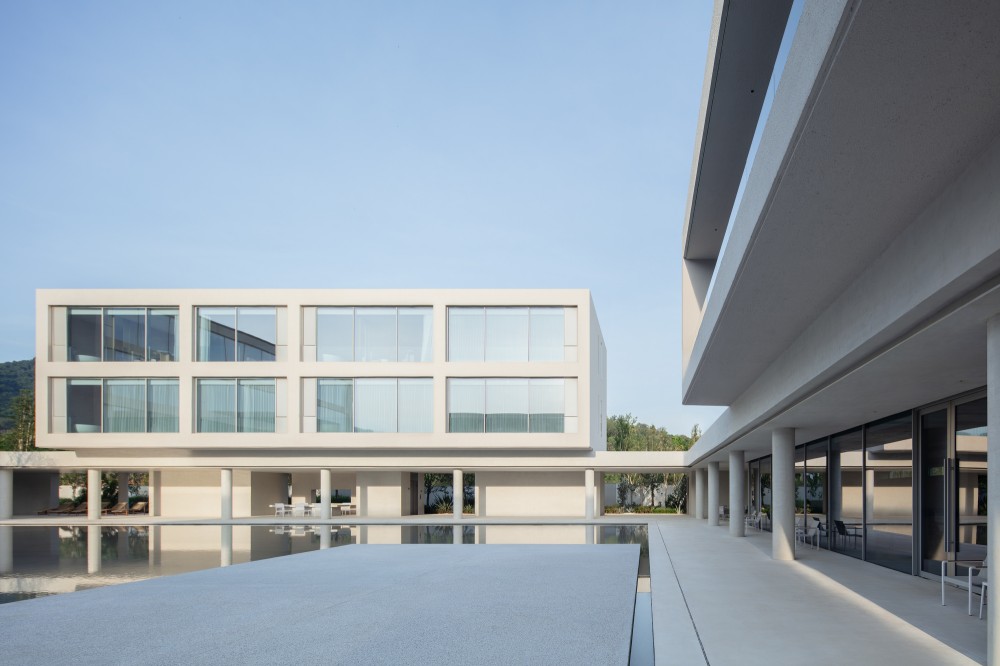
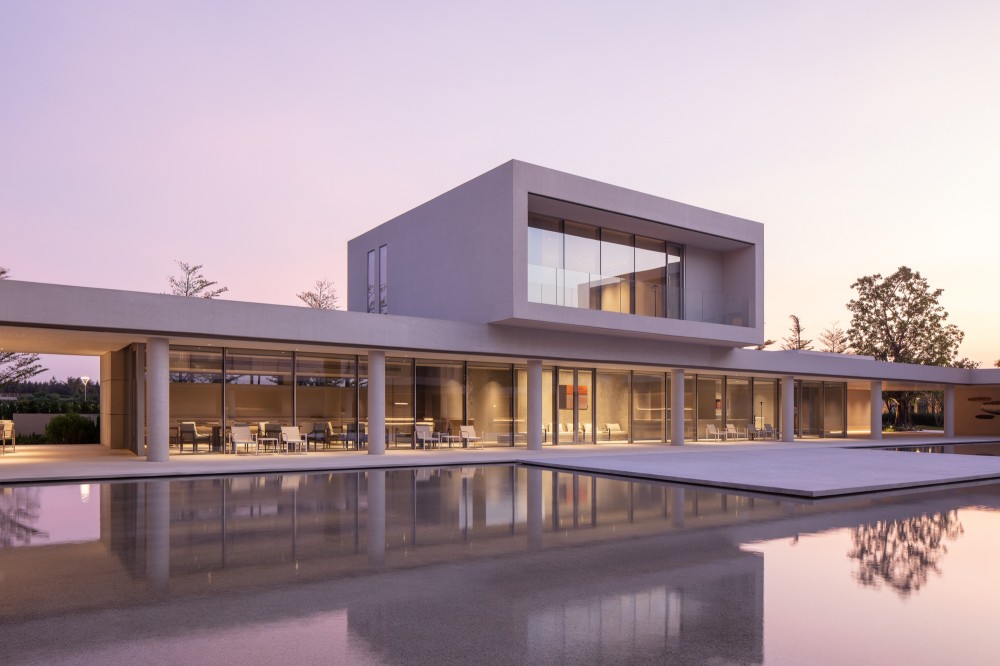
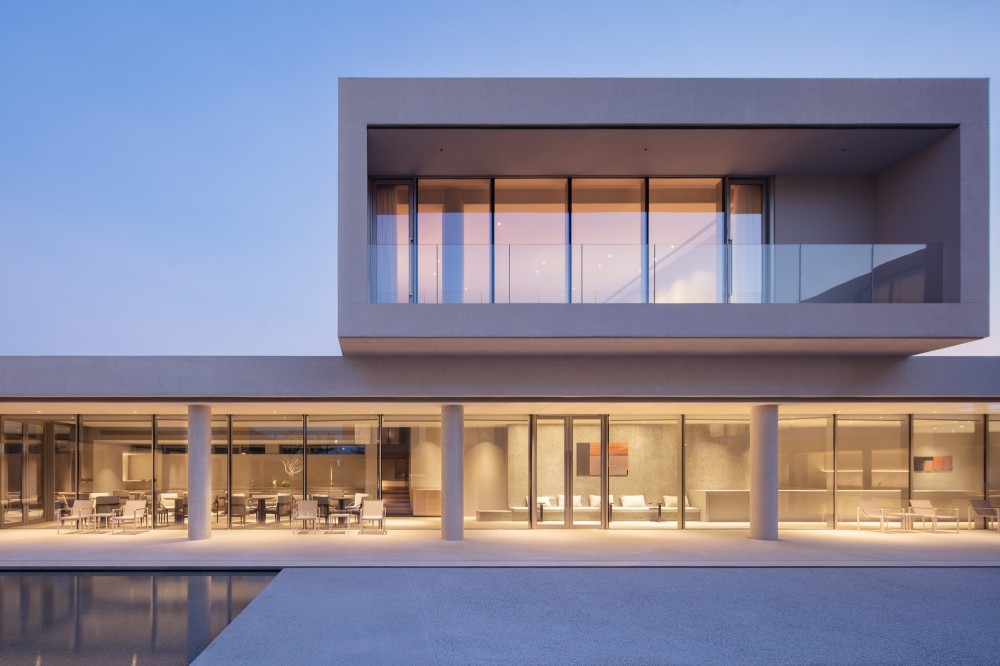
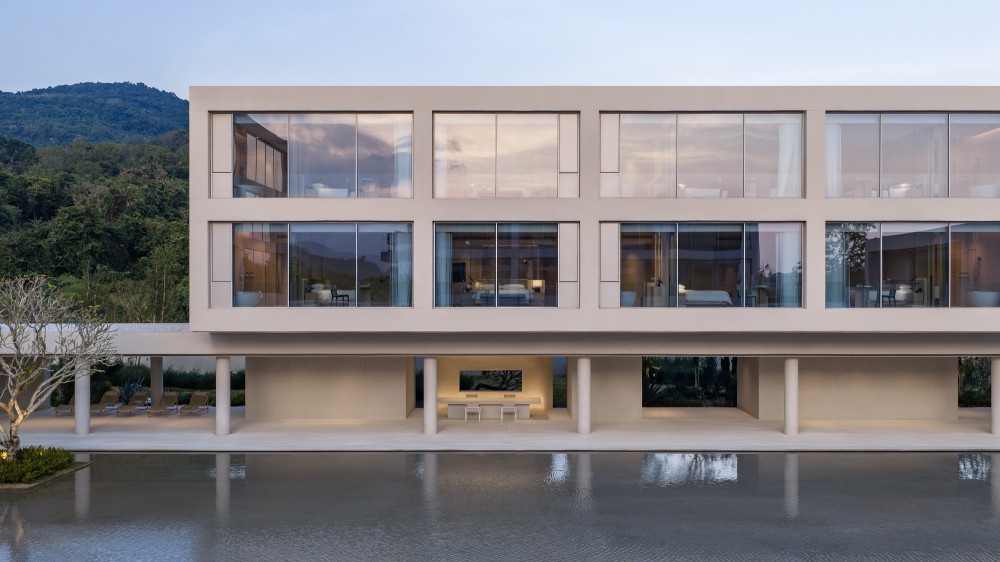
Above the elevated colonnade sits a series of distinct volumes accommodating the public lounge and guest rooms. Rather than consolidating the 25 rooms into a single block, they are divided into three separate masses positioned along the east, west and north edges of the courtyard. On the south side, a smaller public lounge volume is introduced, strategically opening up the composition and mitigating the sense of enclosure created by the courtyard layout. Each volume is designed with cantilevered ends, creating a perception of lightness, as though floating above the water.
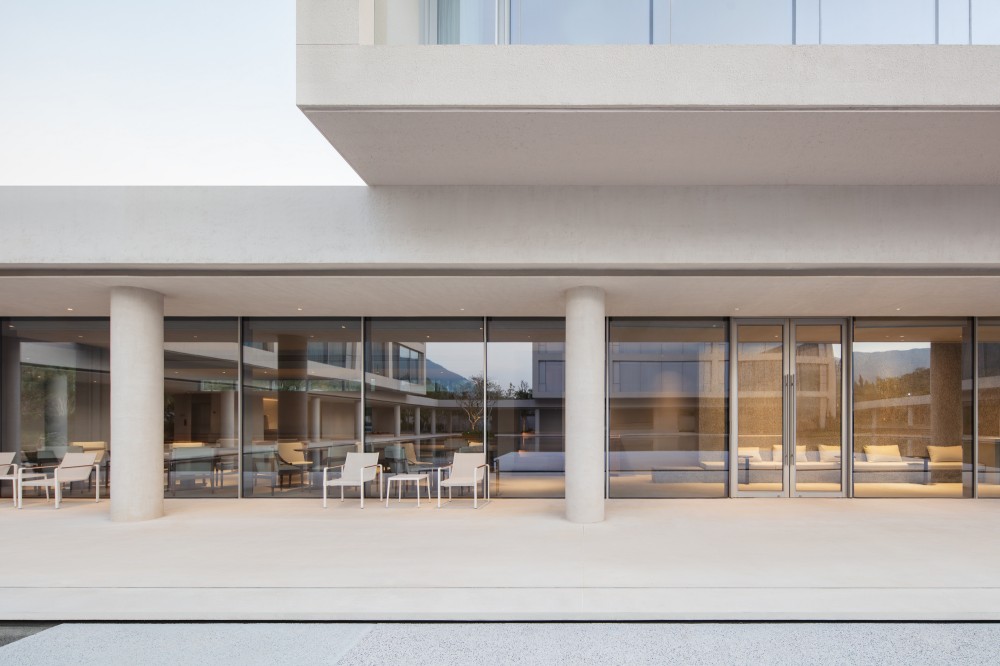
The colonnade and the guestroom volumes together define a clear and sleek architectural silhouette. The facade is composed of two primary materials—light grey paint and silvery aluminium panels—creating a pure and restrained aesthetic.
The hotel’s serene character stands in deliberate contrast to the vibrant atmosphere of the surrounding resort, as though an invisible boundary existed beyond the physical separation. This allows guests returning from surfing to immediately unwind, settle their minds and enjoy a moment of calm.
The entire building is organised around the central water courtyard, forming an introspective spatial composition that frames both mountain and sea vistas. All residential and public spaces are oriented with their backs to the mountains and their fronts to the water, nestled amid the surrounding forests and peaks. The pool in front of them reflects the sky and clouds, blending water and sky into a continuous, ever-present landscape. As one walks along the waterside, the senses gradually awaken to the rhythms of nature, evoking a more nuanced perception—the coarse textures of the materials convey the warmth of sunlight, while the breeze skimming over the water brings a refreshing coolness. Visitors engage with the space not only through sight but through a full spectrum of sensory experiences, perceiving the passage of time as it unfolds within the environment. On special occasions, the pool can be drained to create a temporary venue for art exhibitions, performances, and other cultural events, transforming the courtyard from a static landscape into a dynamic community living room.
Interior Space
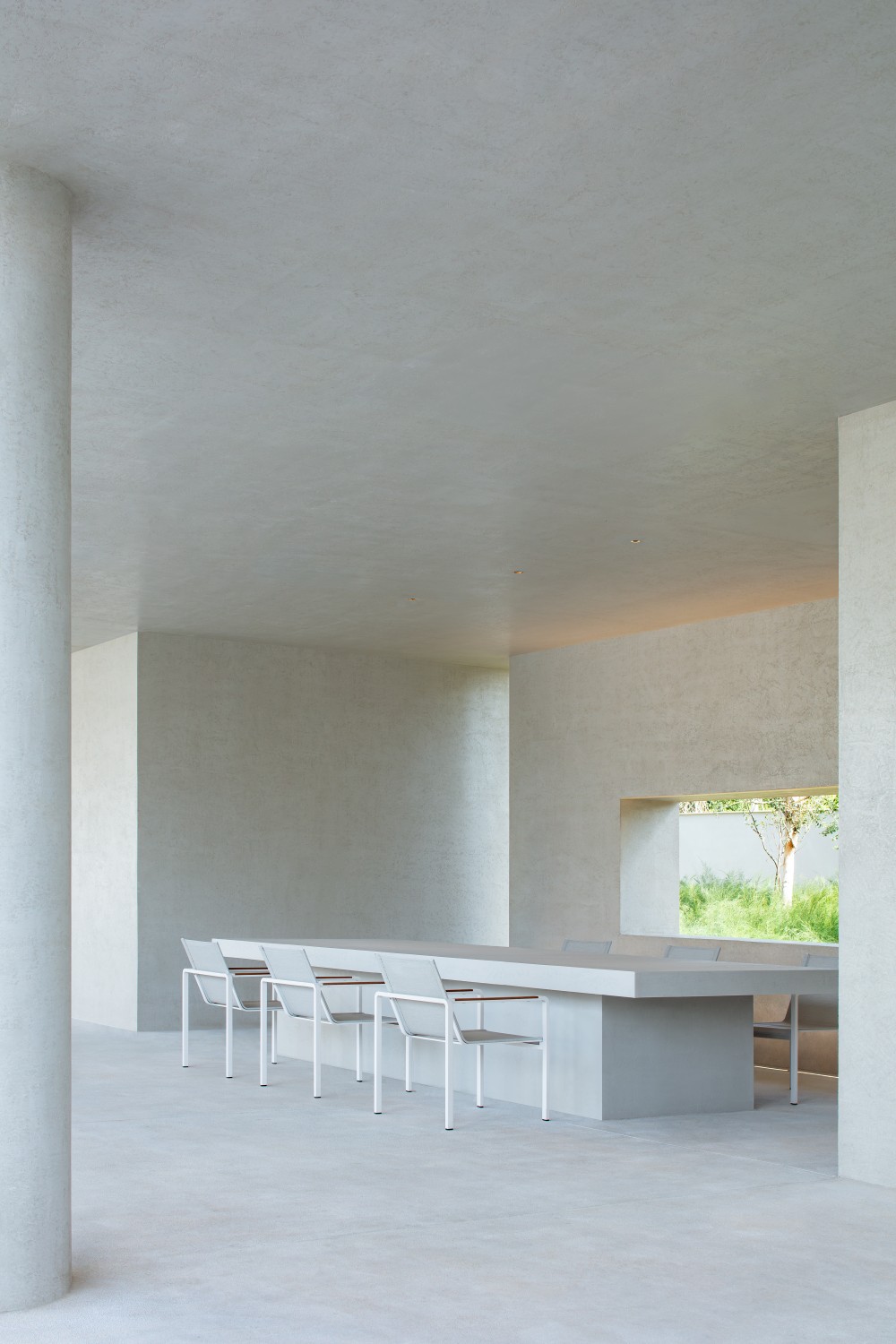
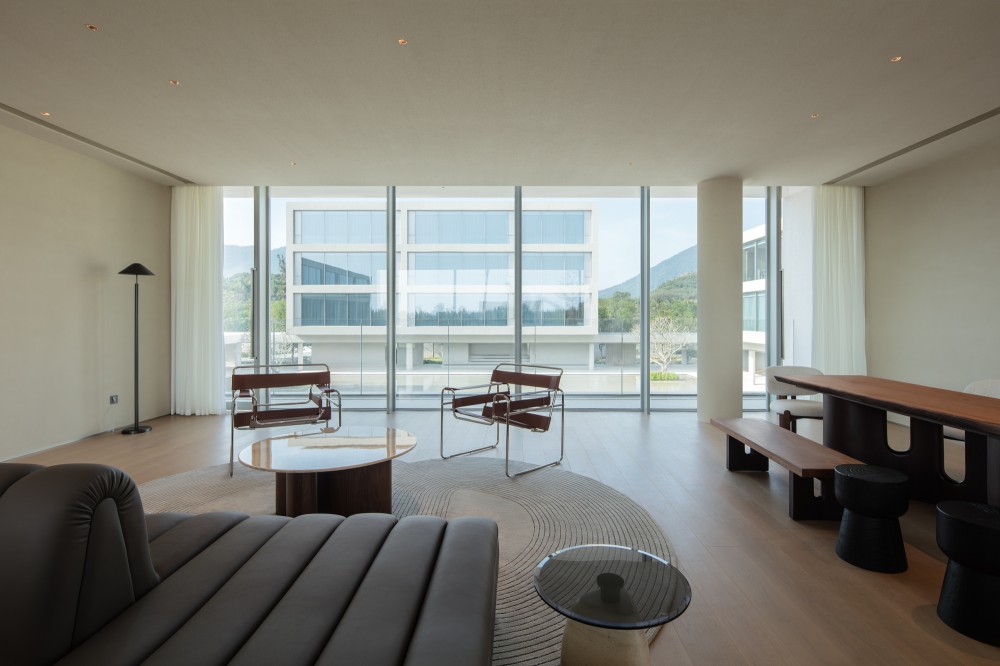
The main public areas on the ground floor are the hotel reception and the public dining area. The glass facade facing the water creates a fully transparent and inviting environment. The reception is integrated with the coffee bar of the dining area, offering an intimate and welcoming experience—guests can check in while casually sitting on nearby benches, enjoying the courtyard view. Materials used for the floor and ceiling of the outdoor corridor are seamlessly extended into the interior, blurring the boundaries between inside and out, allowing the vitality of the water courtyard to infuse the indoor space.
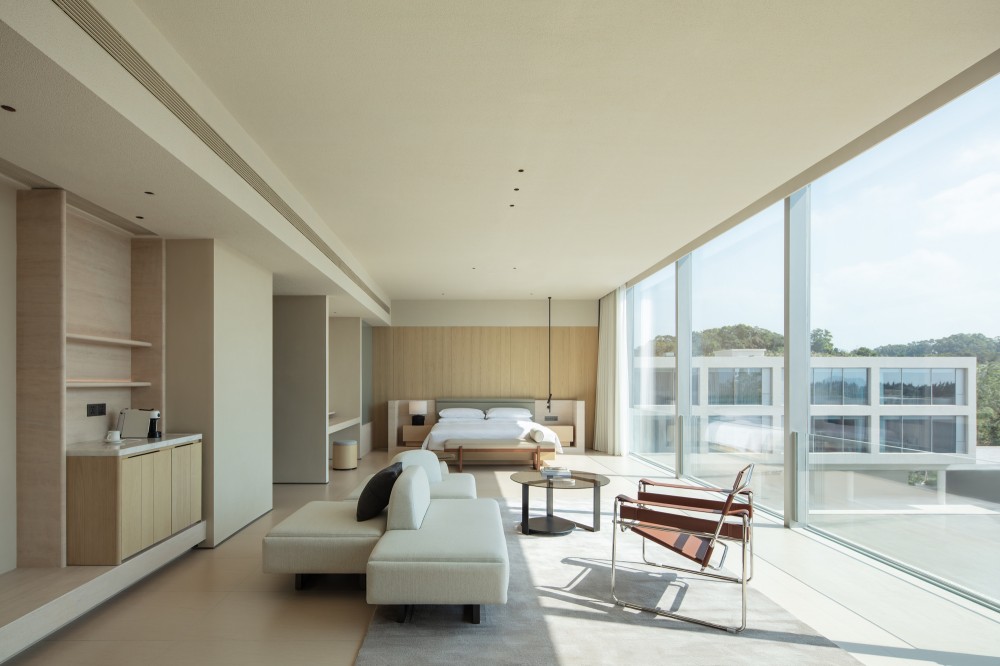
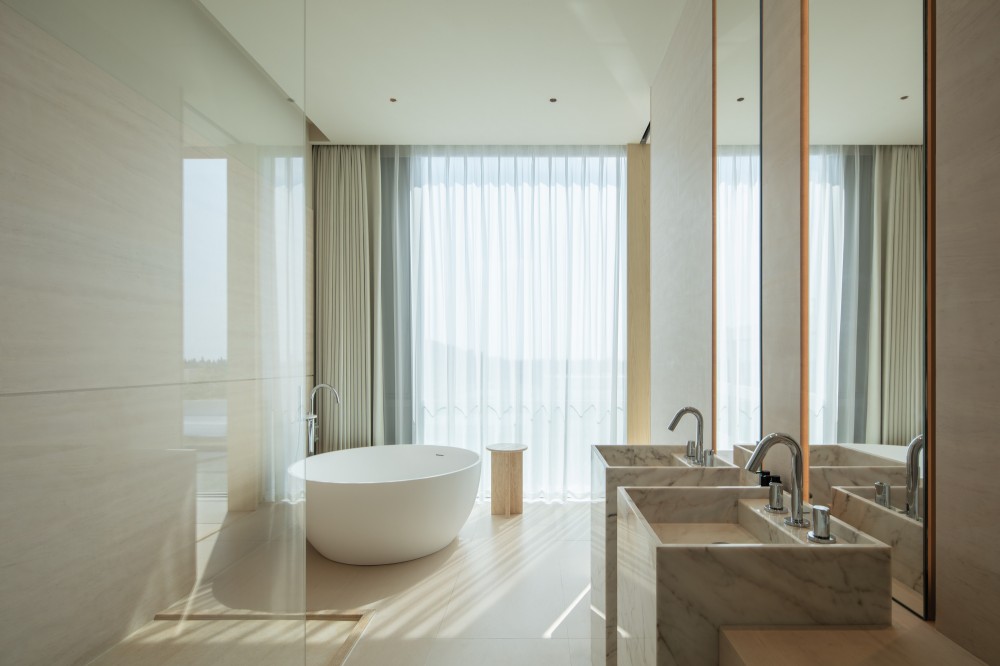
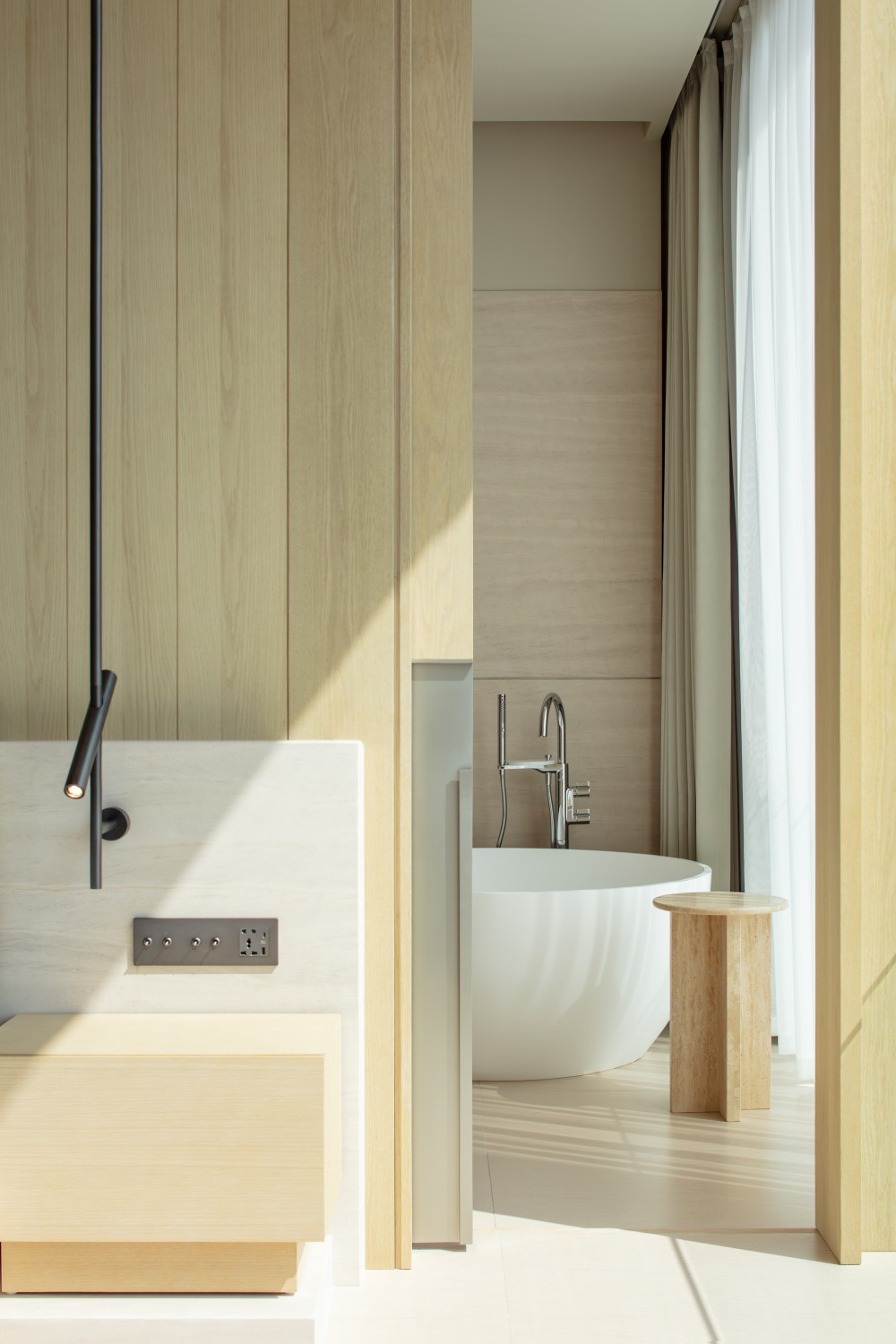
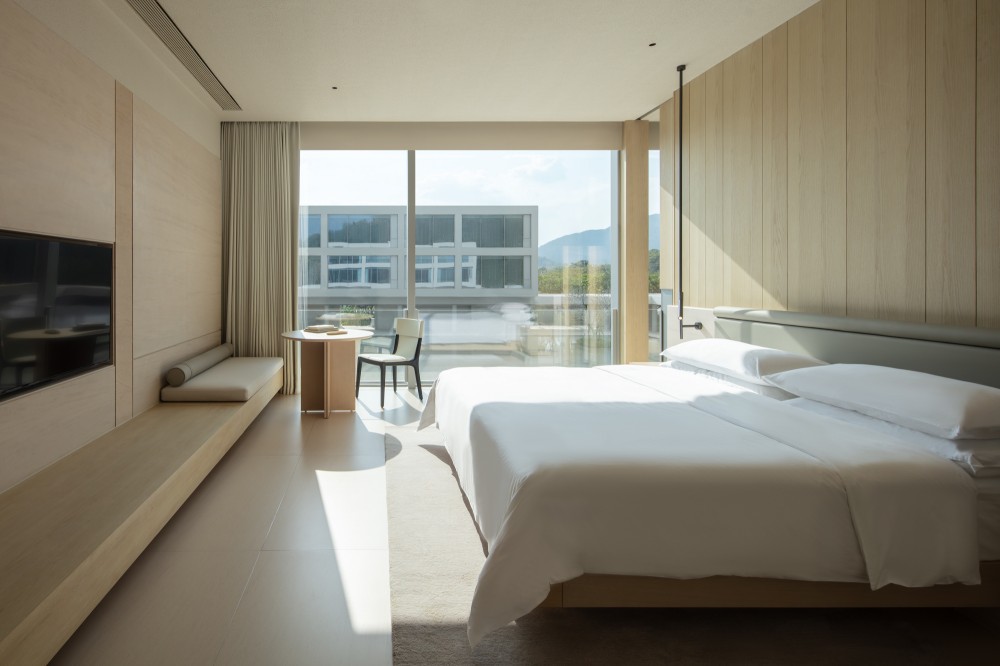
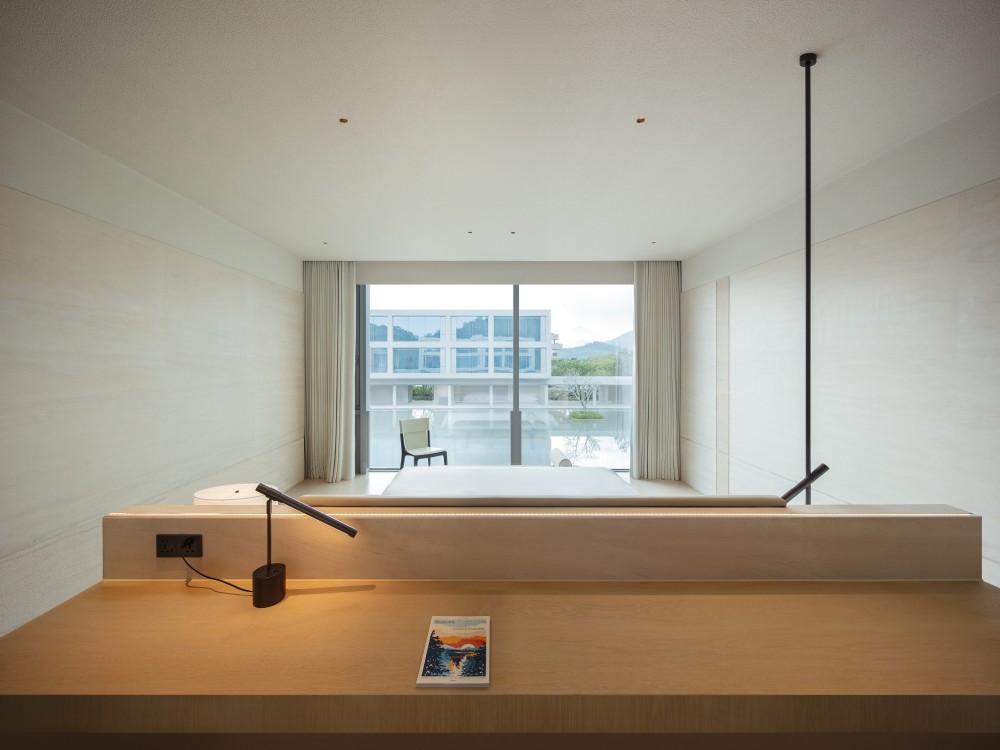
The guestrooms on the second to fourth floors are organised into three typologies. Each room has a full-height glazing facing the water courtyard, offering uninterrupted views. Partitions are minimised wherever possible, letting different living scenarios flow naturally into one another, reinforcing the building’s spatial consequence and character. The interiors of guestrooms are rendered in soft, neutral tones, with natural, warm materials such as matte oak, fossilized wood, and textured finishes. The design language is minimalist and restrained, expressing luxury not through expensive materials, but through thoughtful details and tactile quality—conveying a lifestyle that transcends mere materiality.
Conclusion
Yuyue Artia Hotel is a design that begins with “negative space.” During the design process, the internal experience was prioritised over the exterior form, which allows the architecture to unfold as a landscape that extends into daily life. While the spatial narrative responds to the site environment, it also seeks to engage the inner world of its occupants—transforming living into a de-architecturalisation experience, one where sensory perception evokes emotional resonance.