




Project Background
The author’s room Hotel project is located in Aranya Jiulong Lake, Guangzhou, conceived as a hybrid cultural space developed for the cultural brand naive IMAGINIST. The project integrates a bookstore, café and light dining, and accommodation into a single,
cohesive destination.
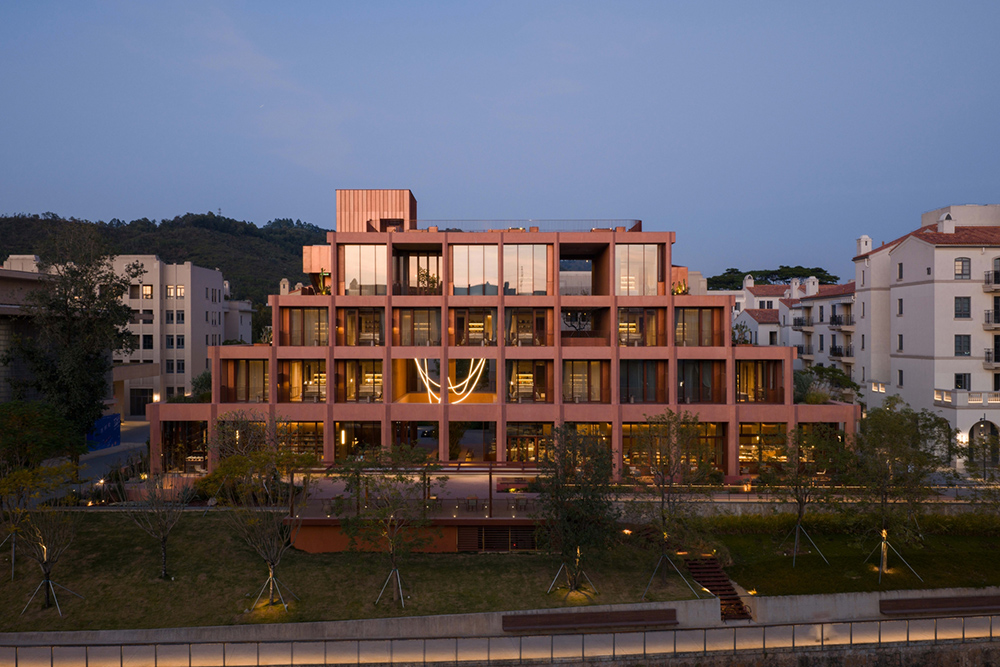
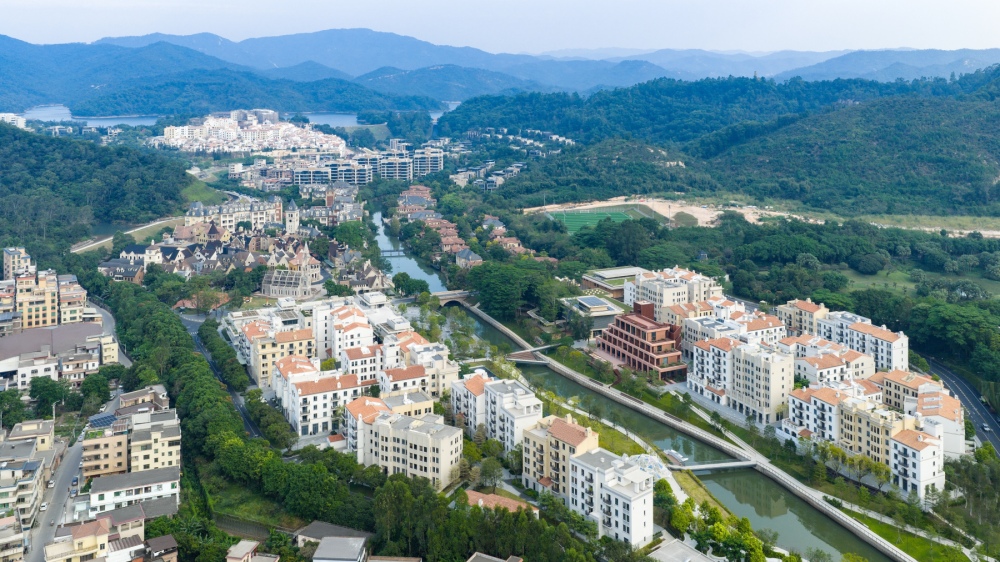
Jiulong Lake is a one-hour drive from downtown Guangzhou and is surrounded by 1.67 km² of pristine mountain forest and lake landscapes. The building is situated on the eastern riverside of the town, backed by expansive views of mountains and the lake, while remaining adjacent to the community art museum and canteen.
Within this unique context—where urban vitality and natural serenity coexist—the design seeks to weave local culture into the spatial narrative, creating a cultural environment that is warm and emotive.
Spatial Design and Concept
Starting from Lingnan culture, the initial inspiration is drawn from the Qi Lou of Guangzhou’s old city—a building typology characterised by ground-floor retails and upper-floor residences, connected through a continuous colonnade that integrates commerce, living, and circulation. It’s not only a witness to the prosperous commercial culture of Guangzhou, but also the foundation of residents’ daily lives, and is an epitome of Lingnan local lifestyle.
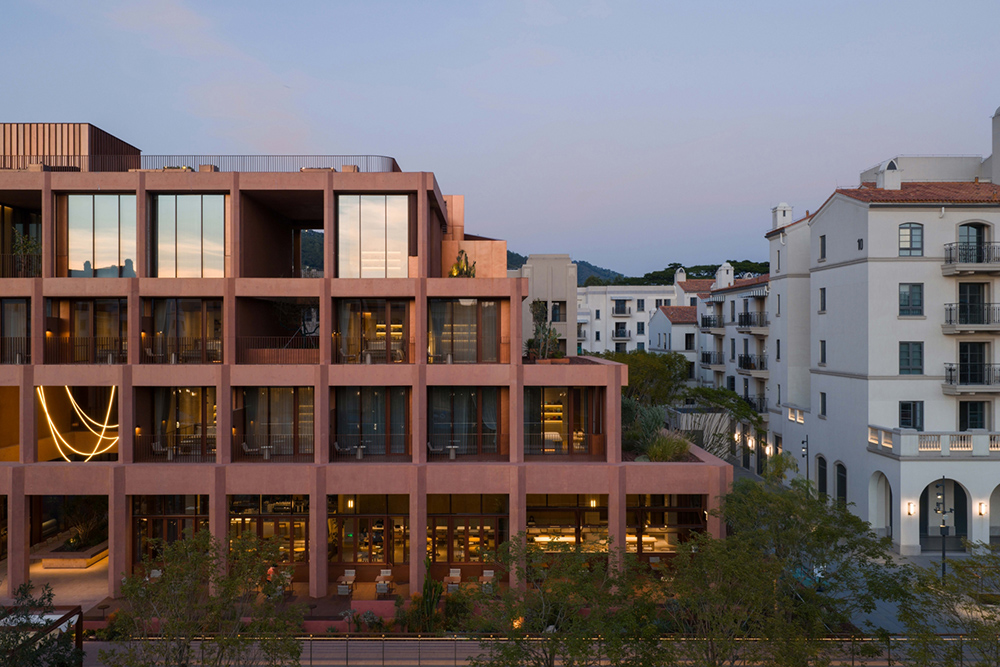
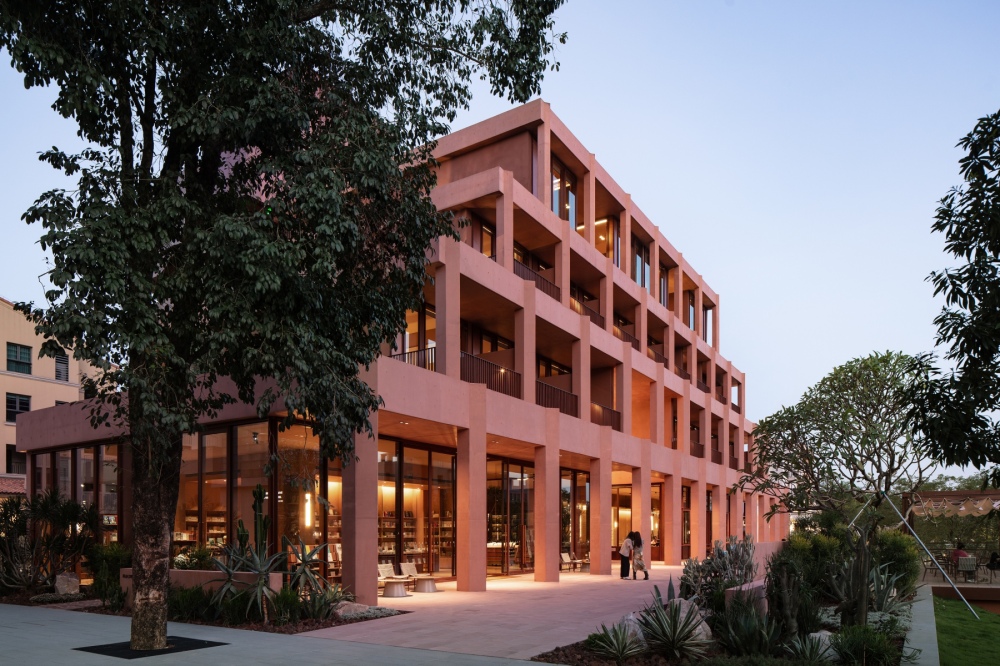
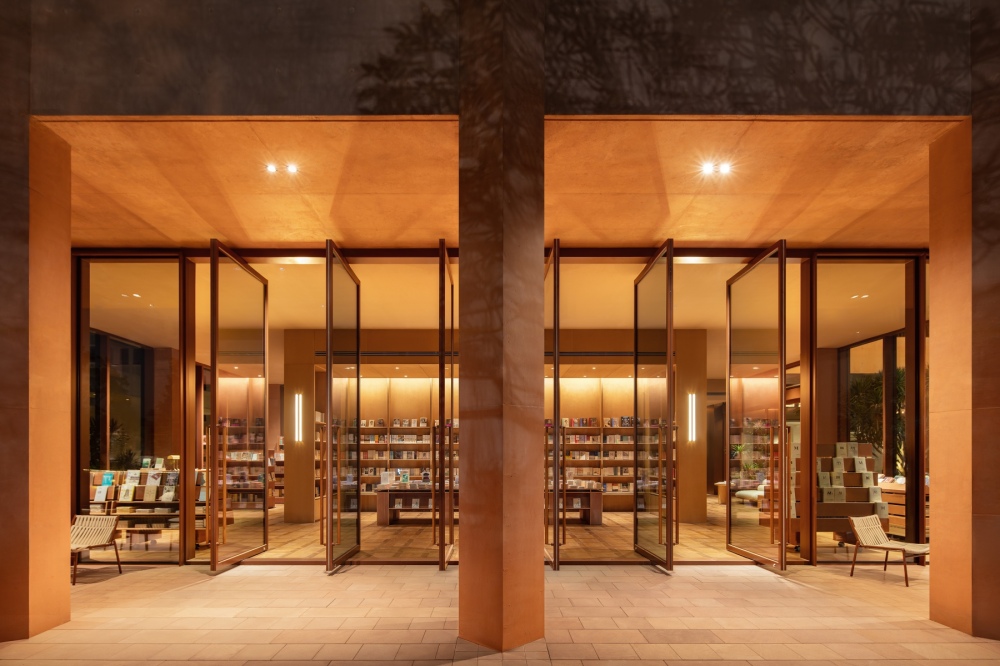
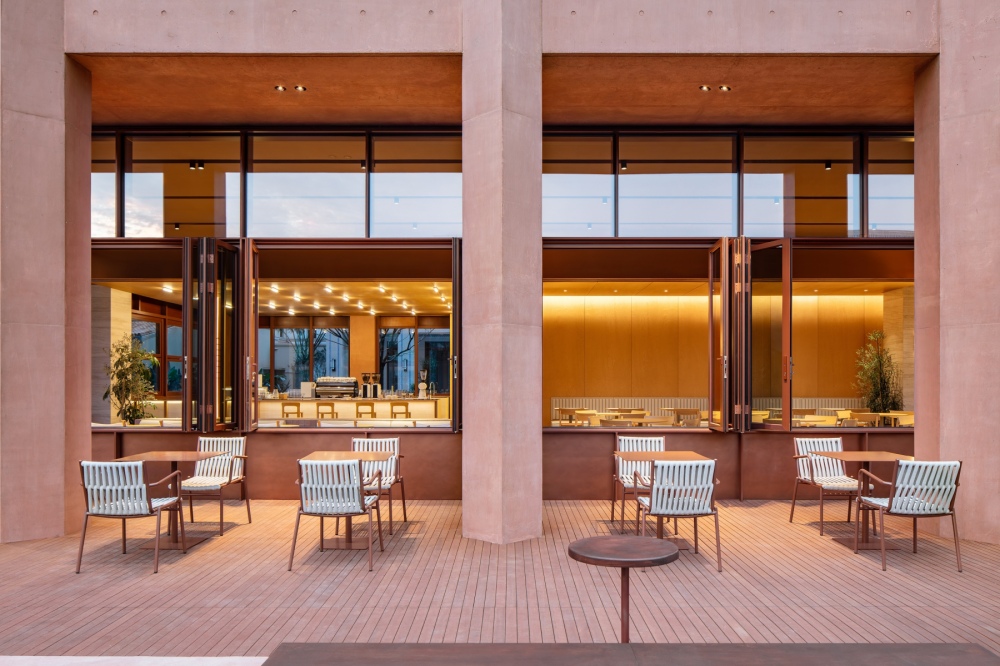
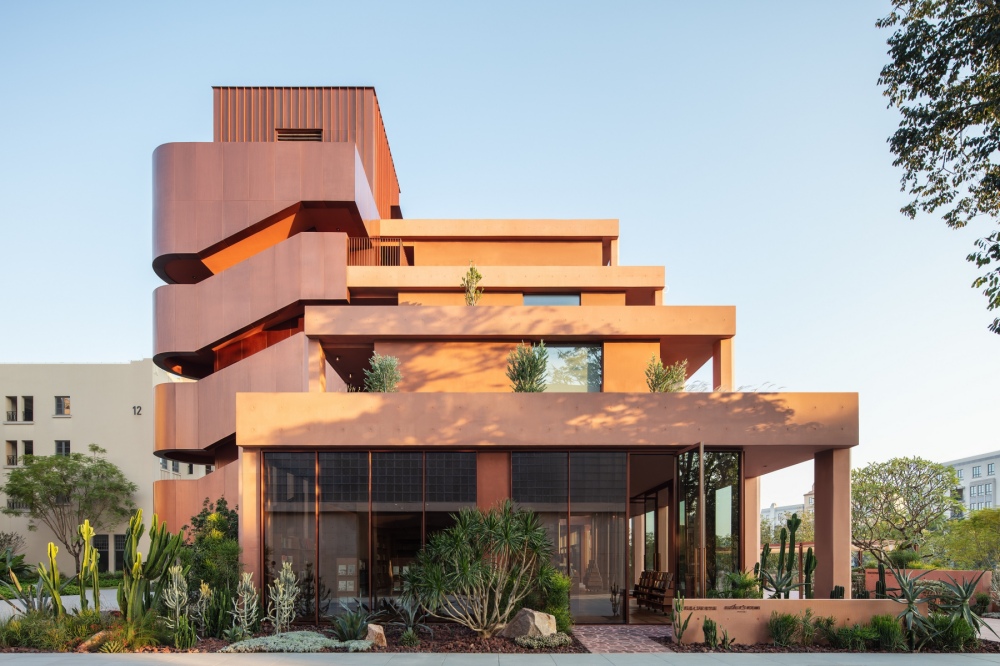
As a multi-functional space, author’s room Hotel adopts the spatial sequence of ground-floor retail and upper-floor residence, recalling the traditional Qi Lou typology. The building is organised into four levels: the ground floor functions as a publicly accessible common space, accommodating a bookstore, café, and light dining, while Levels 2 to 4 are dedicated to hotel guestrooms.
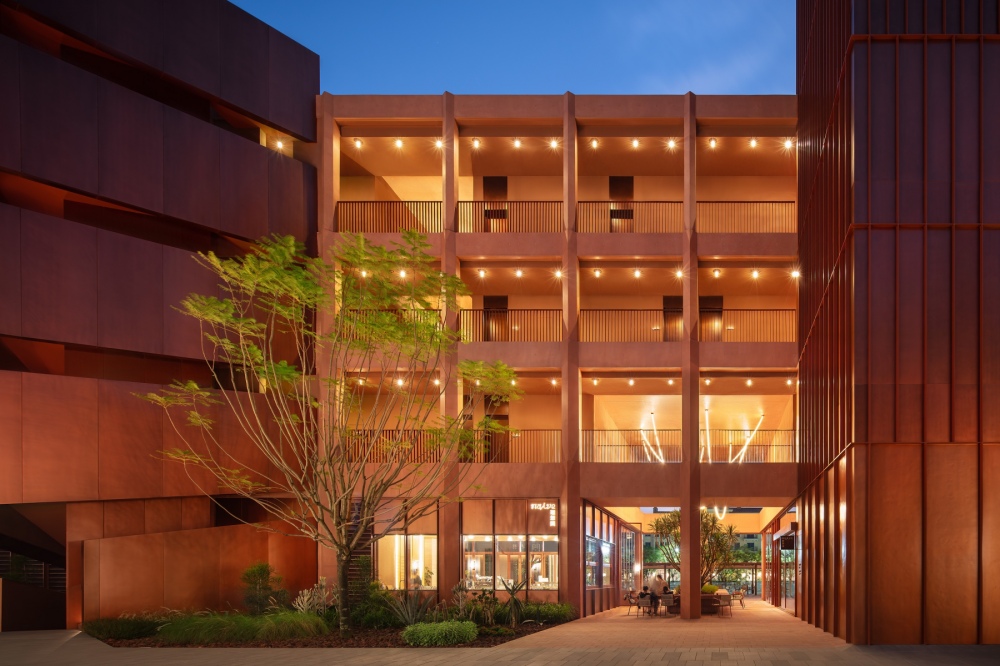
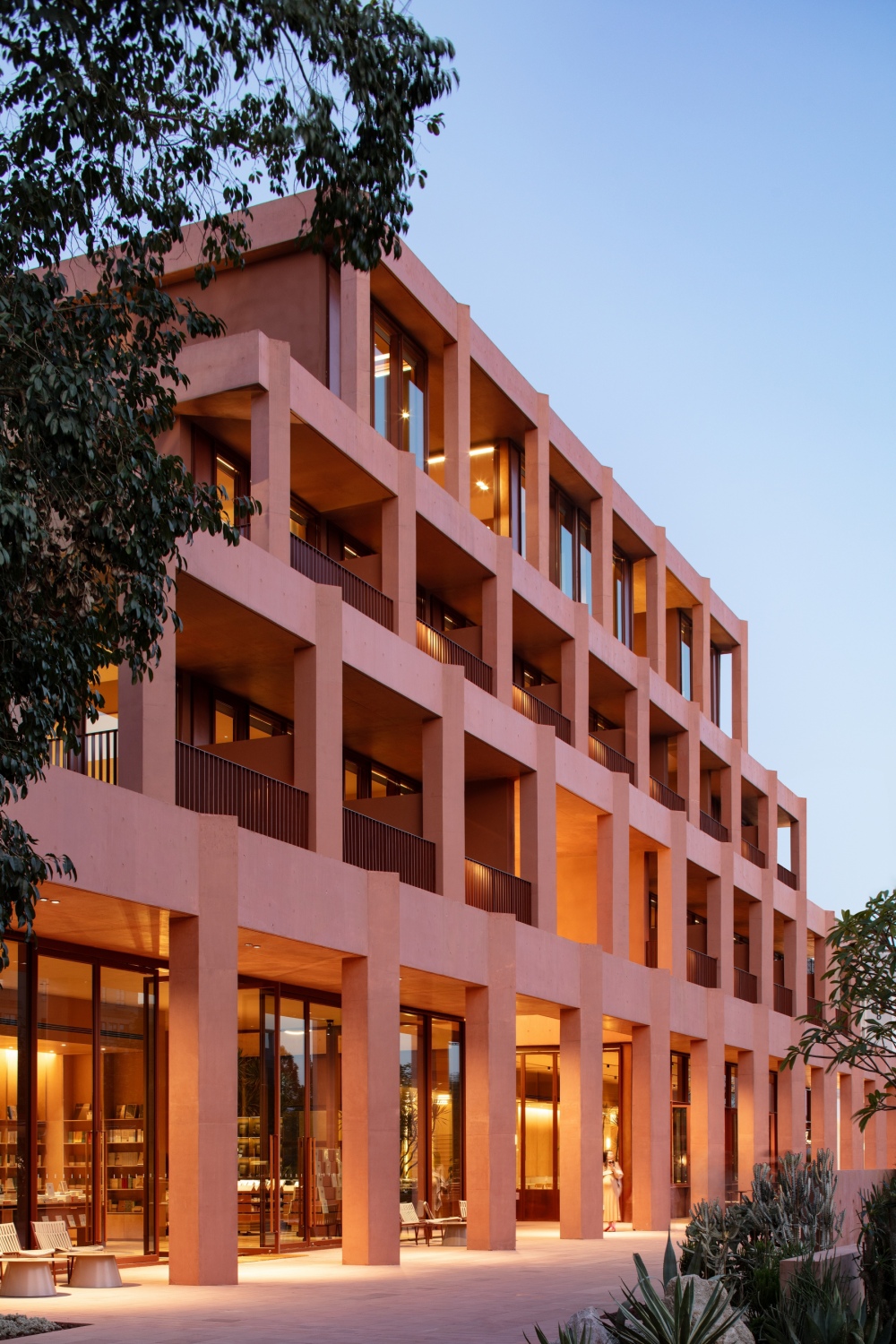
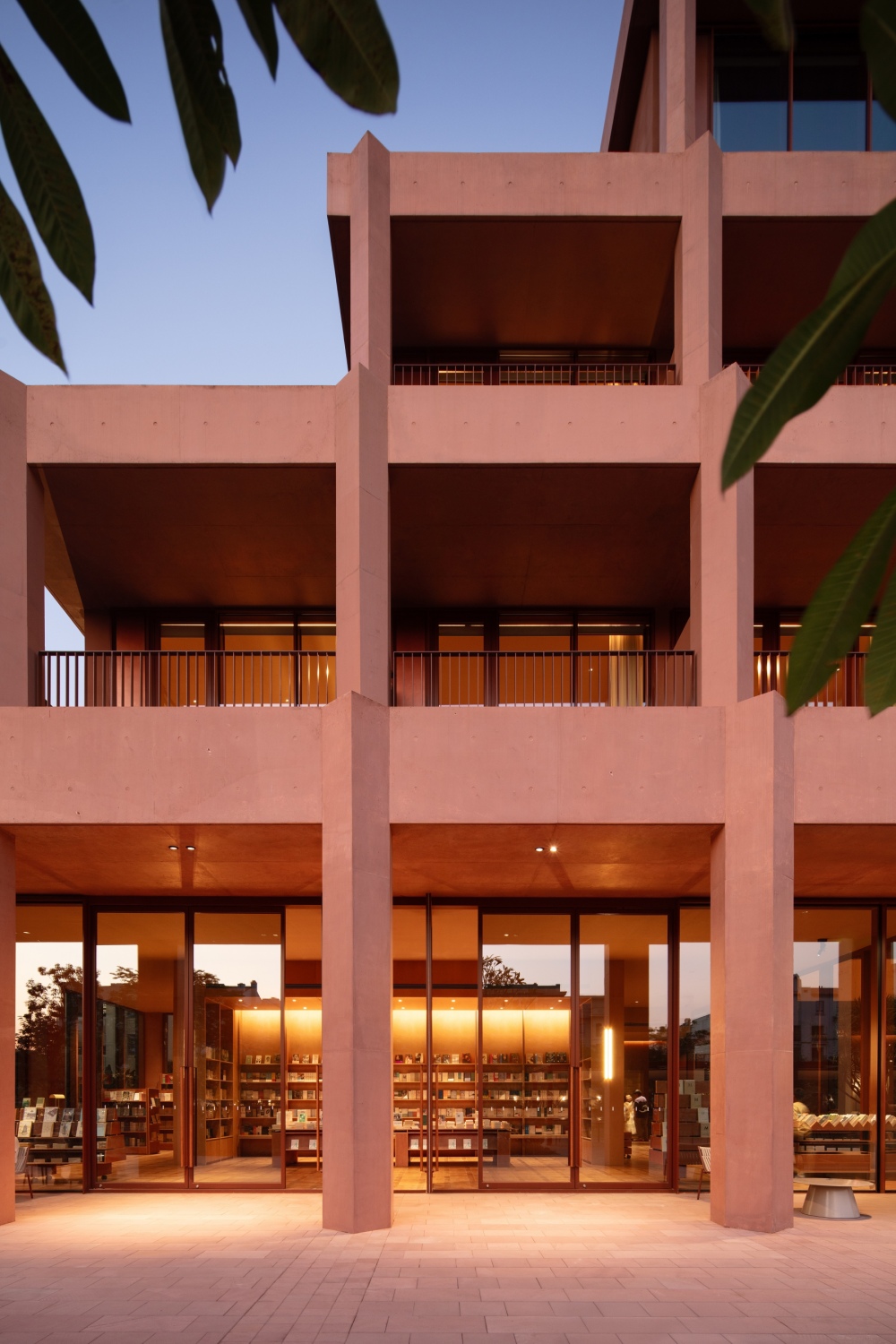
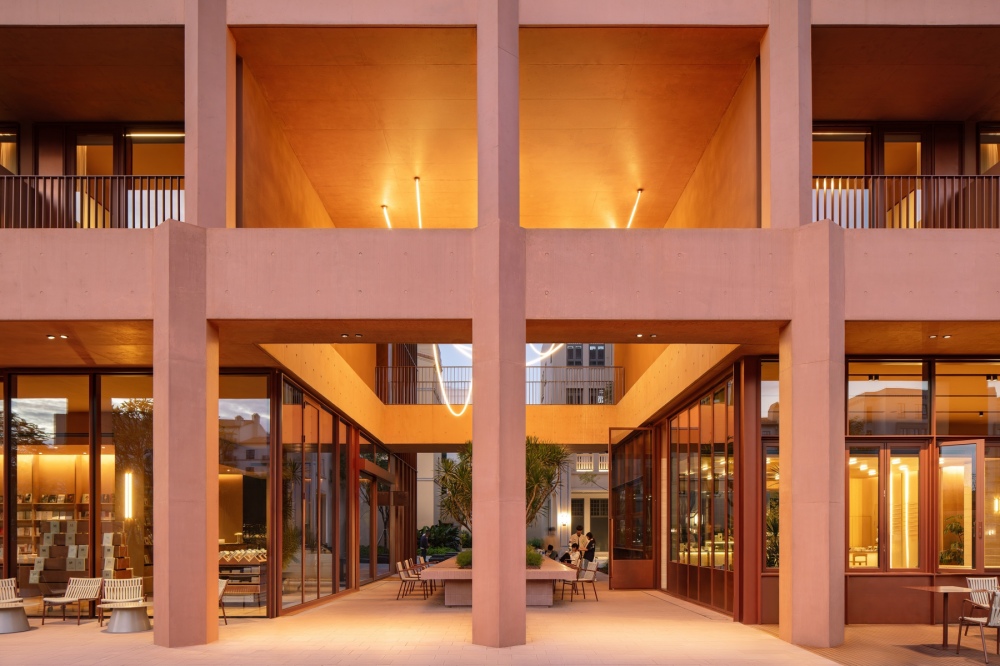
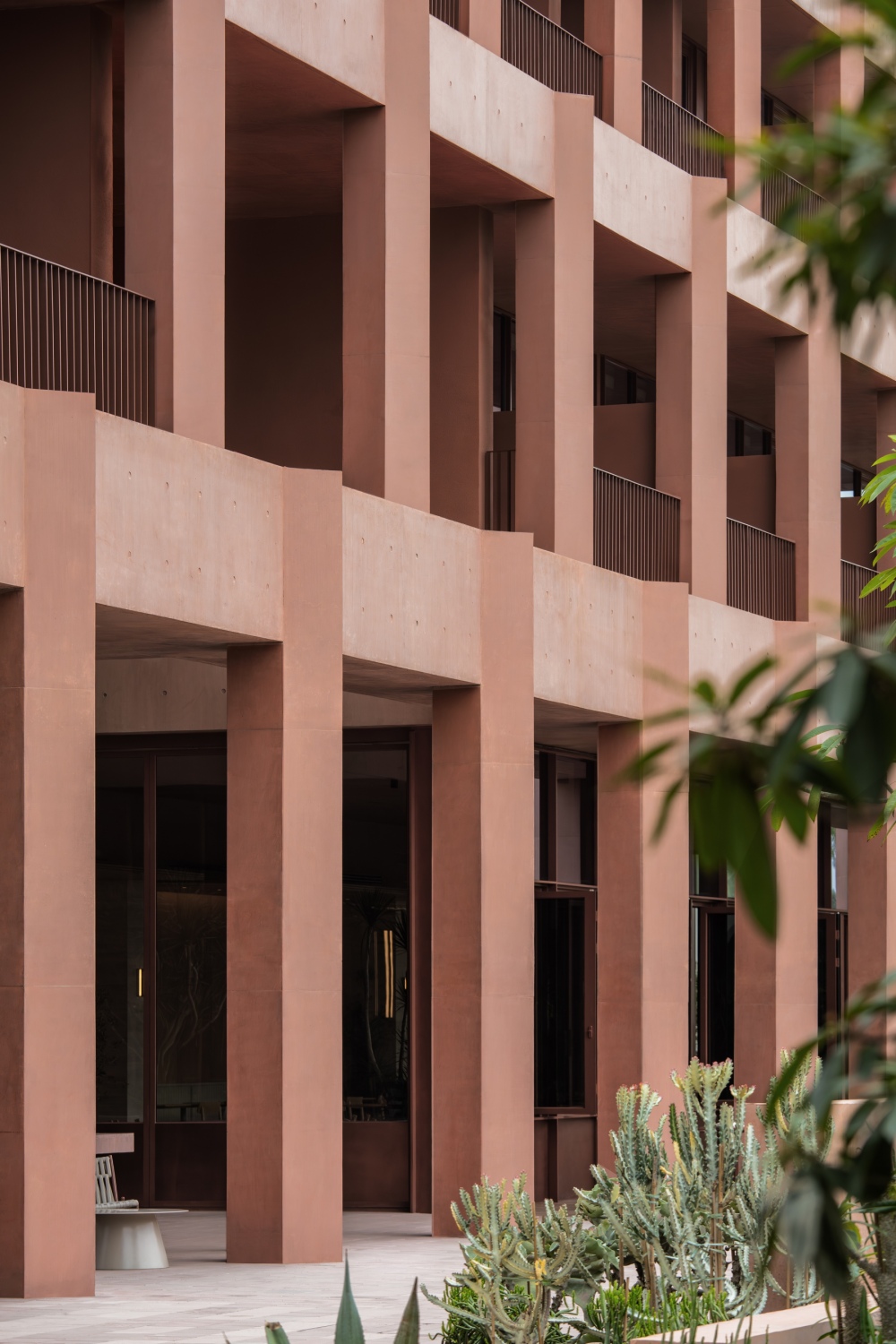
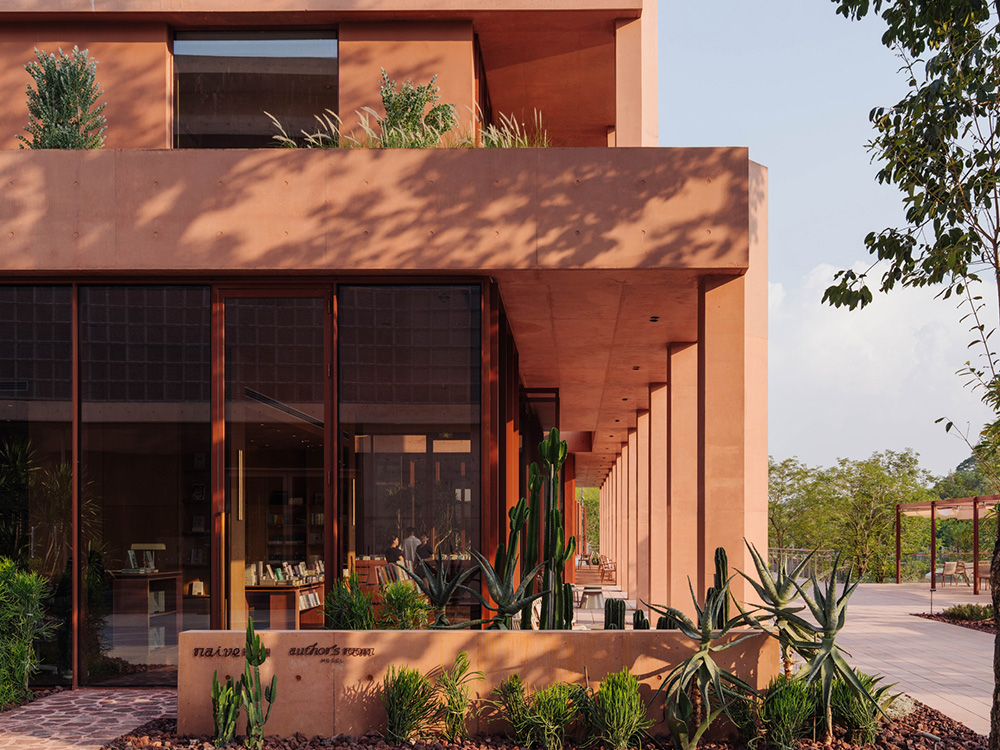
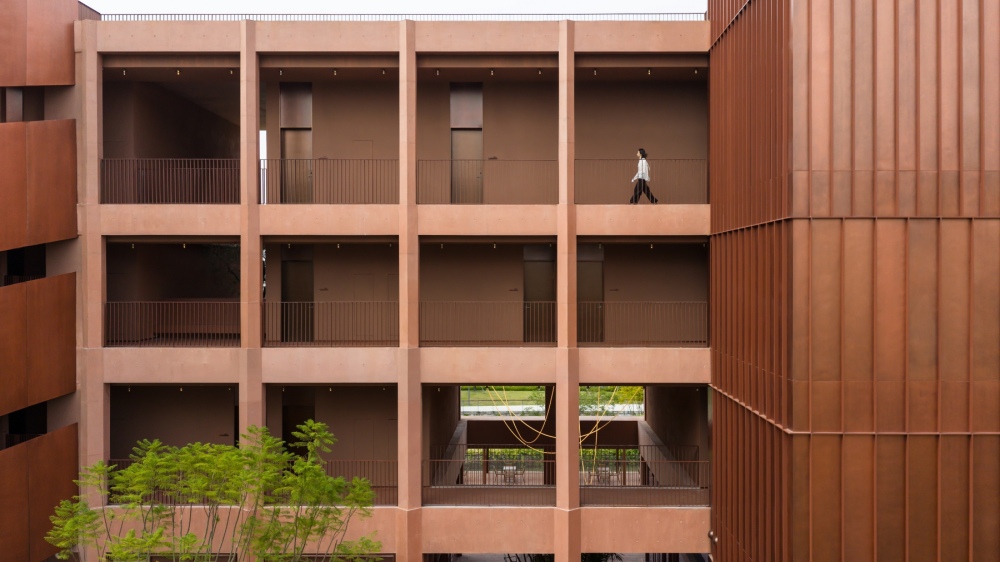
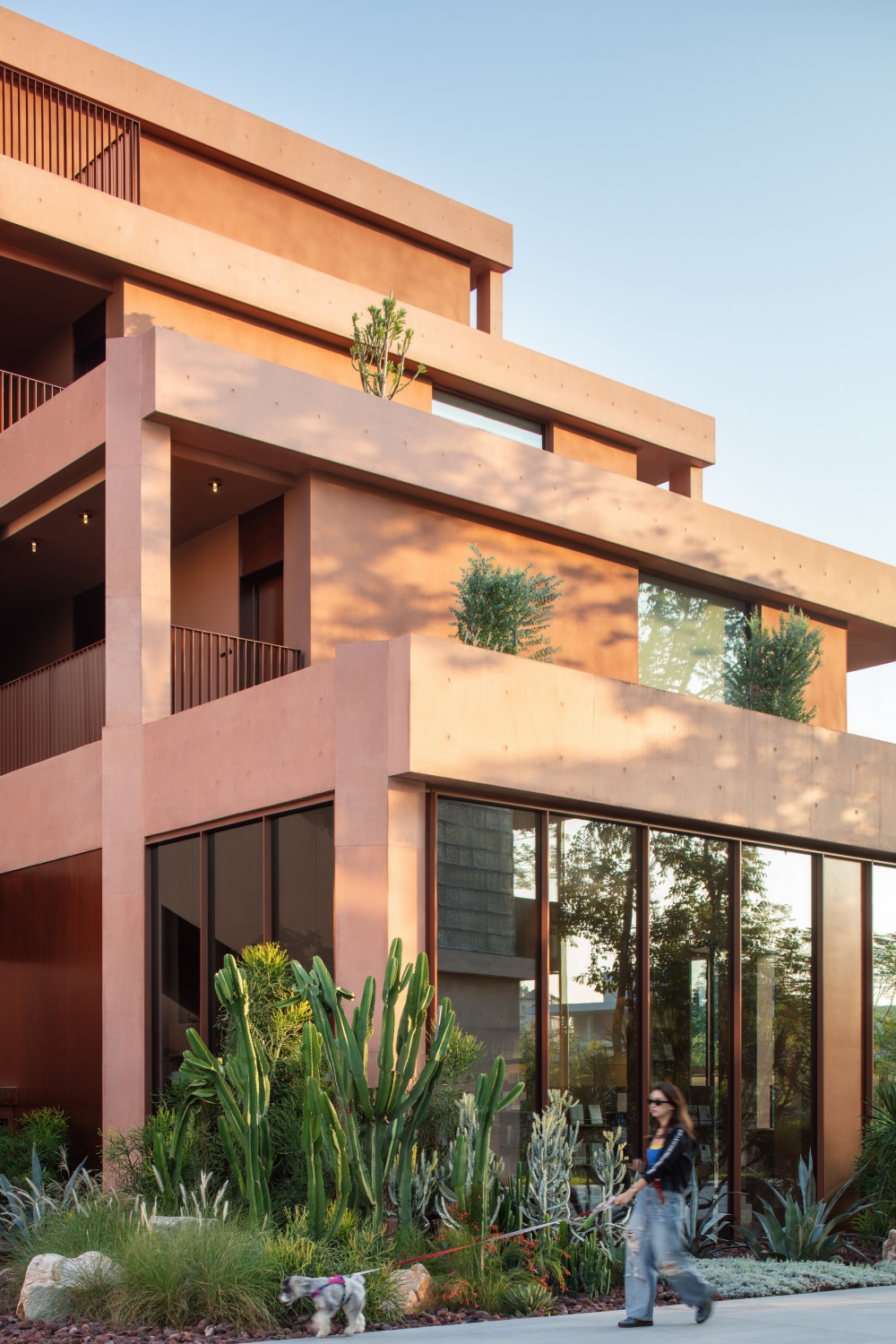
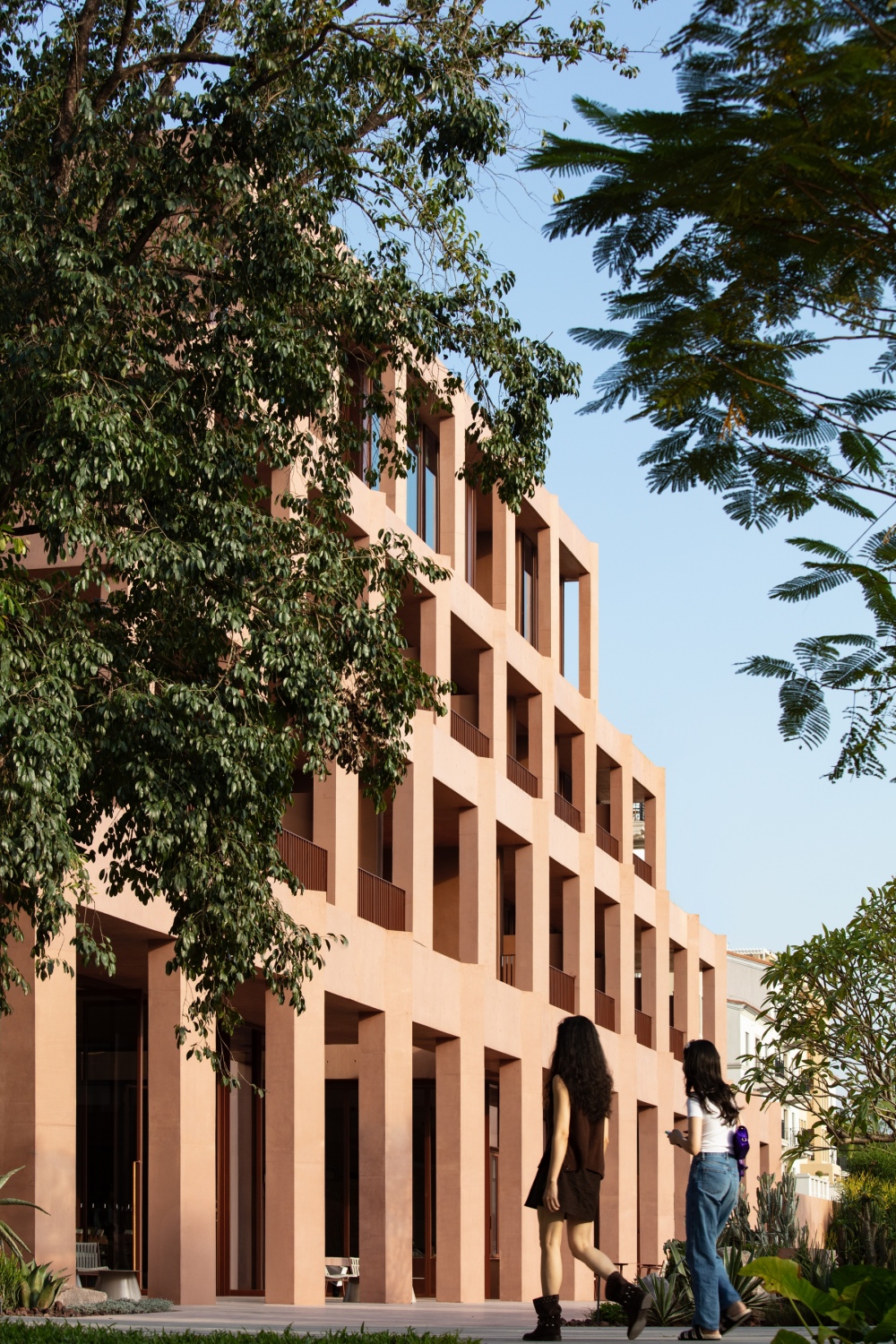
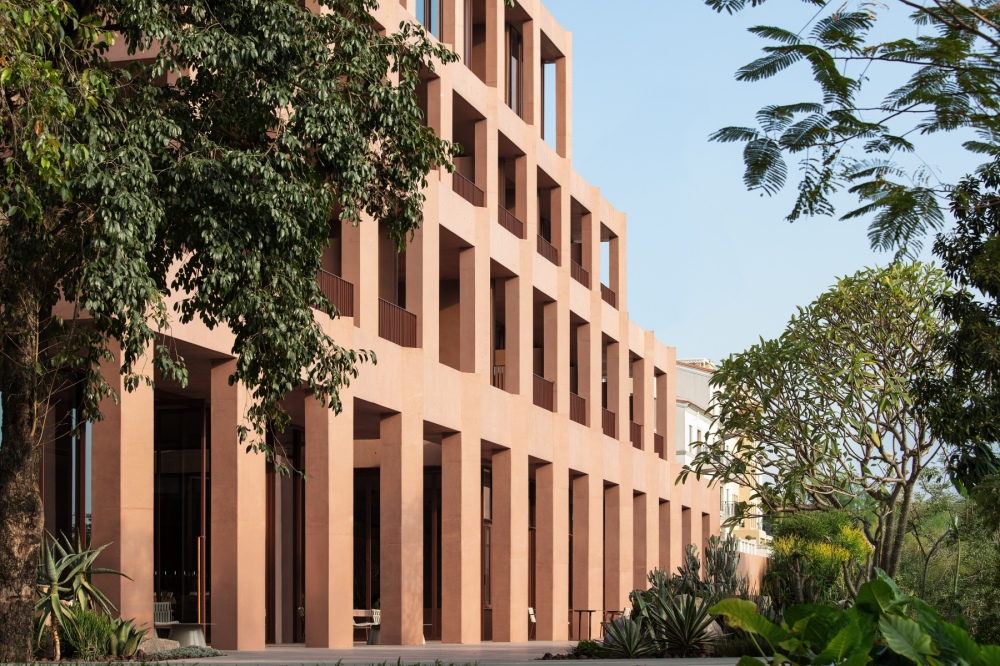
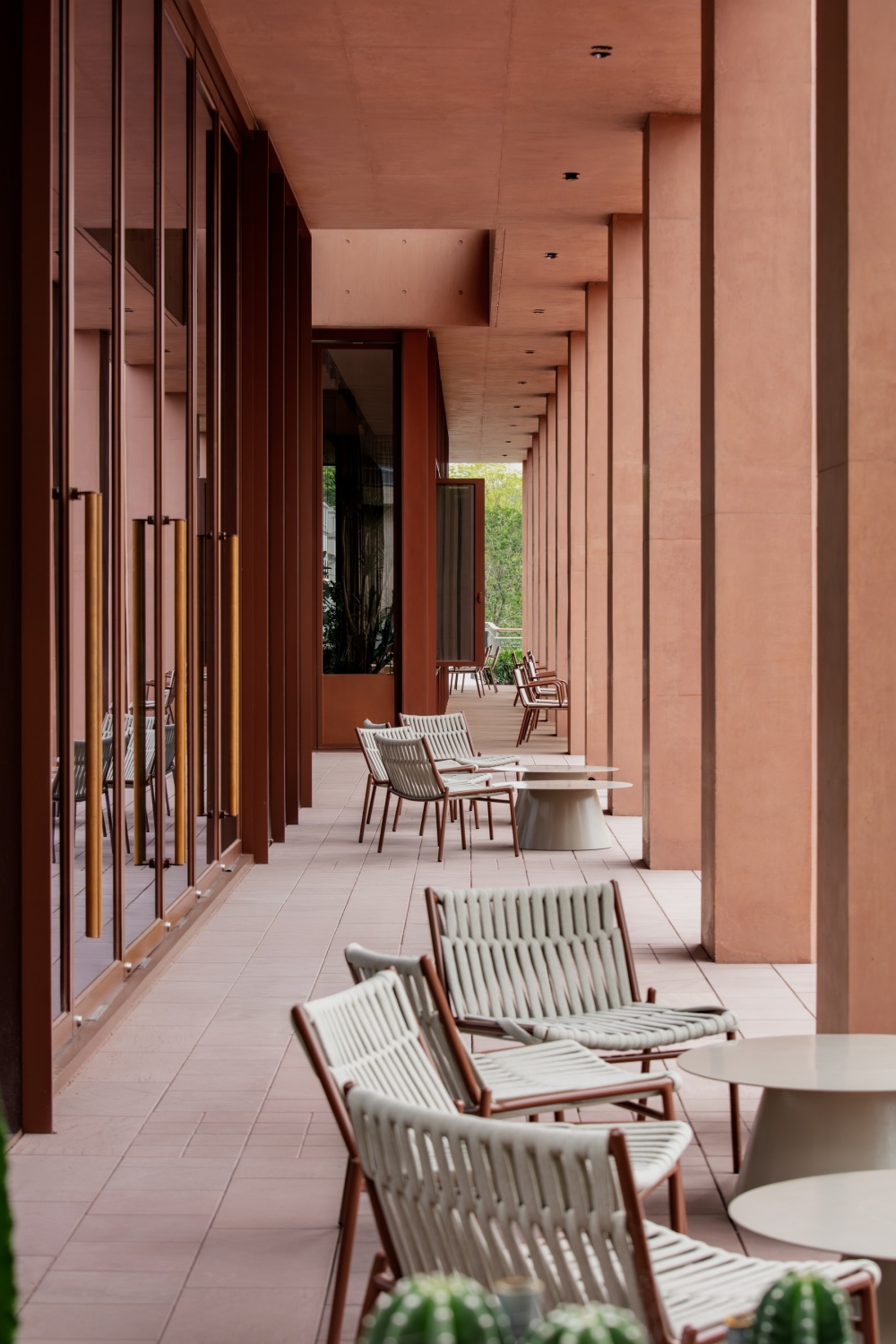
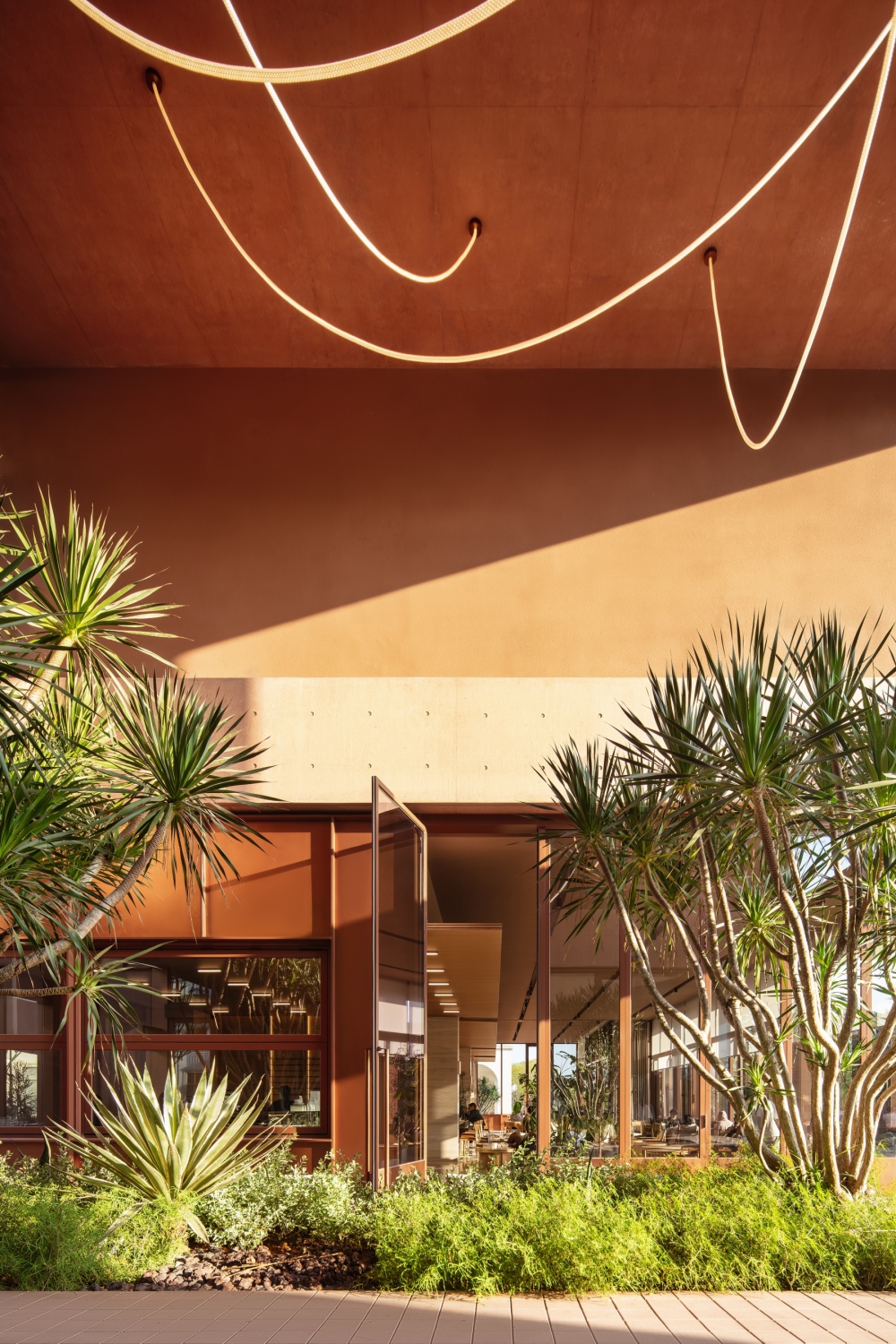
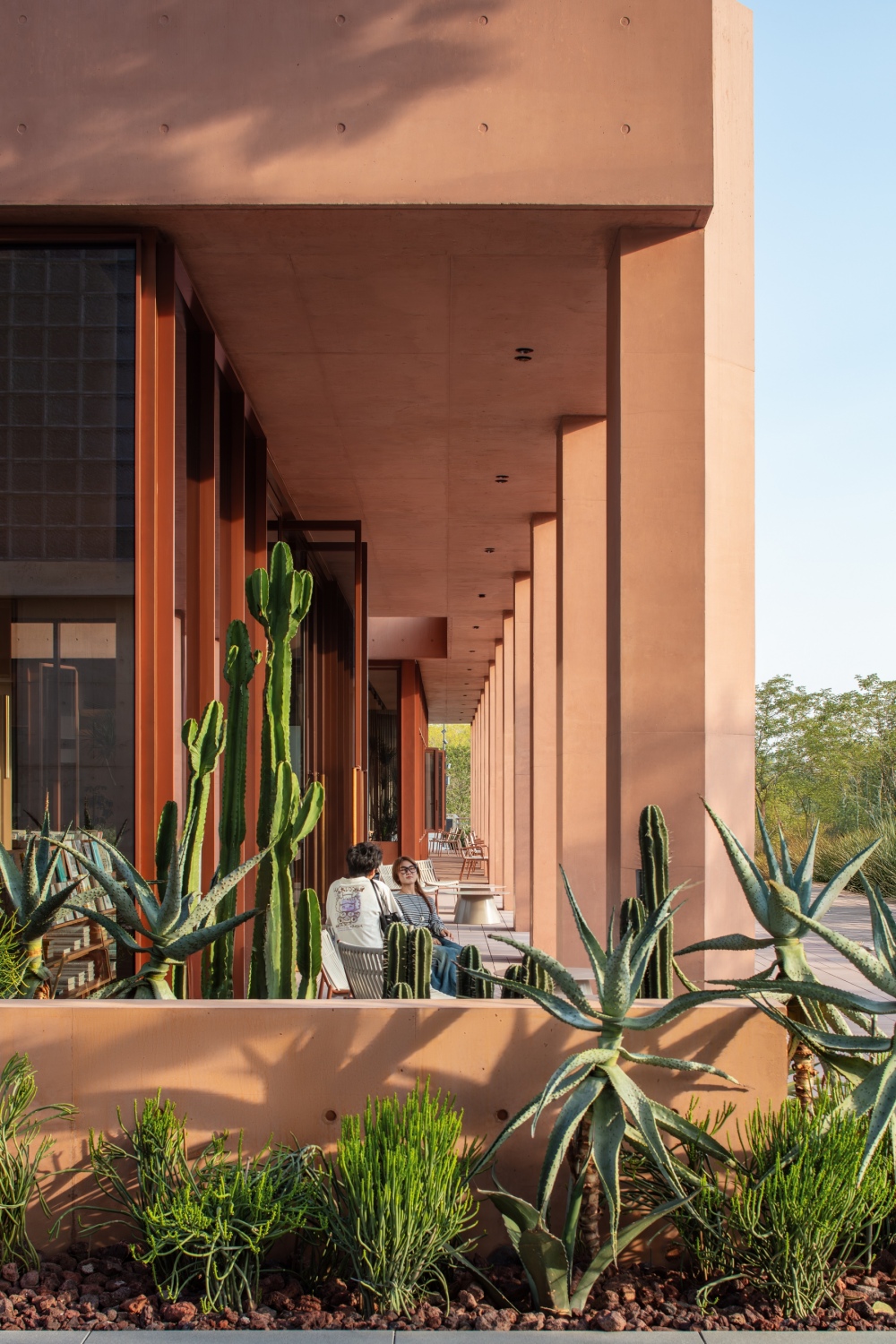
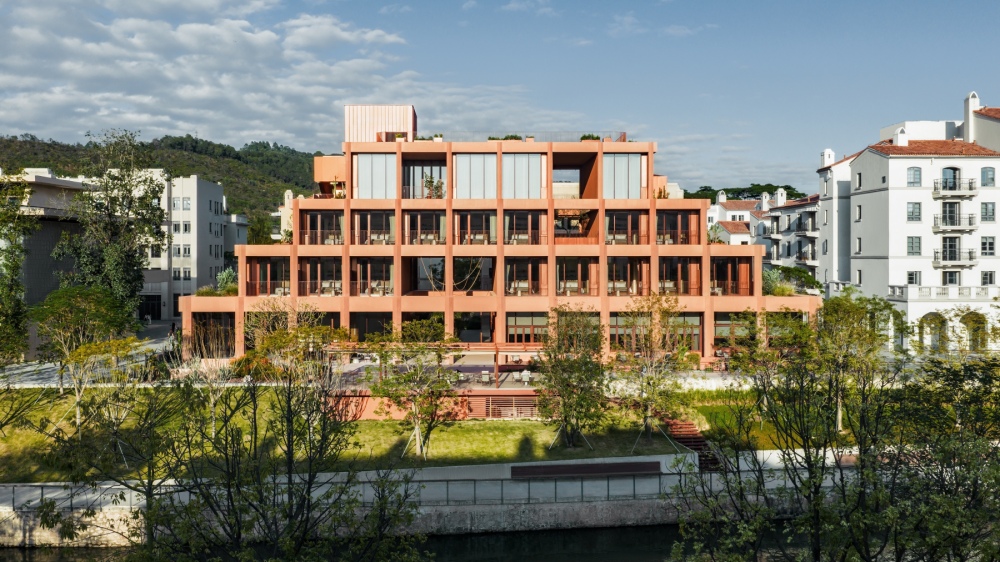
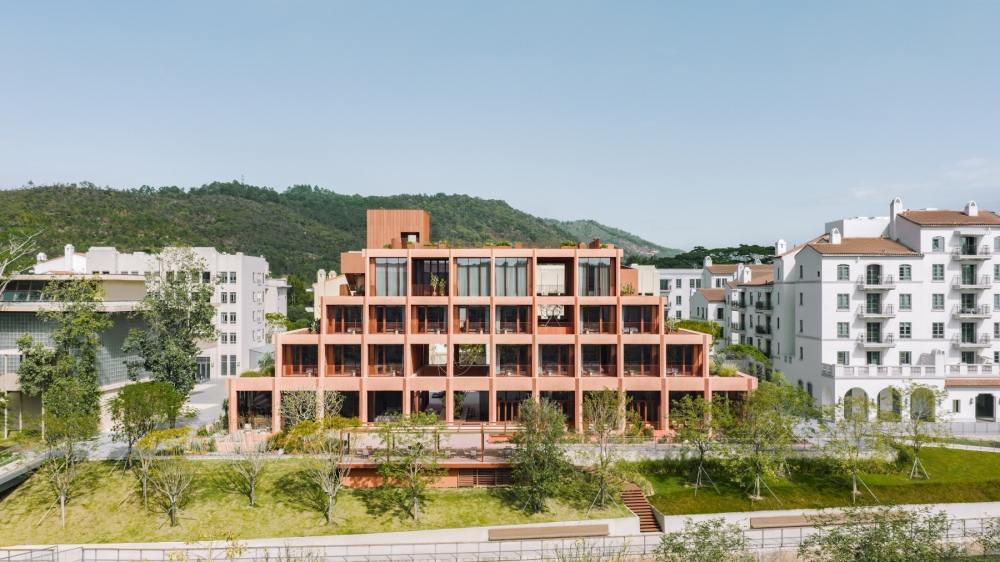
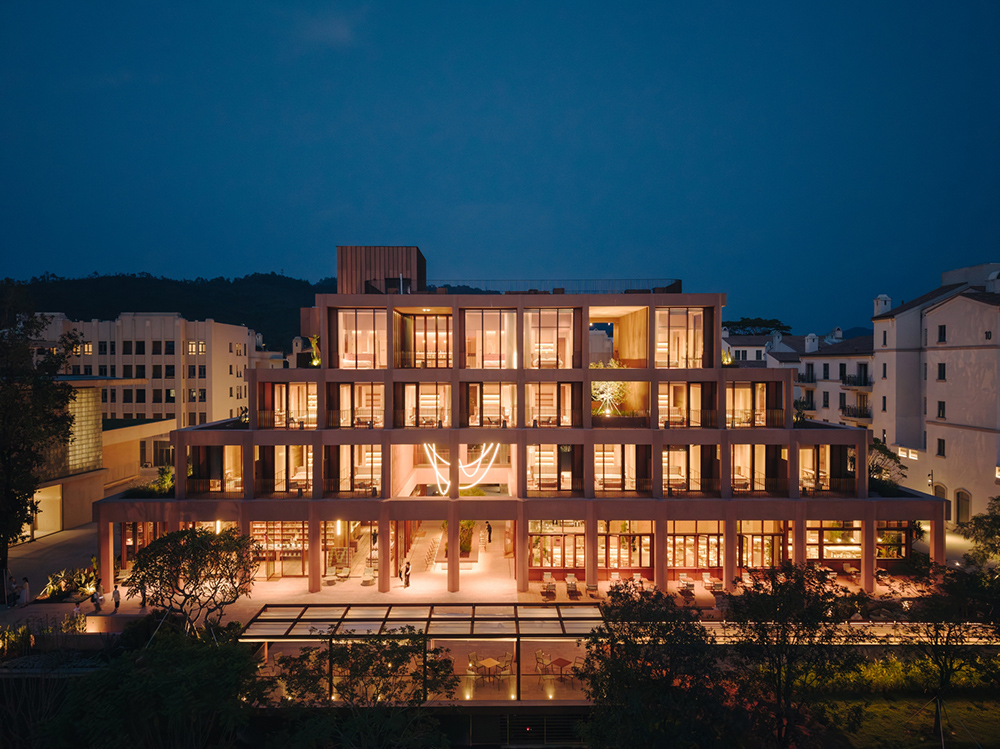
The entire structure is articulated beneath a continuous colonnade, which mediates between interior spaces and the surrounding public realm. Rather than defining the façade with solid walls or any other hard edges, a series of polygonal columns establishes a semi-outdoor colonnade, blurring the boundary between inside and outside.
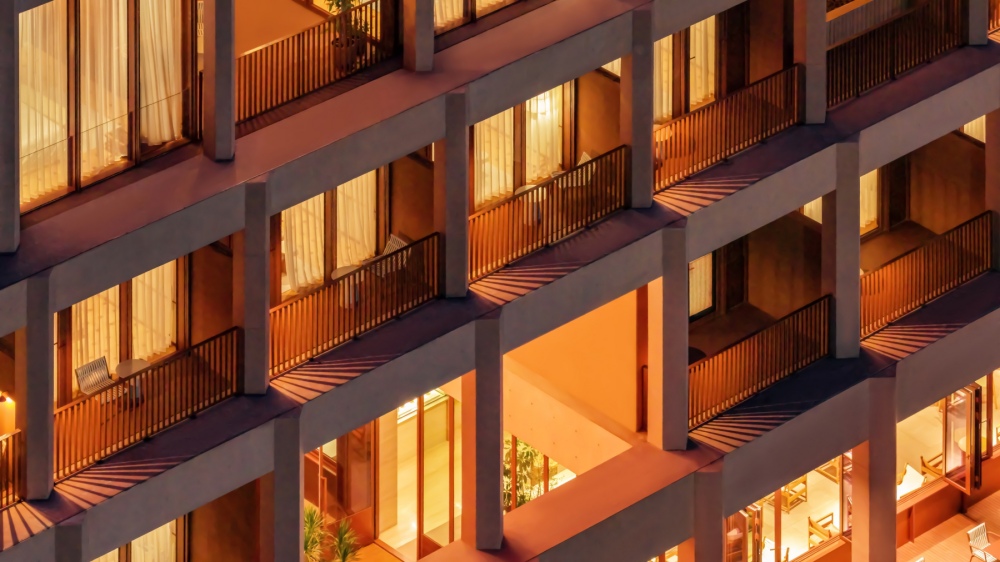
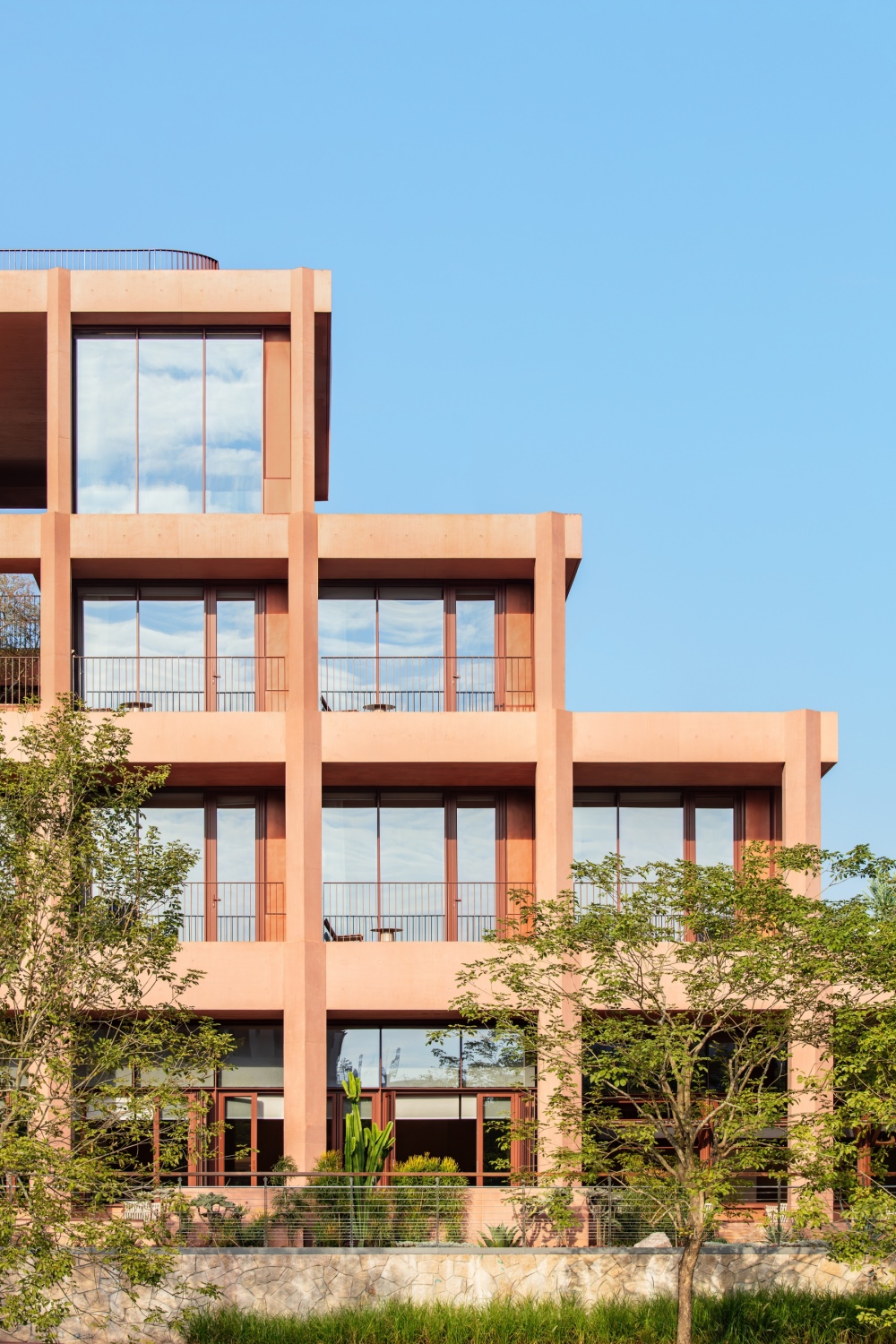
The linear grid consists of the columns, beams, and slabs that play both roles of the visual language and the structural framework. By deliberately exposing the peripheral structural system, the design enables the external form to directly reflect the internal logic of construction, allowing structure, space, and appearance to converge into a coherent architectural language.
The colonnade establishes a spatial dialogue between solid and void, opening the architecture to imagination and use. Beneath the colonnade unfolds a fluid and animated spatial field—one that invites sunlight and breeze, accommodates seasonal change, and defines a soft threshold between interior and exterior. It becomes an active setting for urban daily life. Retails on the ground floor are set back, creating a continuous public pedestrian zone along the street. Passersby drifting through the neighbourhood wander beneath the colonnade and are gently drawn into the bookstore and café.
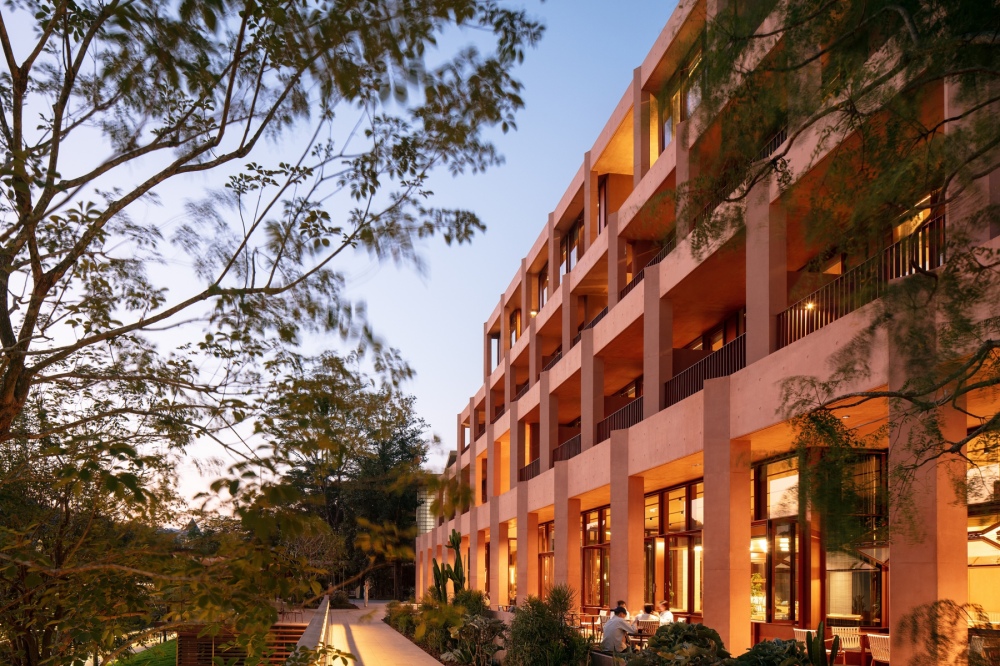
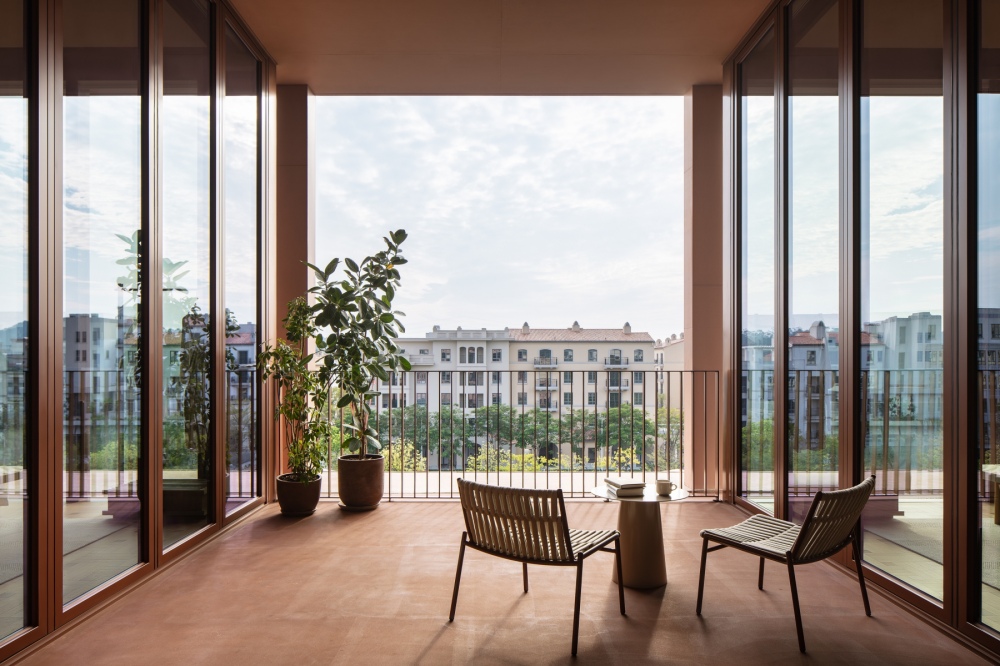
The upper floors are divided by columns into 18 guest rooms facing the river view. Shaded terraces under the eaves allow guests to engage with the river landscape, fostering a close connection to nature.
In terms of functions, the colonnade acts as a secondary architectural skin, providing shade and shelter in response to local subtropical and changeable climate, as well as filtering views from across the river, balancing openness with privacy for the guestrooms.
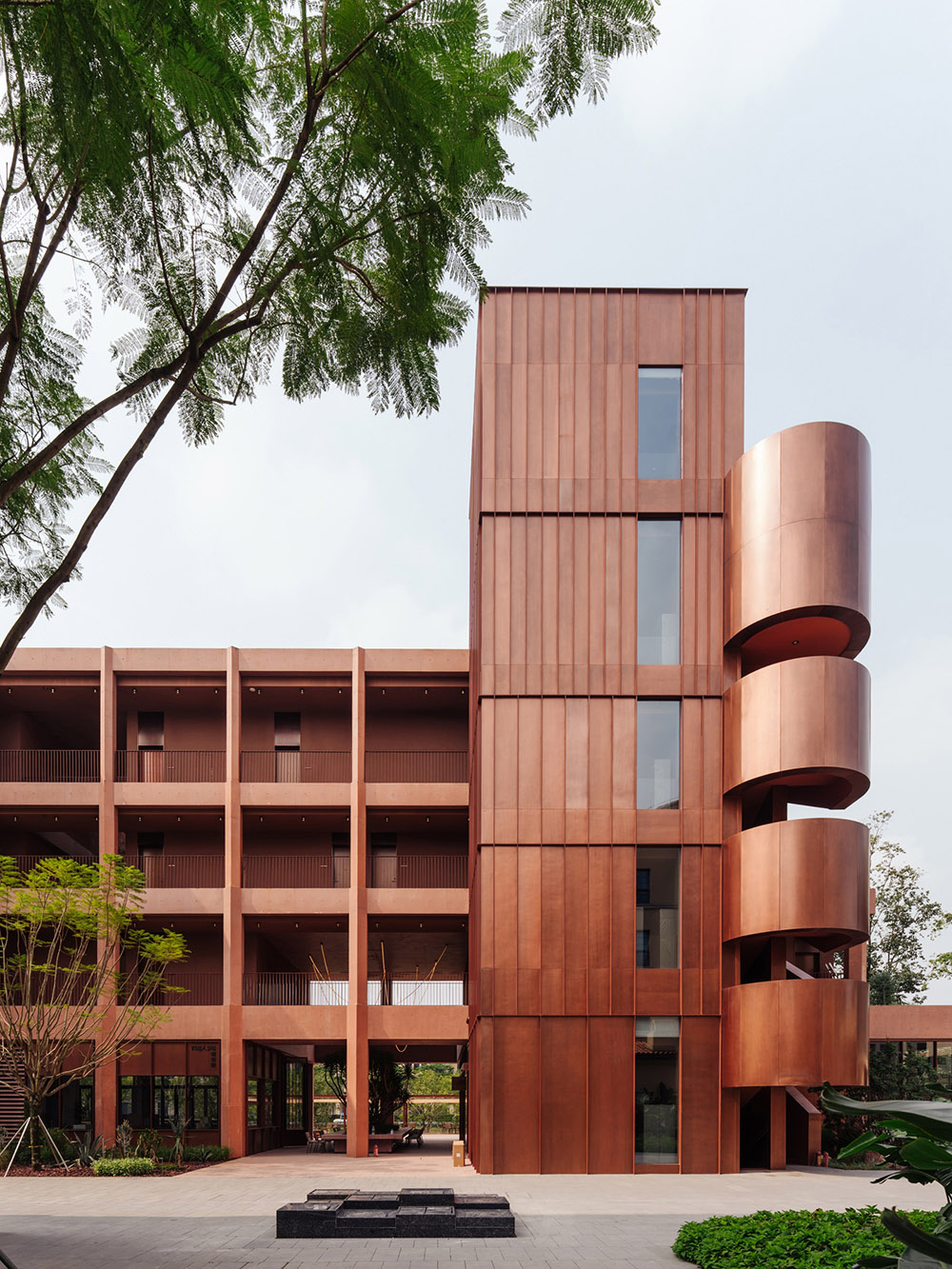
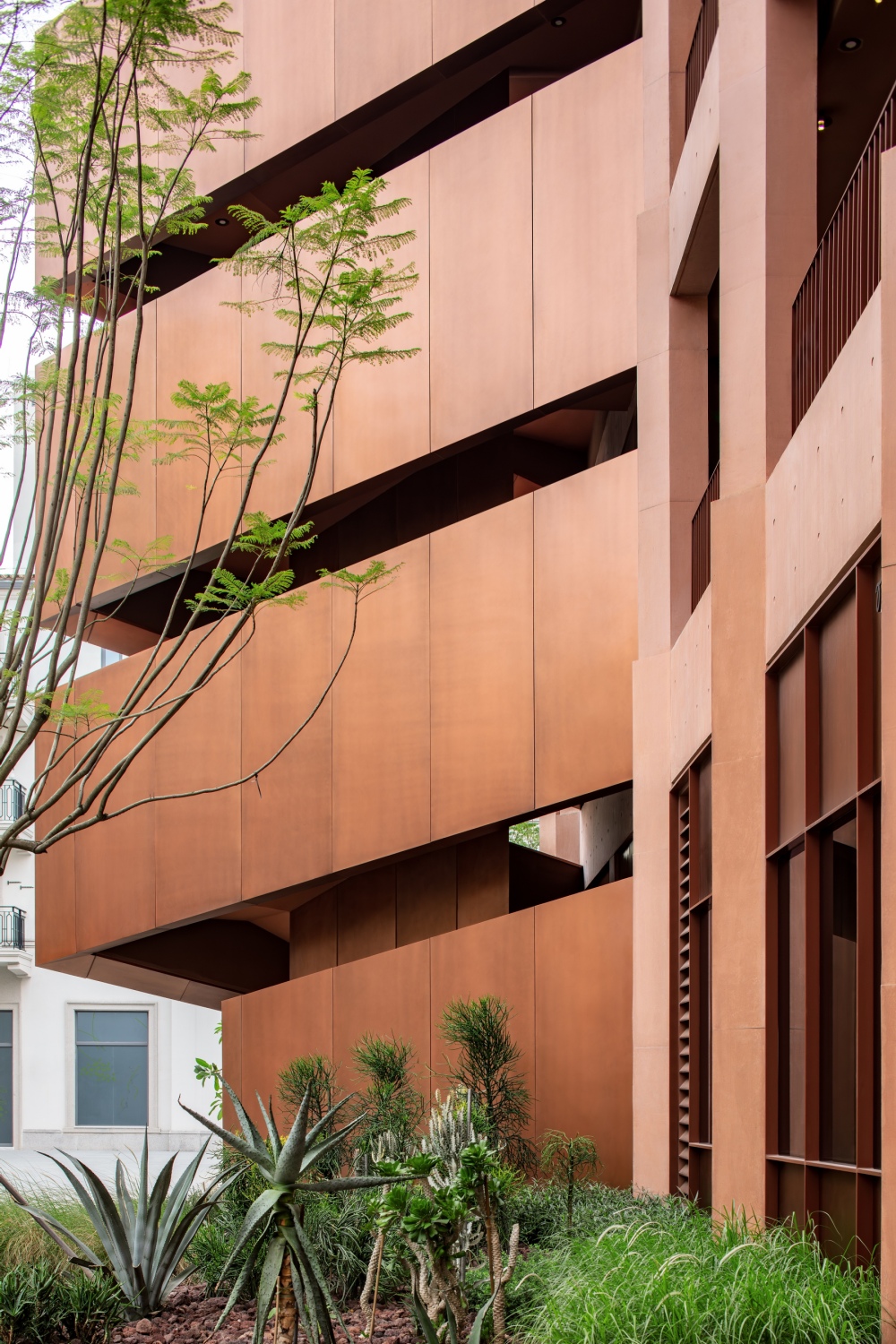
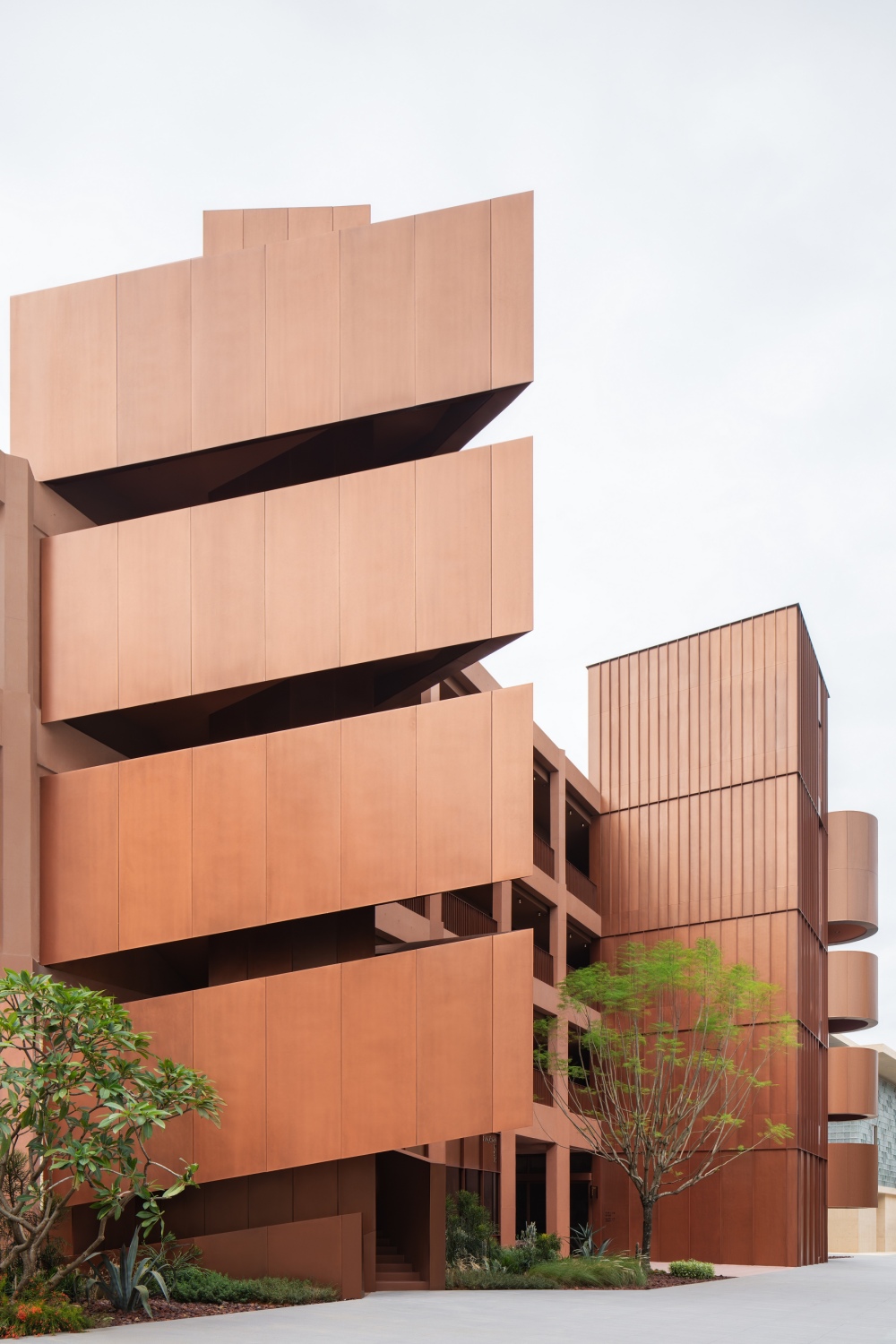
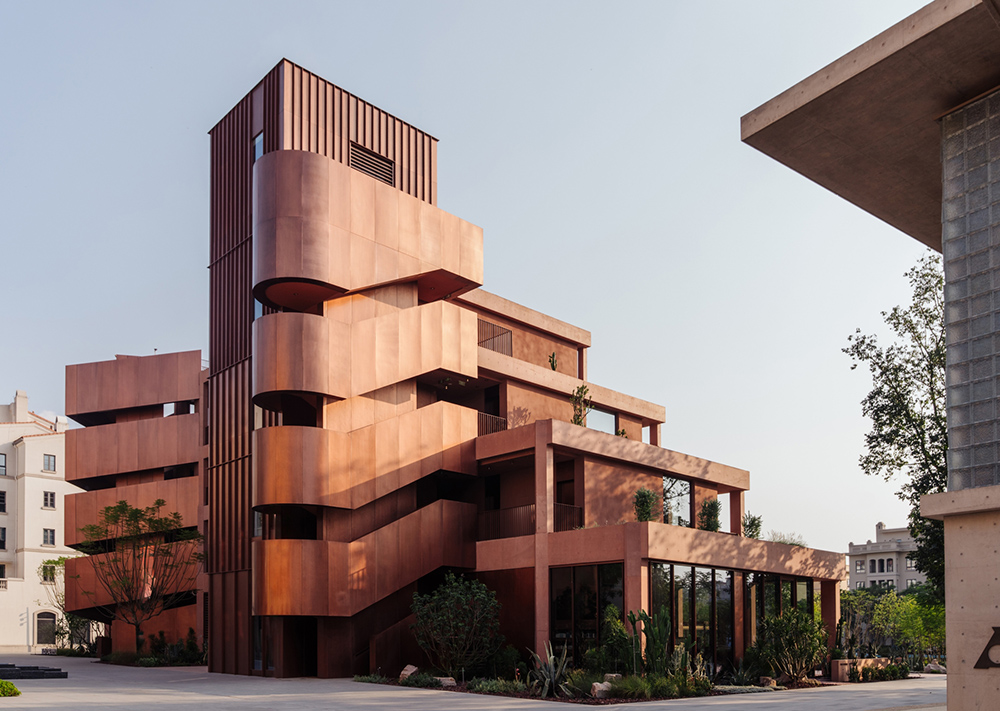
Another feature of the building is its stepped, terraced design, in which four stacked volumes gradually step back as the structure rises, creating a powerful, hierarchical shape that has a changing silhouette when viewed from different angles. Moreover, the terraced configuration also visually reduces the perceived mass, contributing to a more comfortable and human-scaled presence along the shoreline.
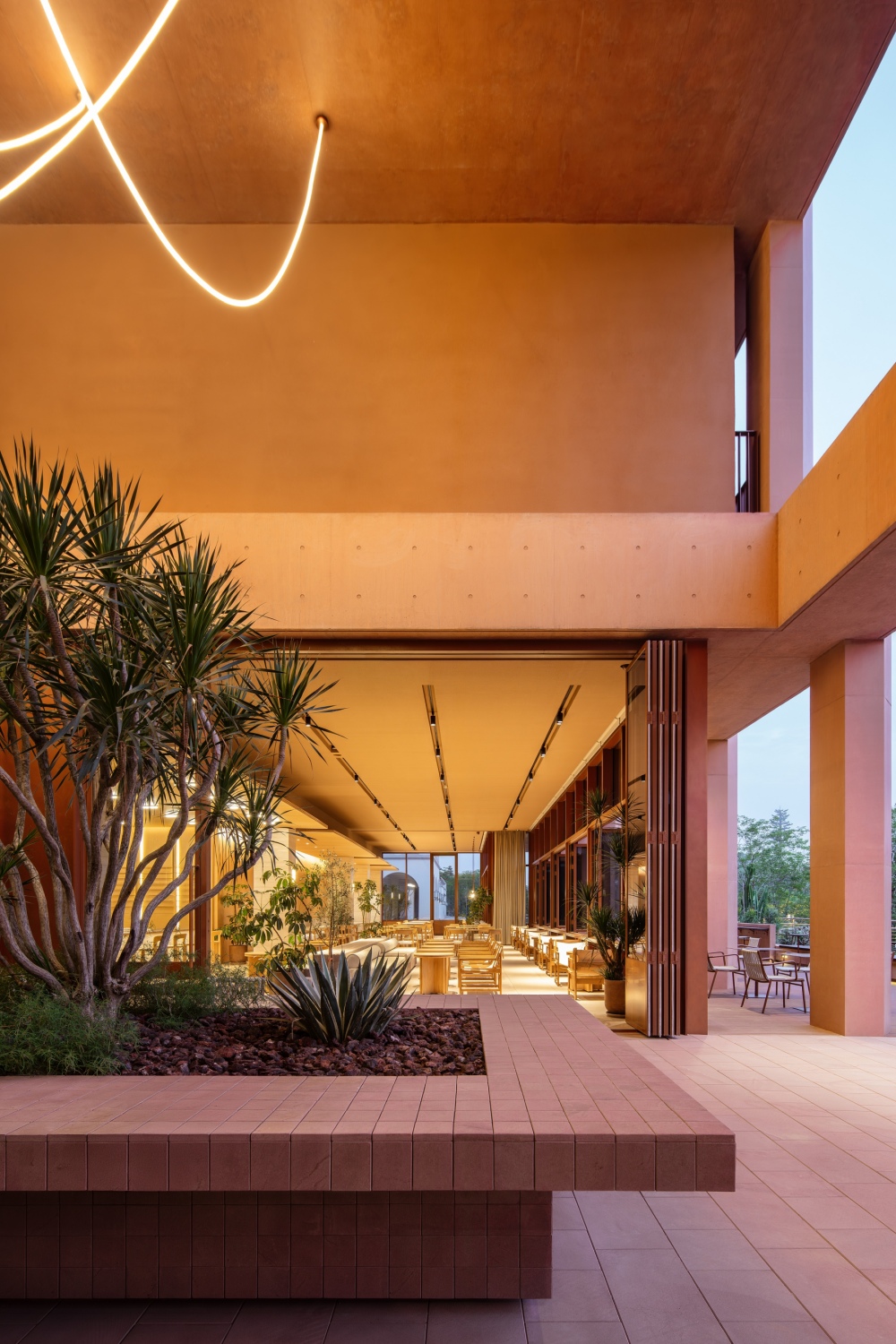
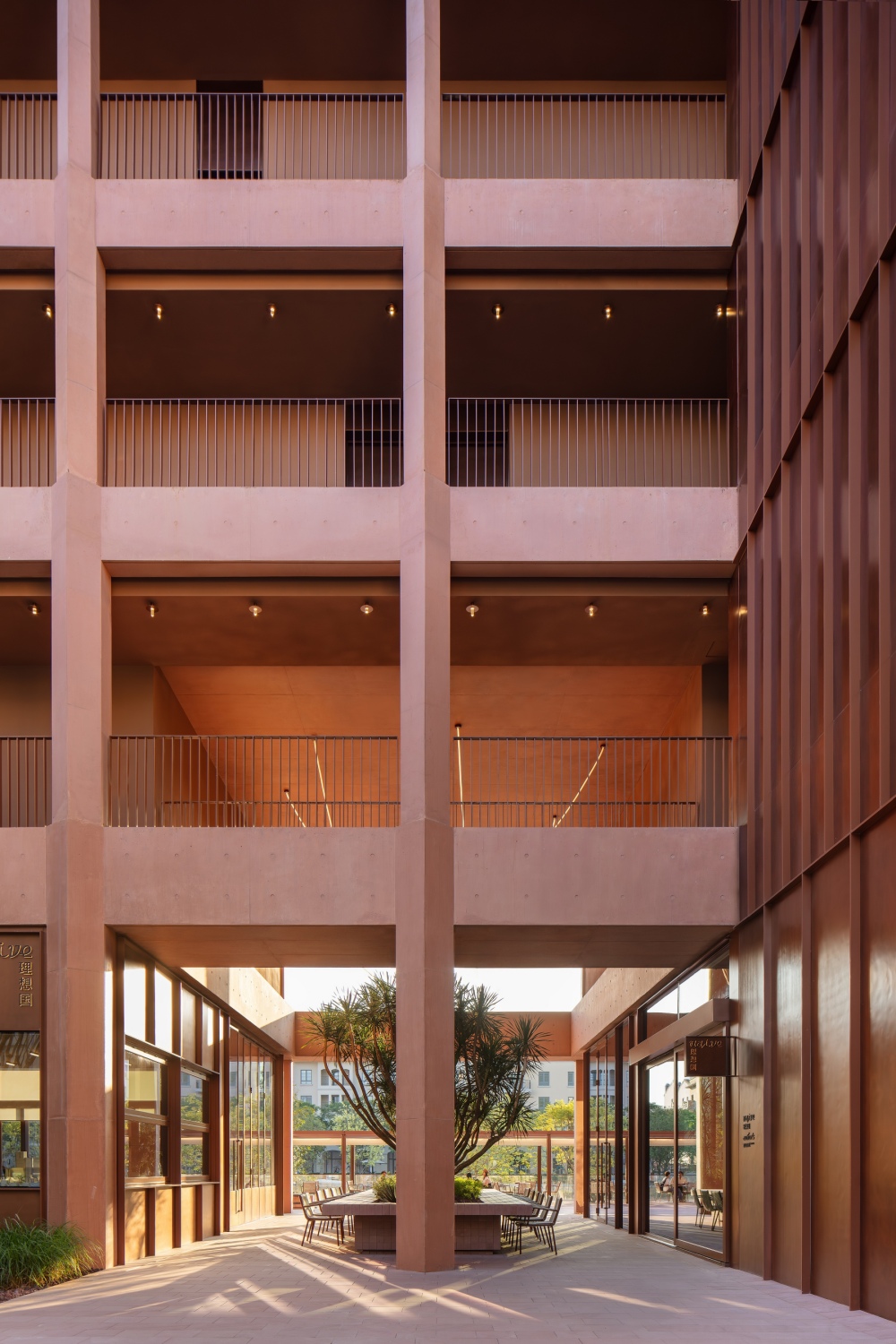
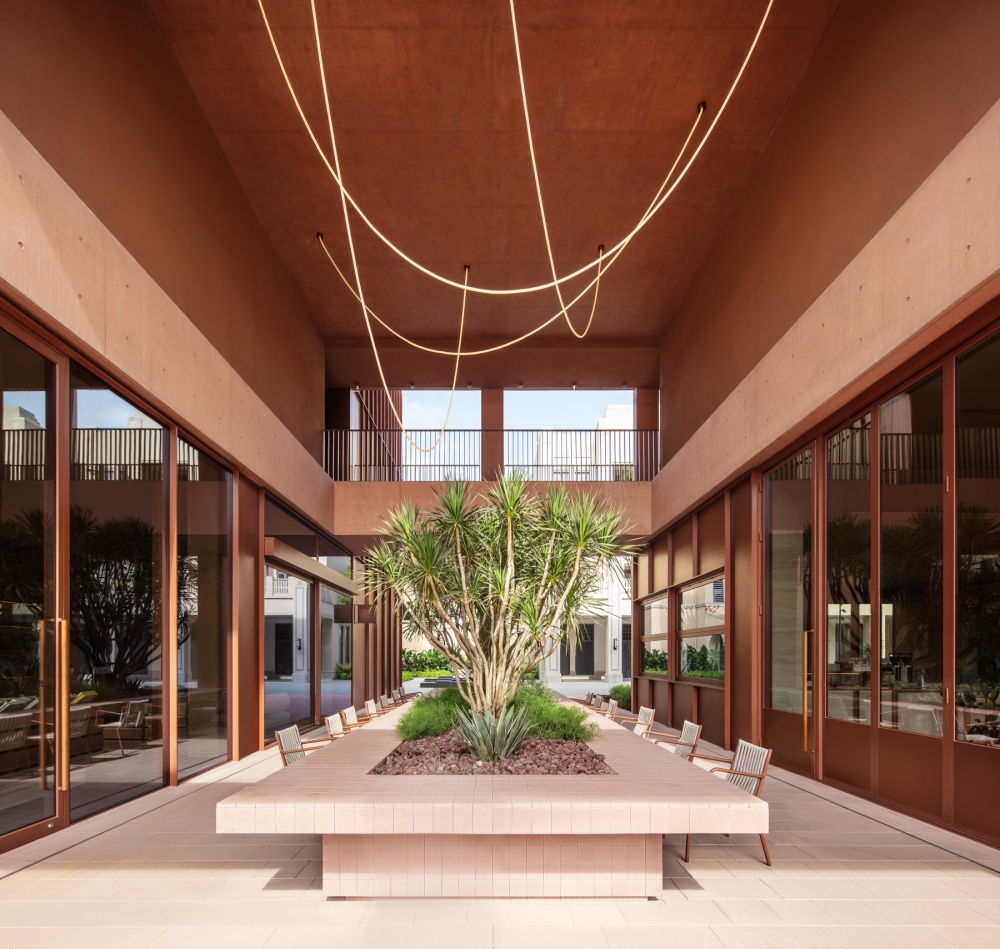
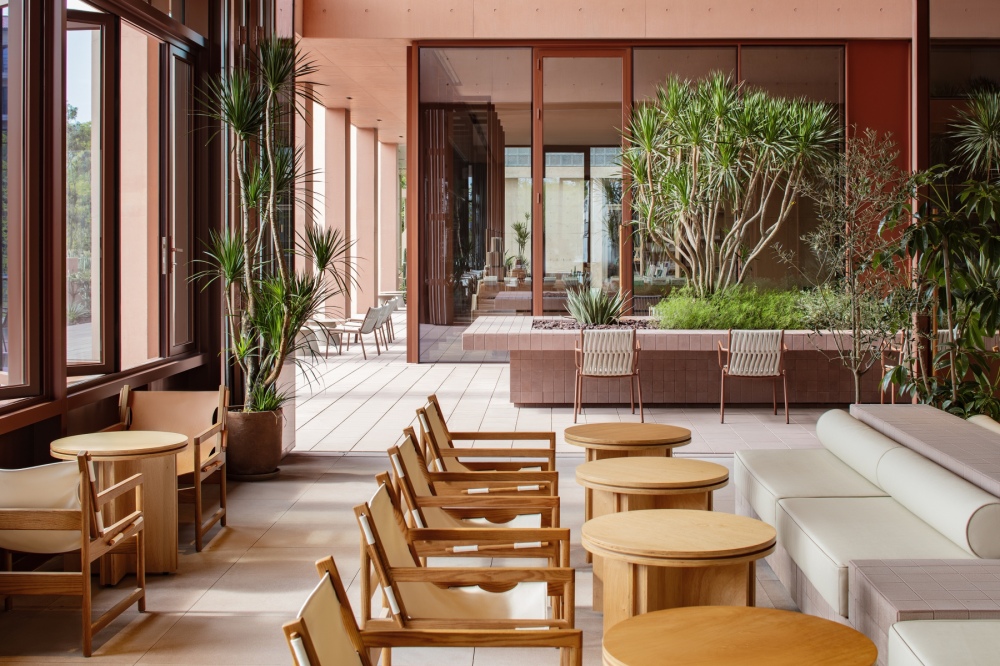
Within the symmetrical structure, two double-height semioutdoor courtyards are introduced on the ground floor and the third floor to break the repetitive rhythm of the façade and to create subtle spatial variations. These courtyards also bring daylight and greenery deep into the building, allowing the natural landscape to merge with the architecture continuously.
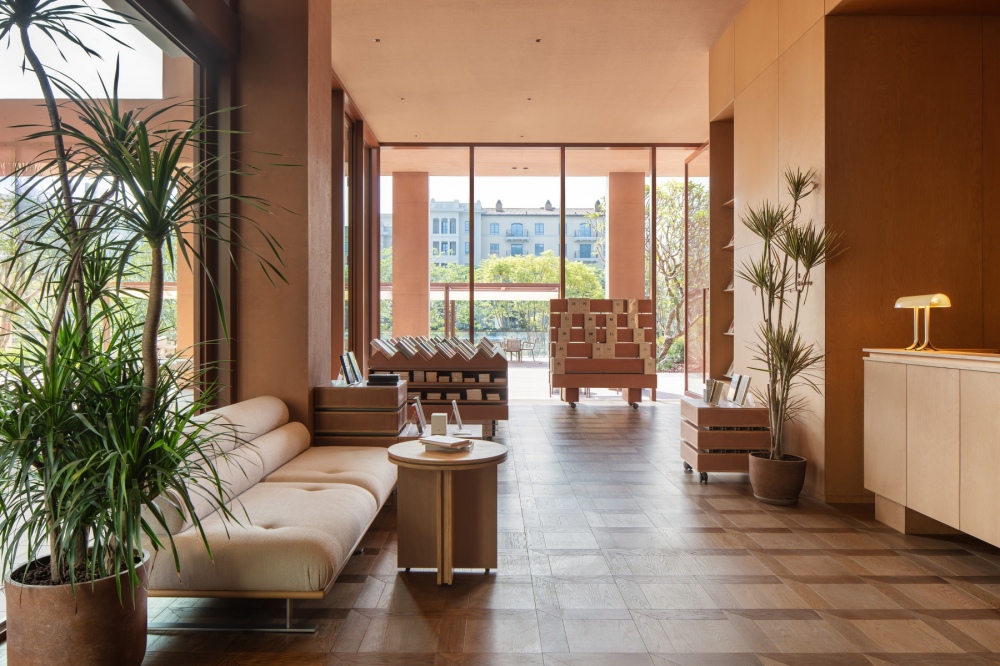
The central atrium on the ground floor faces the riverfront viewing deck on one side and connects to the pedestrian street on the other. This configuration enables the building to embrace pedestrians from all directions with an inclusive attitude, reinforcing its public character.
As a transitional space, the courtyard links the bookstore and restaurant through human movement, creating an uninterrupted and seamless spatial experience between indoors and outdoors.
The introduction of colonnades and courtyards gives the building a sense of spatial breathing. In the context of contemporary urban life, urban space is often optimised for efficiency. However, the project deliberately introduces continuous corridors and elevated courtyards, offering them back to nature and the public realm, even within the inherently limited footprint of a single building.
Freed from fixed functions, these spaces gain meaning through human activity, while movement and the infiltration of nature shift fluidly between solid and void, allowing the architecture to evolve with its occupants and environment.
Within the “tree courtyard”, everyday presence quietly unfolds. As light, air, and movement pass through the space, time appears to slow, allowing architecture to recede and life to come forward. The project does not seek meaning through monumentality, but through the creation of delicate conditions in which people become aware of their surroundings, their routines, and their own presence.
Materials and Interior Design
The primary structure of the building is constructed with red fairfaced concrete, cast monolithically to reveal both the material and structure in its purest form. The low-saturation red, reminiscent of aged brick and earth, complements the natural roughness of concrete, producing a warm and tactile presence. Over time, slight variations in tone give the architecture a sense of expression and vitality, as if it grows with the surrounding mountains. In sunlight, the red volume is echoed by its reflection in the water, creating a more dynamic and animated presence.
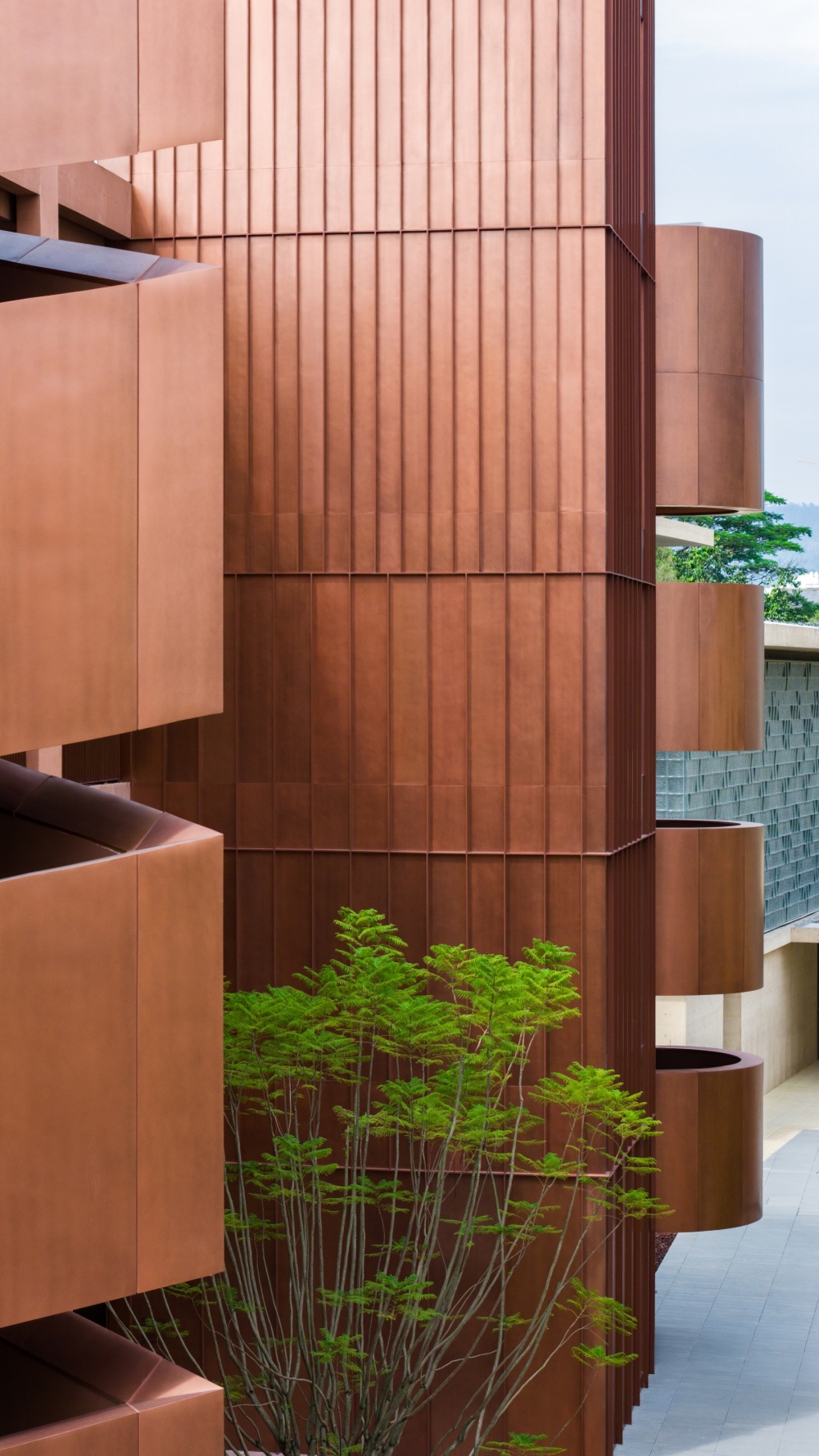
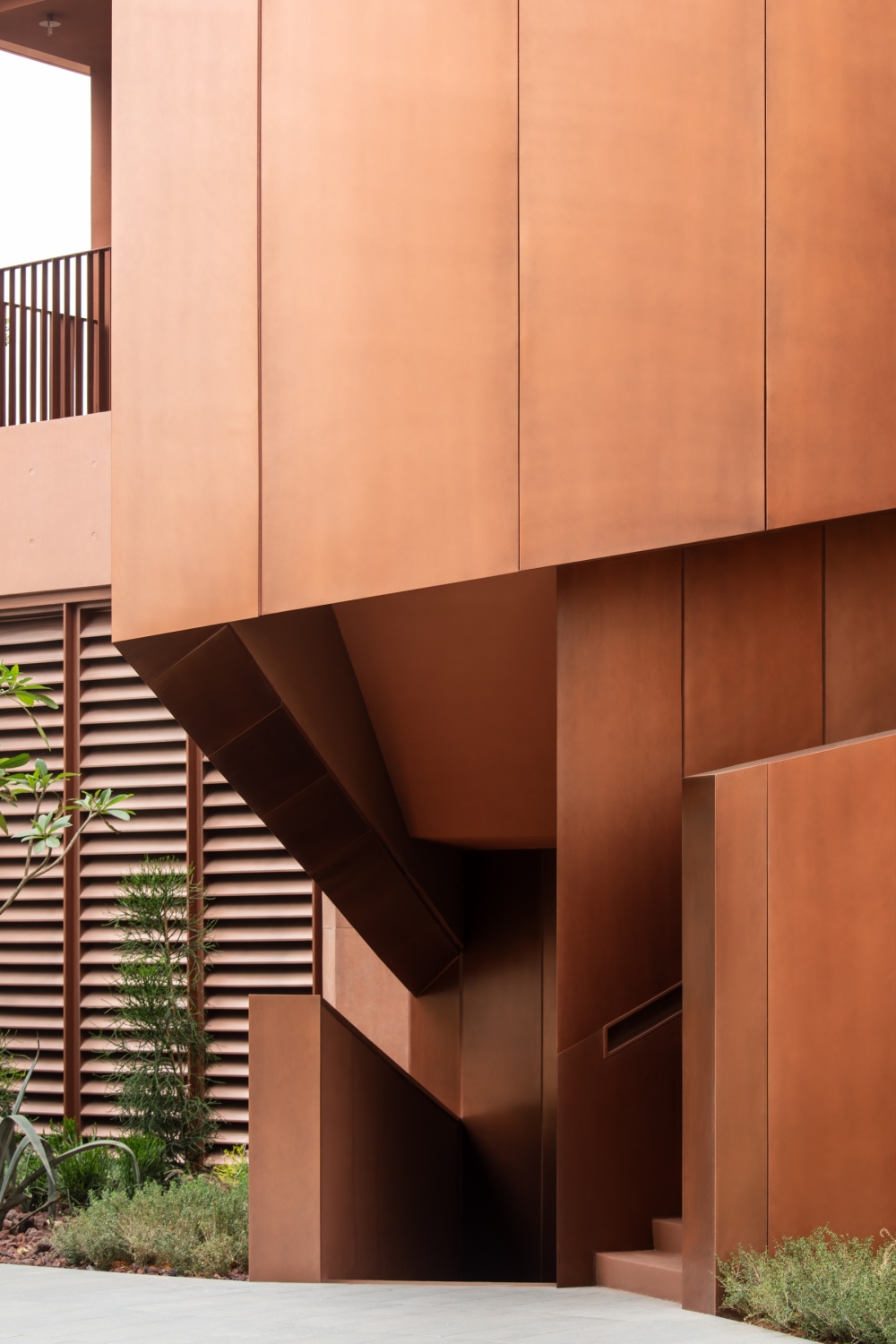
Engaging with its surroundings, the façade’s linear grid is visually softened, allowing the architecture to read as lighter and more permeable. Patterned red copper panels are introduced on the external escape stairs and service cores, where the refined coolness of metal contrasts with the raw warmth of red concrete, enriching the depth and articulation of the façade. Together, the bright yet balanced material palette enables the building to stand
out within the mountainous landscape, reinforcing a lively and relaxed resort character.
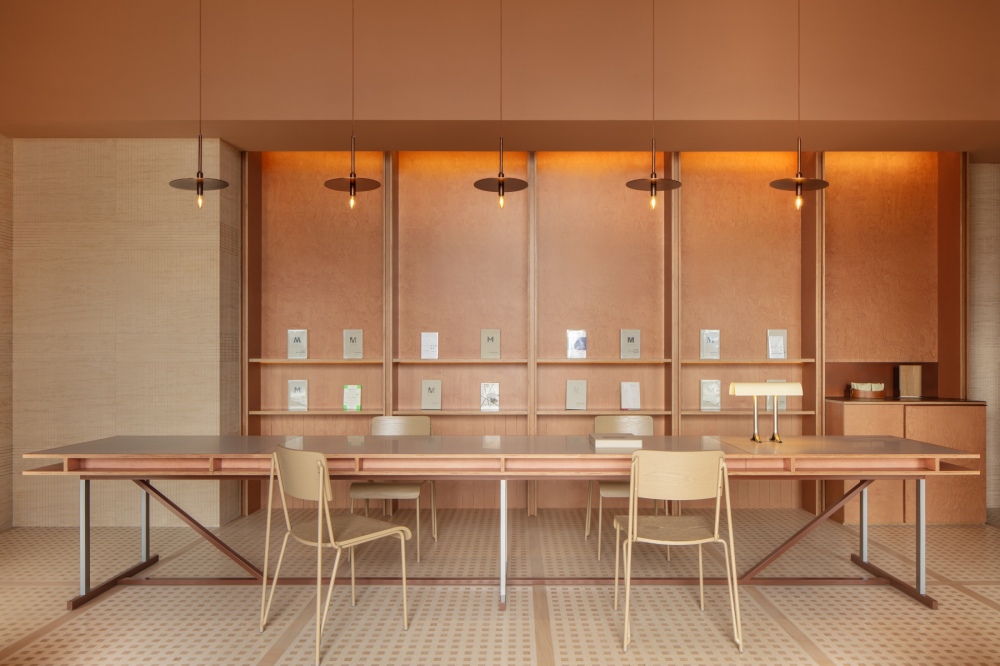
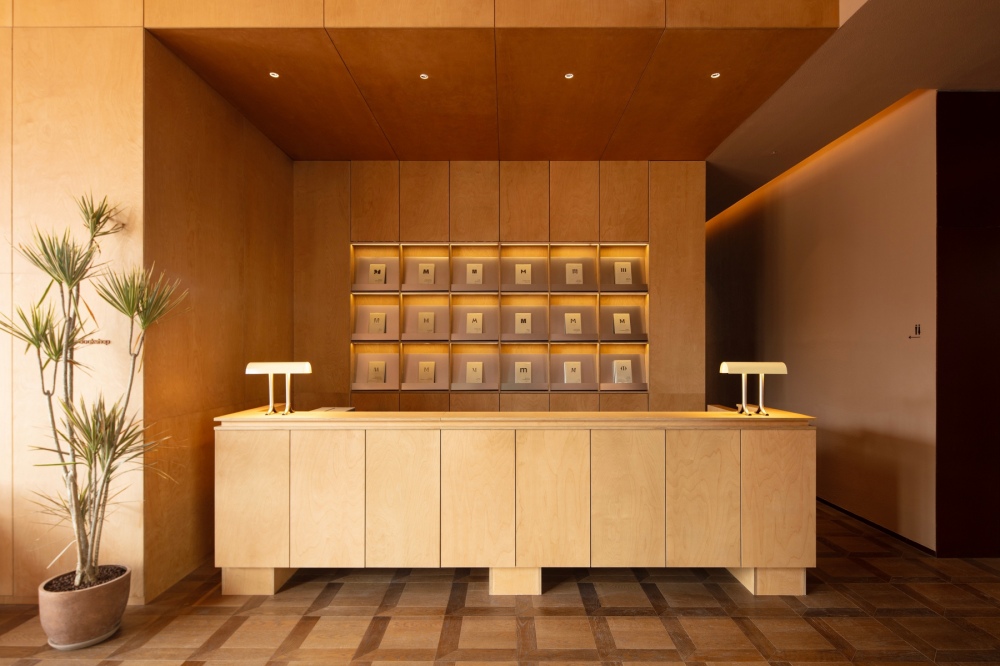
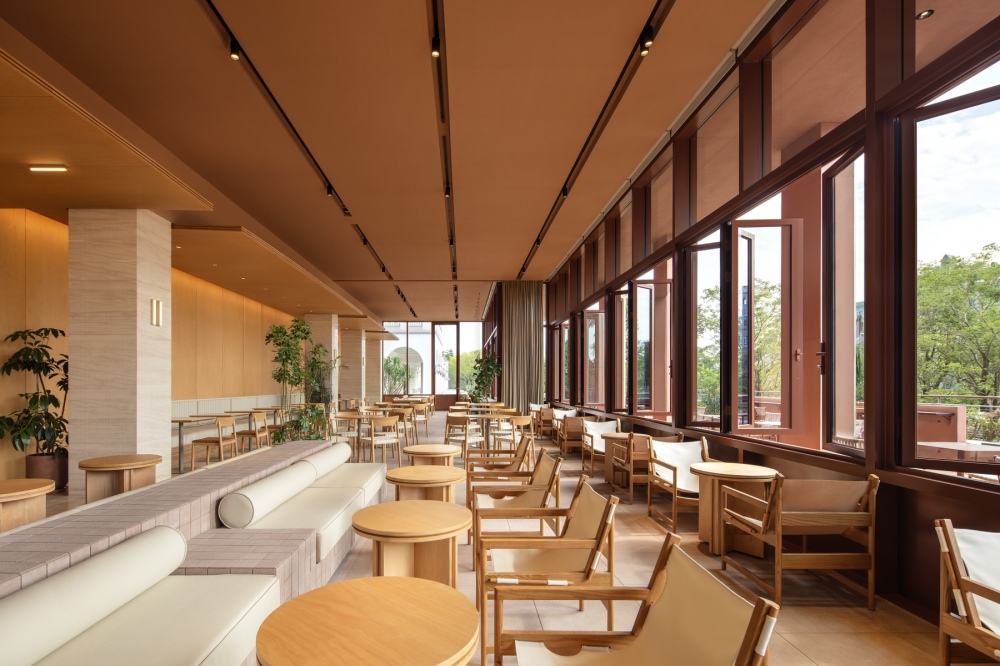
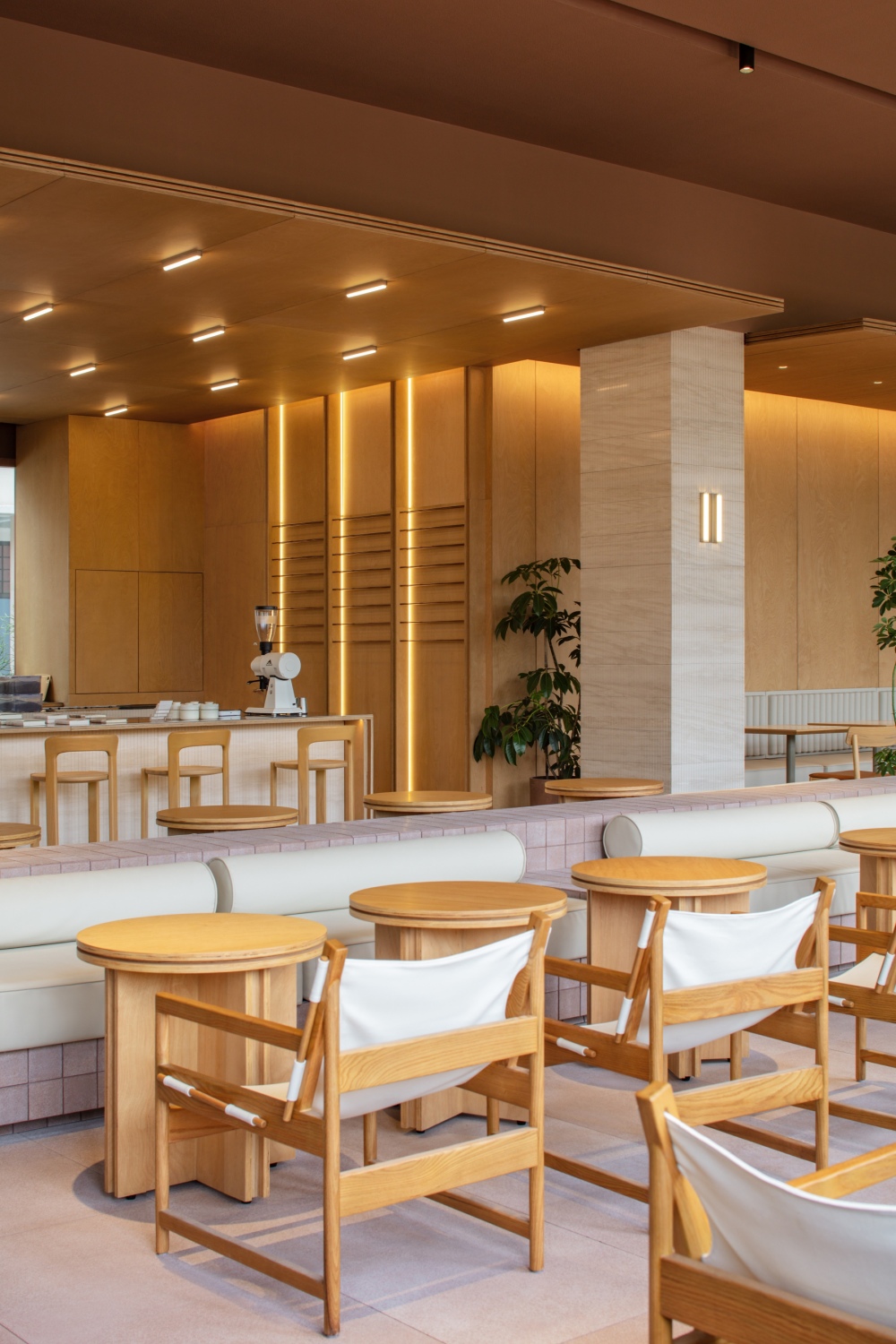
The interior atmosphere continues the building’s warm architectural language. The ground floor is organised into two spaces yet interconnected zones: a combined bookstore and hotelreception space, and a café with light dining. Rather than separating functions through fixed partitions, the public areas are conceived as a continuous and fluid spatial sequence, allowing movement to unfold freely and maximising the inherent openness of the building.
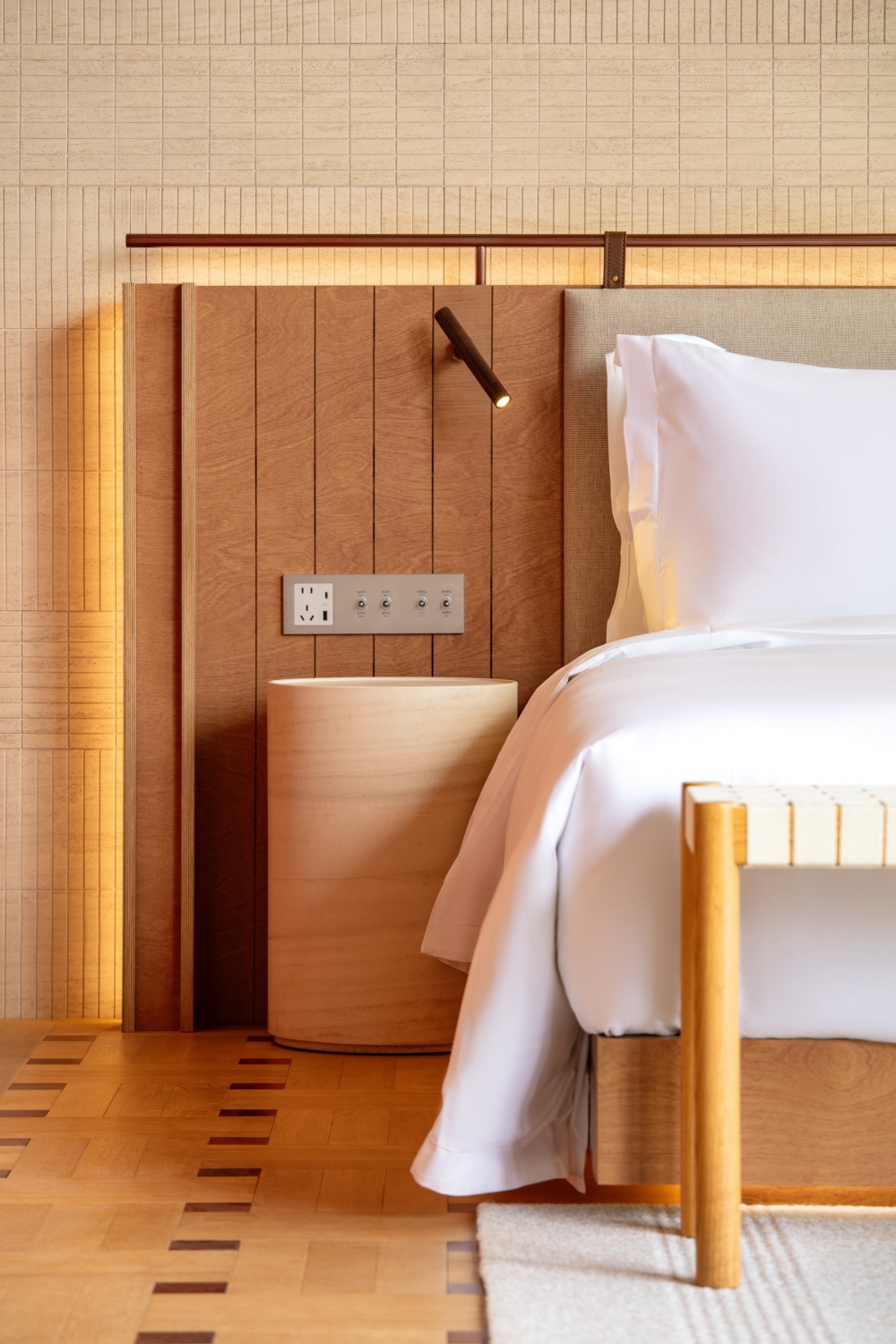
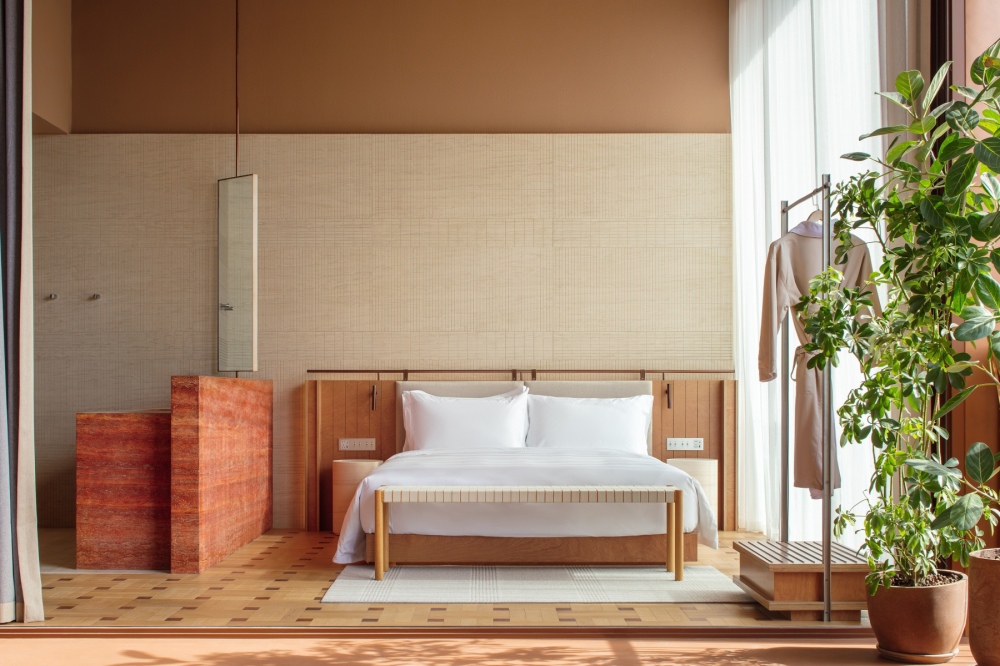
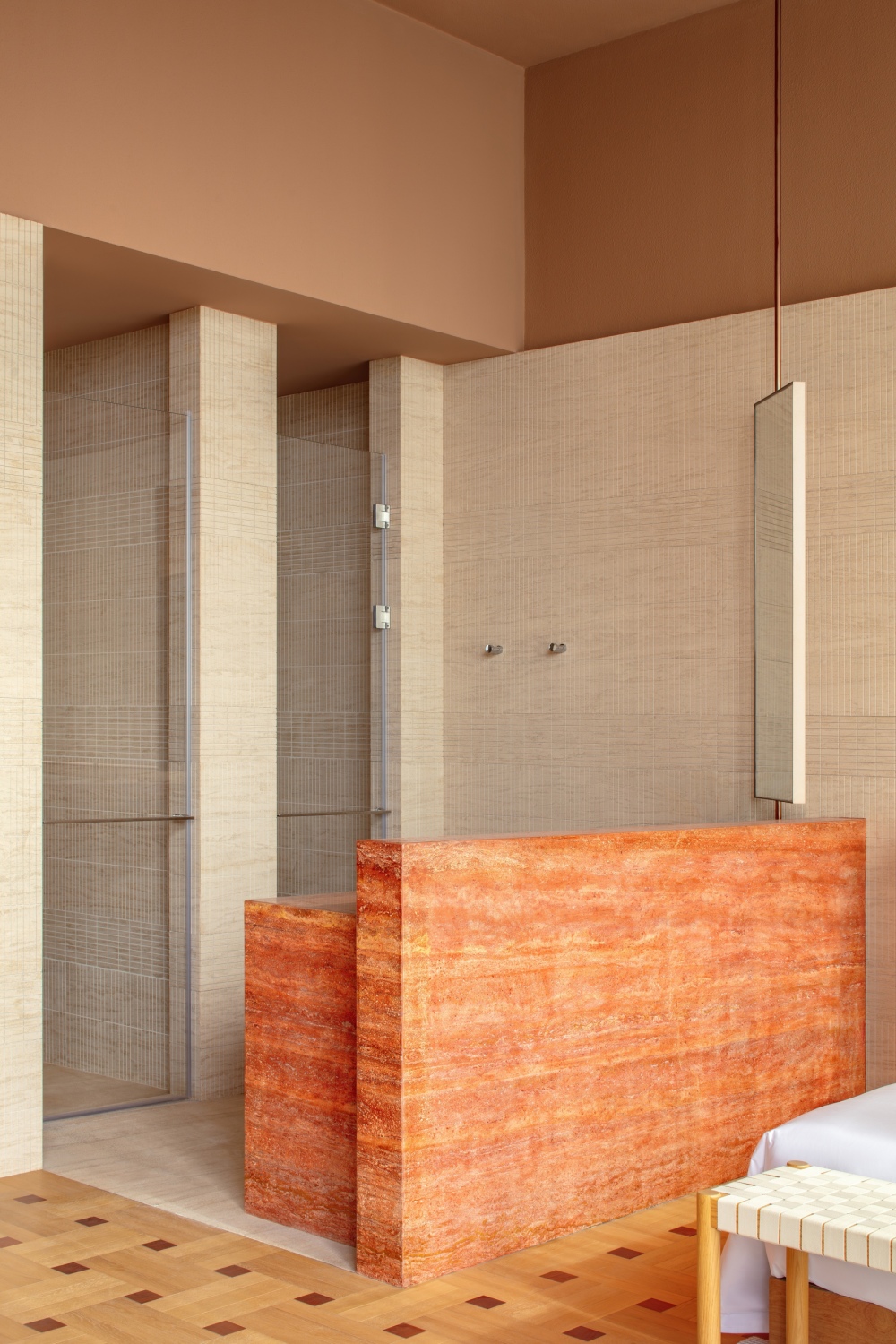
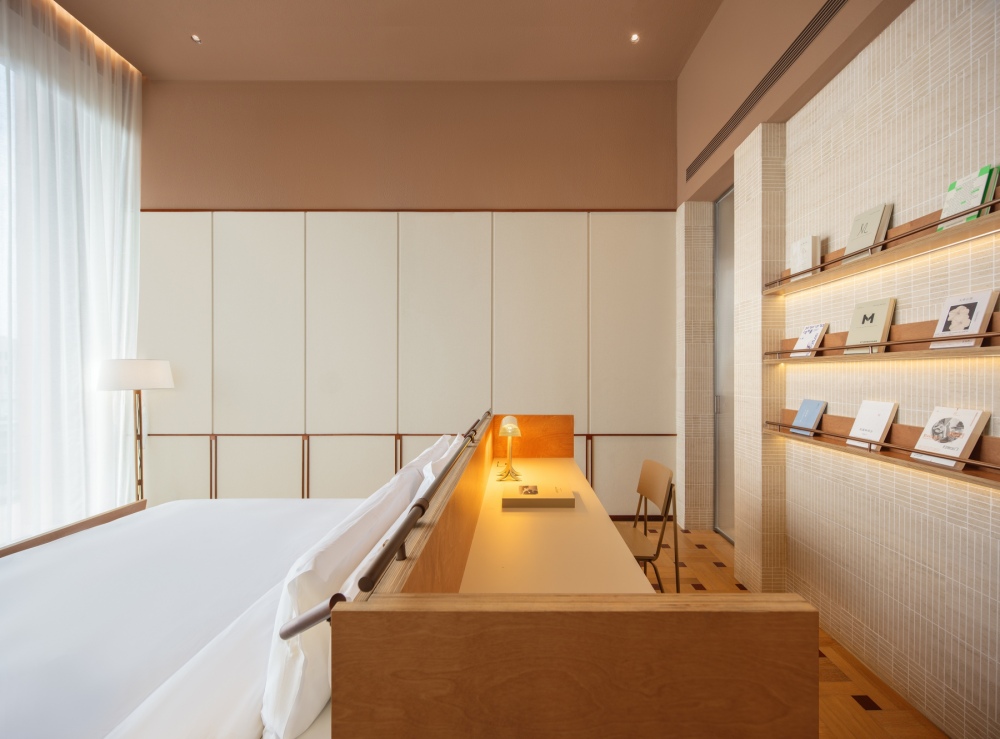
The hotel accommodates 18 guestrooms across Levels 2 to 4, arranged in three typologies. While the standard rooms on Levels 2 and 3 are compact in size, each is extended by a sunlit balcony facing the river, visually and spatially enlarging the living experience. Warm-toned materials—including wood-grain stone, red travertine, red plywood, and concrete brick—are used throughout the interiors, where the tactile quality of natural materials and a restrained warm palette create a welcoming and lived-in atmosphere.
In selected floor and wall areas, patterned timber flooring, terrazzo inlays, and mosaic stone tiles are introduced. The layered use of patterns recalls the ornamental floor tiles of traditional Guangzhou architecture, reinterpreting local craftsmanship and Lingnan aesthetics through a contemporary design language.
New Way of Thinking
“naive IMAGINIST” embodies the idea of imagining alternative possibilities, and the design of author’s room Hotel is conceived as an exploration of architectural potential. Drawing from the spatial logic of the Qi Lou—an architectural typology born in a pedestrian-oriented era—the project reintroduces the experience of walking and lingering to contemporary life, translating collective memory into lived, present-day emotion. Rather than proposing an abstract ideal detached from everyday reality, the architecture seeks to create moments of gathering and pause, where people and their environment together give form to another way of living.